Investigation of voriconazole heteroresistance in clinical isolates of Trichosporon asahii from a multicenter study in China
Chenlu Liu, Qiaoying Gao, Yingxing Li, Jinhan Yu, Shuying Yu, Xinfei Chen, Xue Li, Yingchun Xu, Ying Zhao, Lina Guo

TL;DR
This study reveals that Trichosporon asahii clinical isolates show voriconazole heteroresistance, which could impact treatment effectiveness and challenge standard antifungal testing.
Contribution
The first comprehensive characterization of voriconazole heteroresistance in Trichosporon asahii clinical isolates.
Findings
Heteroresistance to voriconazole was observed in all 62 isolates, with LHV values 23 times higher than MICs.
Most strains rapidly adapted to high voriconazole concentrations but gradually lost resistance when passaged on drug-free media.
90.3% of strains tolerated voriconazole at concentrations 16 times the MICs, with subpopulation frequencies between 0.002% and 0.830%.
Abstract
Heteroresistance refers to the presence of subpopulations within seemingly homogeneous microbial cells that exhibit varying sensitivities to antifungal agents, potentially contributing to treatment failure. Our study investigated the heteroresistance levels of clinical isolates of Trichosporon asahii collected from a multicenter study in China. A total of 62 isolates from 31 research centers, representing five different genotypes, were analyzed. We assessed the minimal inhibitory concentrations (MICs) of voriconazole (VRC), the level of heteroresistance to voriconazole (LHV), the strains’ capacity for adaptation to high VRC concentrations (ADP), and the stability of the heteroresistance phenomenon. The isolates had low VRC MICs (average 0.038 µg/mL), with 95.2% (59/62) classified as wild type. Heteroresistance to VRC was observed in all isolates, with an average LHV (0.25–4 µg/mL) 23…
Genes, proteins, chemicals, diseases, species, mutations and cell lines named across the full text — each resolved to its canonical identifier and authoritative record.
Click any figure to enlarge with its caption.
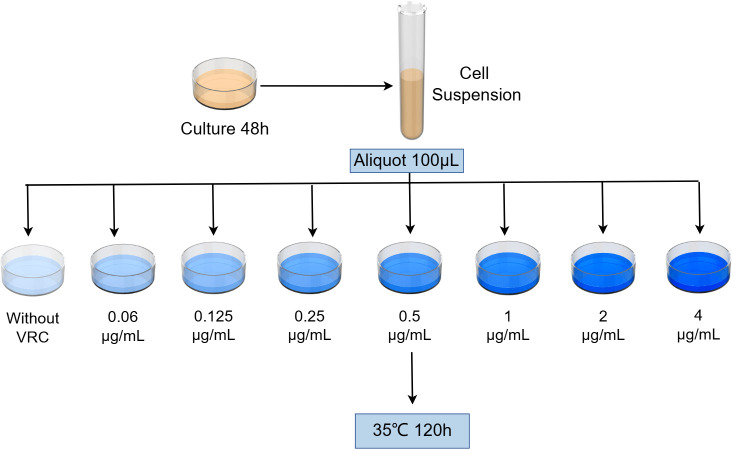 Figure 1
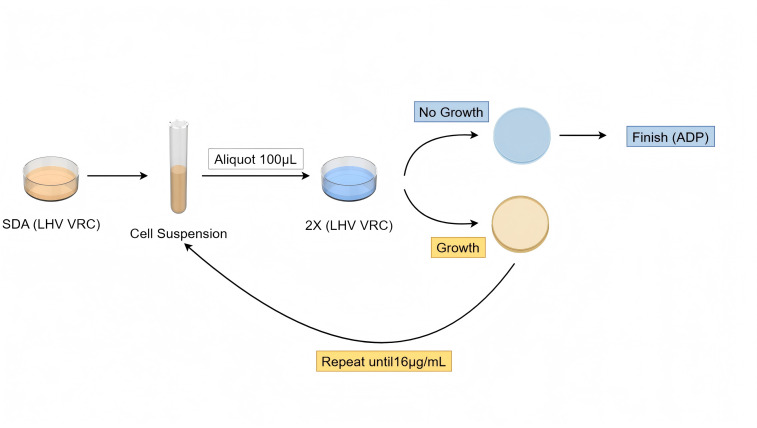 Figure 2
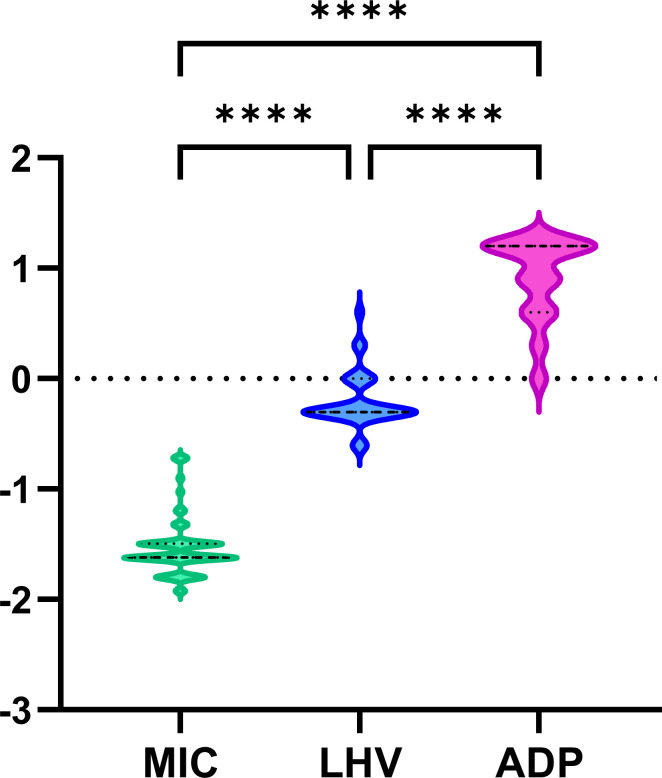 Figure 3
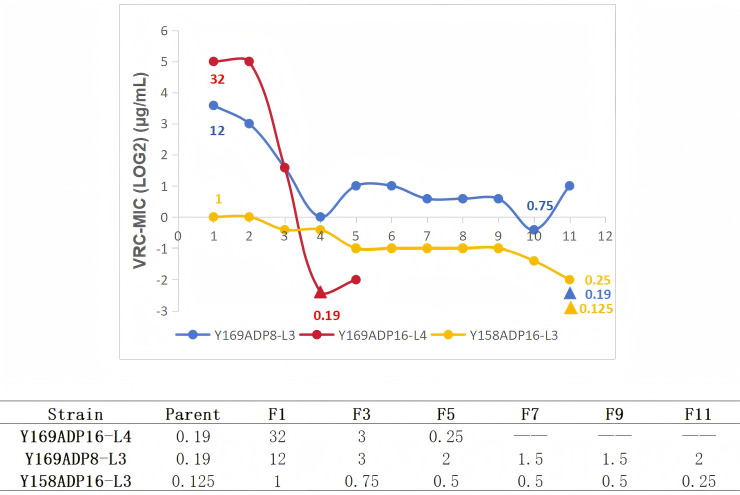 Figure 4
Peer Reviews
No public reviews on file for this paper yet. If you reviewed it on a platform where reviews are public (OpenReview, ICLR, NeurIPS, ICML), you can paste yours below so the community can read it here.
Videos
No videos yet. Explain this paper in a talk, walkthrough, or lecture? Add one.
Taxonomy
TopicsAntifungal resistance and susceptibility · Infectious Diseases and Mycology · Fungal Infections and Studies