Role of GuaB, the inosine-5′-monophosphate dehydrogenase of uropathogenic Escherichia coli pathogenicity: a key factor for bladder infection
Mizuki Shimokawa, Ayako Takita, Kazutomo Suzue, Ayuko Kimura, Himari Tabo, Yumika Sato, Yuya Yanagita, Takuya Sadahira, Haruyoshi Tomita, Hidetada Hirakawa

TL;DR
This study identifies GuaB as a key protein in uropathogenic E. coli's ability to infect the bladder, offering a potential target for new UTI treatments.
Contribution
The study identifies GuaB as a novel factor contributing to UPEC bladder infection and persistence.
Findings
GuaB is significantly upregulated in urine-like conditions and is crucial for UPEC growth and infection.
A GuaB mutant shows reduced infection efficiency and impaired growth in urine-mimicking environments.
GuaB expression is influenced by urea, highlighting its role in UPEC pathogenicity.
Abstract
Uropathogenic Escherichia coli (UPEC) is the primary causative agent of urinary tract infections (UTIs). This bacterium infects the bladder through the urinary tract, and some bacteria ascend to the kidneys, leading to more severe conditions such as pyelonephritis and sepsis. The infection of the bladder by UPEC is a critical initial step in the development of UTIs. Once inside the bladder, UPEC forms microcolonies both within and outside bladder epithelial cells, allowing it to persist in the bladder by resisting urine flow, innate immunity, and antimicrobials. In this study, to look for novel factors of UPEC that contribute to bladder infection and persistence, we analyzed proteins expressed at significant levels by UPEC in the bladder using a UTI mouse model. Mass spectrometry detected over 30 candidate proteins, including those already reported to play important roles in bladder…
Genes, proteins, chemicals, diseases, species, mutations and cell lines named across the full text — each resolved to its canonical identifier and authoritative record.
Click any figure to enlarge with its caption.
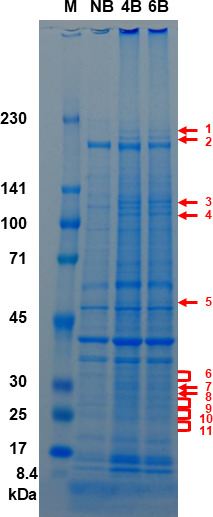 Figure 1
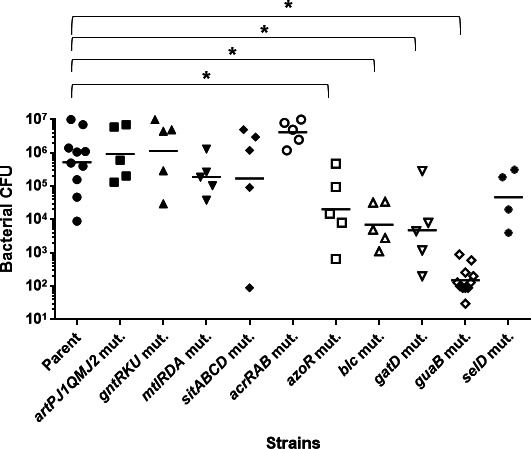 Figure 2
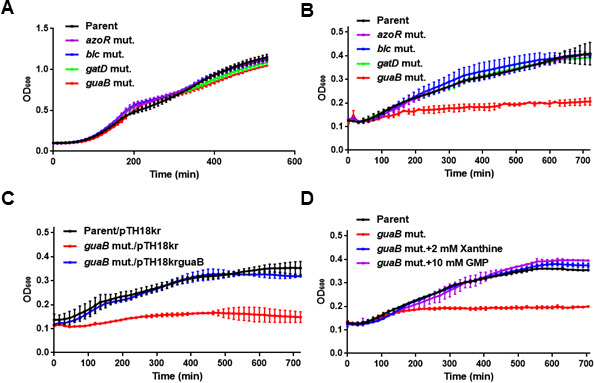 Figure 3
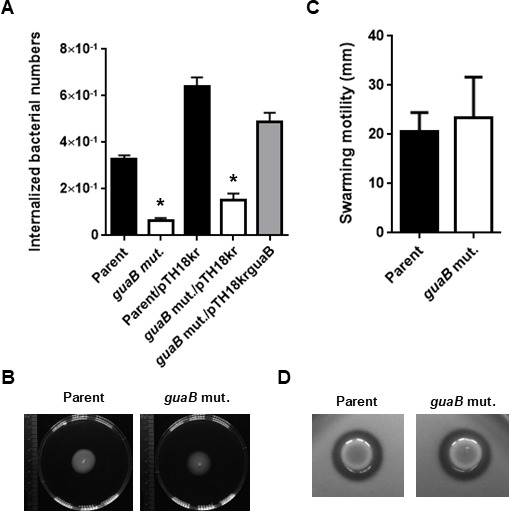 Figure 4
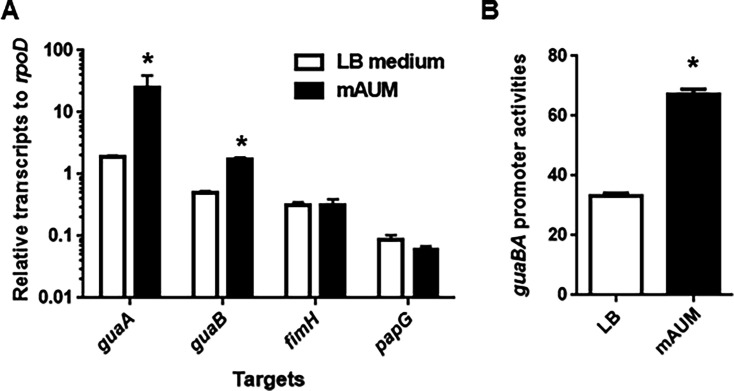 Figure 5
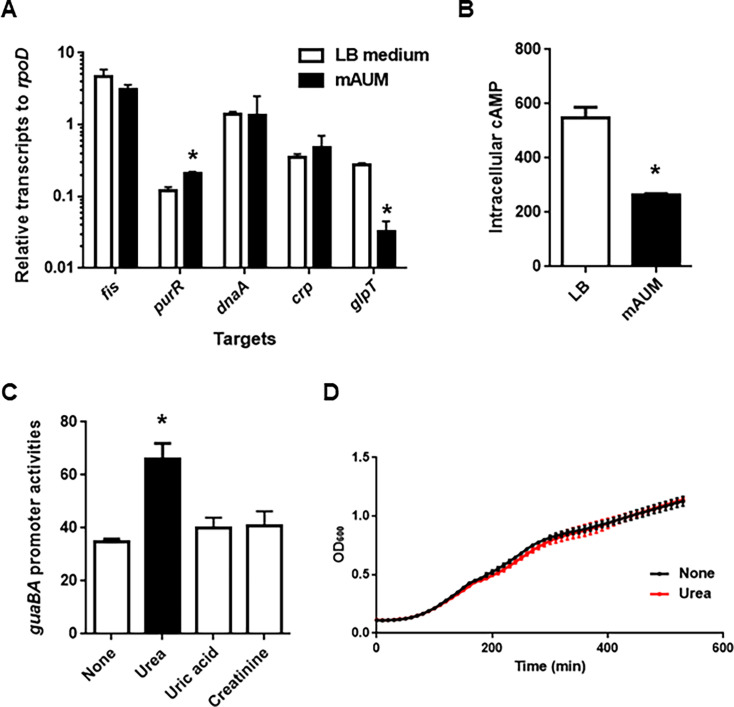 Figure 6
Peer Reviews
No public reviews on file for this paper yet. If you reviewed it on a platform where reviews are public (OpenReview, ICLR, NeurIPS, ICML), you can paste yours below so the community can read it here.
Videos
No videos yet. Explain this paper in a talk, walkthrough, or lecture? Add one.
Taxonomy
TopicsBiochemical and Molecular Research · Urinary Tract Infections Management · Pediatric Urology and Nephrology Studies