Revisiting synthetic lethality of Gcn5-related N-acetyltransferase (GNAT) family mutations in Haloferax volcanii
Katherine R. Weber, Brianna Novillo, Julie A. Maupin-Furlow

TL;DR
This study challenges previous claims about the synthetic lethality of two acetyltransferase genes in Haloferax volcanii, showing they can be deleted together without causing cell death.
Contribution
The study provides genetic evidence refuting the synthetic lethality of elp3 and pat2 in Haloferax volcanii.
Findings
Δelp3, Δpat1Δelp3, and Δpat2Δelp3 mutant strains were successfully generated and remained viable.
Minimal genomic differences were observed between the parent and Δelp3Δpat2 mutant, indicating no suppressor mutations.
Elp3 and Pat2 may not share a close functional relationship as previously suggested.
Abstract
Lysine acetylation is a post-translational modification that occurs in all domains of life, highlighting its evolutionary significance. Previous genome comparison identified three Gcn5-related N-acetyltransferase (GNAT) family members as lysine acetyltransferase homologs (Pat1, Pat2, and Elp3) and two deacetylase homologs (Sir2 and HdaI) in the halophilic archaeon Haloferax volcanii, with elp3 and pat2 proposed as a synthetic lethal gene pair. Here, we advance these findings by performing single and double mutagenesis of elp3 with the pat1 and pat2 lysine acetyltransferase gene homologs. Genome sequencing and PCR screens of these strains reveal successful generation of Δelp3, Δpat1Δelp3, and Δpat2Δelp3 mutant strains. Although these mutant strains exhibited a reduced growth rate compared to the parent, they remained viable. Overall, this study provides genetic evidence that elp3 and…
Genes, proteins, chemicals, diseases, species, mutations and cell lines named across the full text — each resolved to its canonical identifier and authoritative record.
Click any figure to enlarge with its caption.
 Figure 1
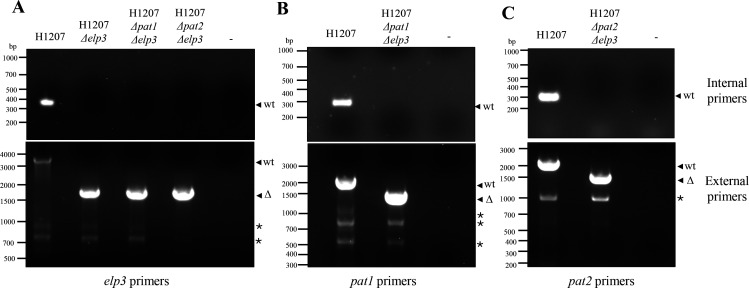 Figure 2
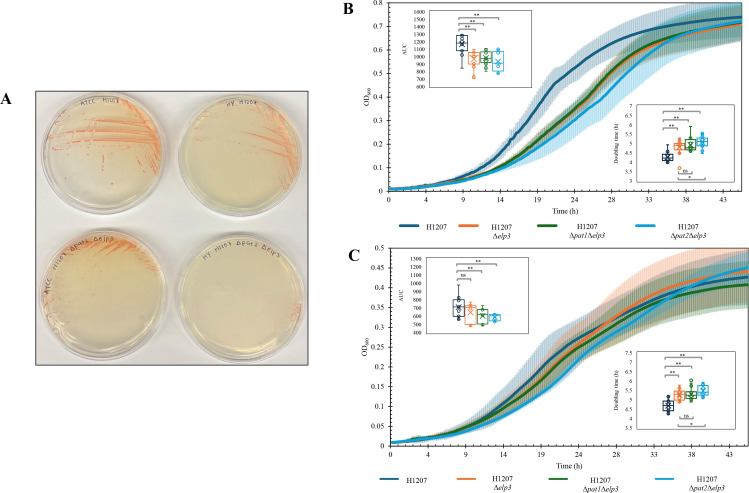 Figure 3
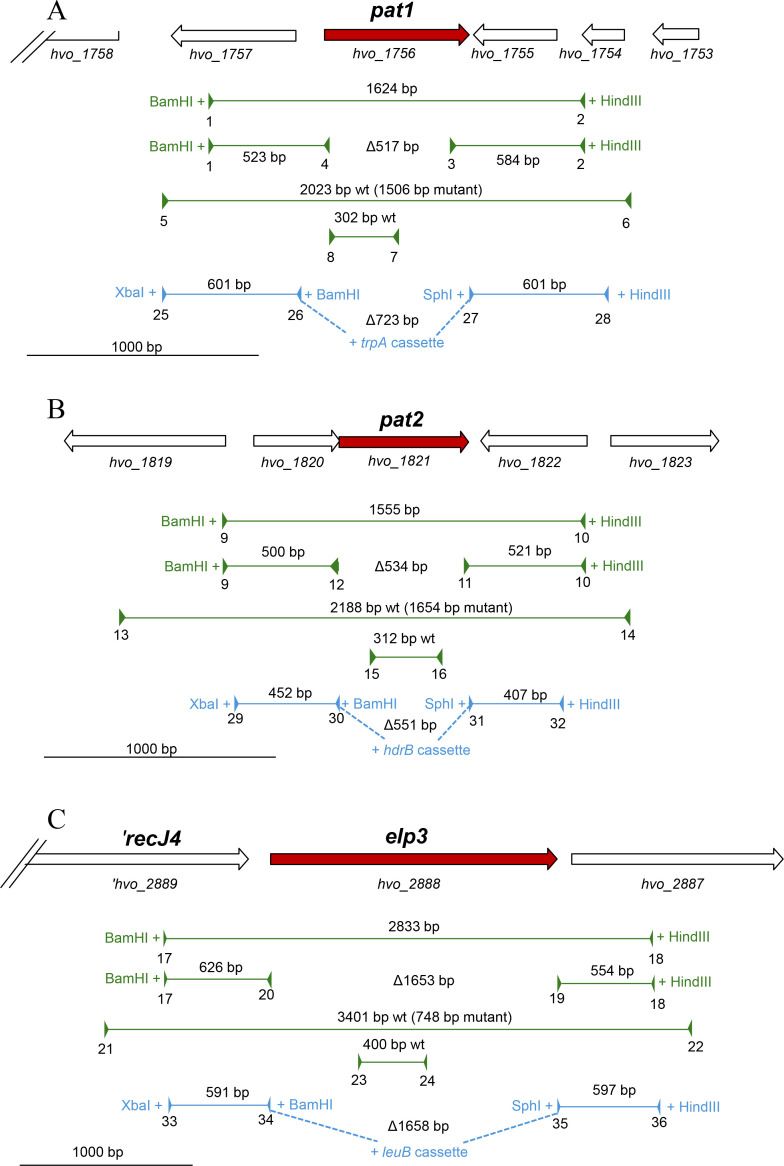 Figure 4
Peer Reviews
No public reviews on file for this paper yet. If you reviewed it on a platform where reviews are public (OpenReview, ICLR, NeurIPS, ICML), you can paste yours below so the community can read it here.
Videos
No videos yet. Explain this paper in a talk, walkthrough, or lecture? Add one.
Taxonomy
TopicsPeptidase Inhibition and Analysis · RNA modifications and cancer · Cancer-related gene regulation