Massive culture-based approach for the screening of AmpC, ESBL, and carbapenemase producers from rectal swabs
Gabriel Taddeucci-Rocha, Victoria de Oliveira Costa, Sarah Vitória Martins da Silva, Jéssica Britto Gonçalves, Natalia Chilinque Zambão da Silva, Marcia Maiolino Garnica, Renata Cristina Picão

TL;DR
This paper introduces a new culture-based method to detect and differentiate various beta-lactamase-producing bacteria in rectal swabs, improving surveillance of antibiotic resistance.
Contribution
A novel, high-throughput culture method that differentiates AmpC, ESBL, and carbapenemase producers in a single sample.
Findings
The method achieved 100% sensitivity and higher specificity for ESBL detection compared to reference methods.
It identified a broader range of beta-lactamase producers, including AmpC and carbapenemase.
The approach is suitable for central and research labs and can be adapted for other complex samples.
Abstract
Gram-negative bacilli-producing beta-lactamases are major causes of difficult-to-treat infections, especially the AmpC, extended-spectrum beta-lactamases (ESBL), and carbapenemase types. Their spread within and outside hospital settings demands effective detection and monitoring in various environments, but current methods for this purpose often neglect important groups of beta-lactamases or are expensive and time consuming. We aimed to develop and test a massive culture approach to detect and differentiate between beta-lactamase producers from complex samples. The method includes enrichment on MacConkey agar supplemented with ceftriaxone to select for AmpC, ESBL, and carbapenemase producers, followed by replica plating under selective pressures (cefoxitin, cefepime, and imipenem) to differentiate them. The massive culture approach effectively differentiated strains producing different…
Genes, proteins, chemicals, diseases, species, mutations and cell lines named across the full text — each resolved to its canonical identifier and authoritative record.
Click any figure to enlarge with its caption.
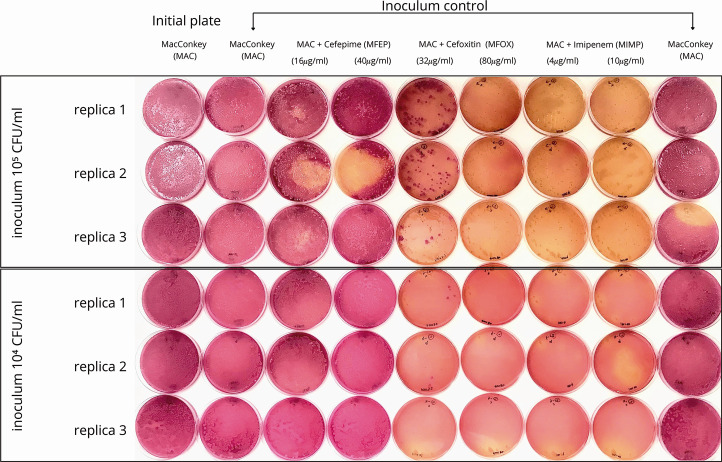 Figure 1
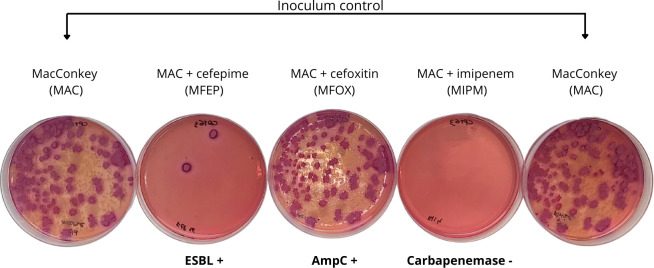 Figure 2
Peer Reviews
No public reviews on file for this paper yet. If you reviewed it on a platform where reviews are public (OpenReview, ICLR, NeurIPS, ICML), you can paste yours below so the community can read it here.
Videos
No videos yet. Explain this paper in a talk, walkthrough, or lecture? Add one.
Taxonomy
TopicsAntibiotic Resistance in Bacteria · Bacterial Identification and Susceptibility Testing · Antibiotic Use and Resistance