Using phenotyping to visualize and identify selfish bacteria: a methods guide
G. Reintjes, G. Giljan, B. M. Fuchs, C. Arnosti, R. Amann

TL;DR
This paper provides a guide to identify bacteria that hoard sugars for themselves, which are important for understanding carbon cycling in ecosystems.
Contribution
The paper introduces methods to visualize and distinguish 'selfish' bacteria in microbial communities.
Findings
Selfish uptake is a widespread mechanism in diverse environments like the gut and oceans.
Standard methods often overlook selfish bacteria, necessitating revised approaches.
Identifying these bacteria improves understanding of microbial community function and carbon flow.
Abstract
Polysaccharides are dominant components of plant and algal biomass, whose degradation is typically mediated by heterotrophic bacteria. These bacteria use extracellular enzymes to hydrolyze polysaccharides to oligosaccharides that are then also available to other bacteria. Recently, a new mechanism of polysaccharide processing—“selfish” uptake—has been recognized, initially among gut-derived bacteria. In “selfish” uptake, polysaccharides are bound at the outer membrane, partially hydrolyzed, and transported into the periplasmic space without loss of hydrolysis products, thus limiting the availability of smaller sugars to the surrounding environment. Selfish uptake is widespread in environments ranging from the ocean’s cool, oxygen-rich, organic carbon-poor waters to the warm, carbon-rich, anoxic environment of the human gut. In this methods paper, we present a detailed guide to…
Genes, proteins, chemicals, diseases, species, mutations and cell lines named across the full text — each resolved to its canonical identifier and authoritative record.
Click any figure to enlarge with its caption.
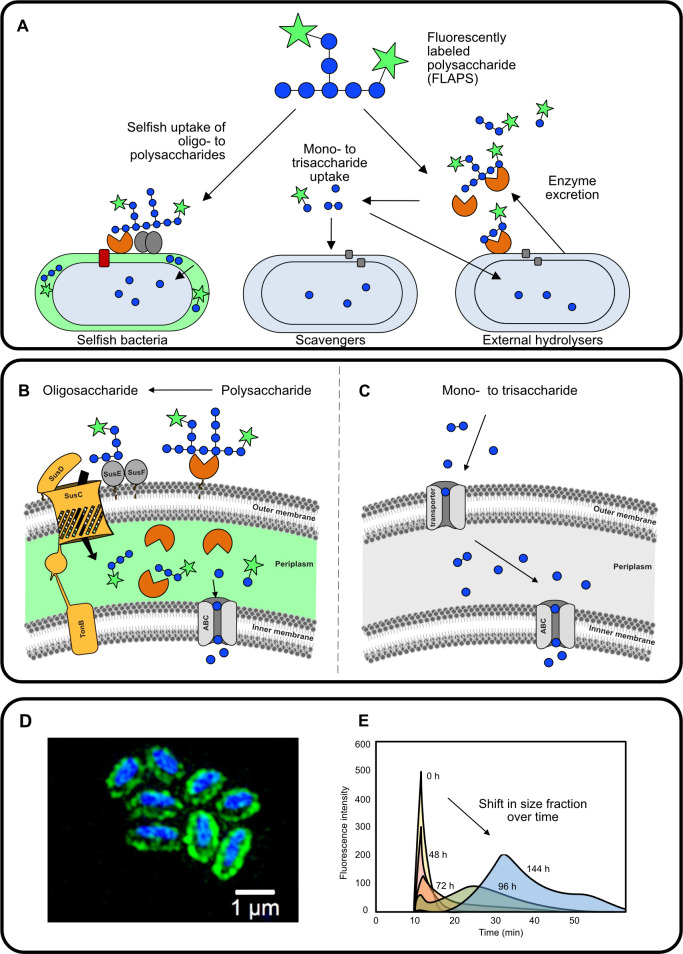 Figure 1
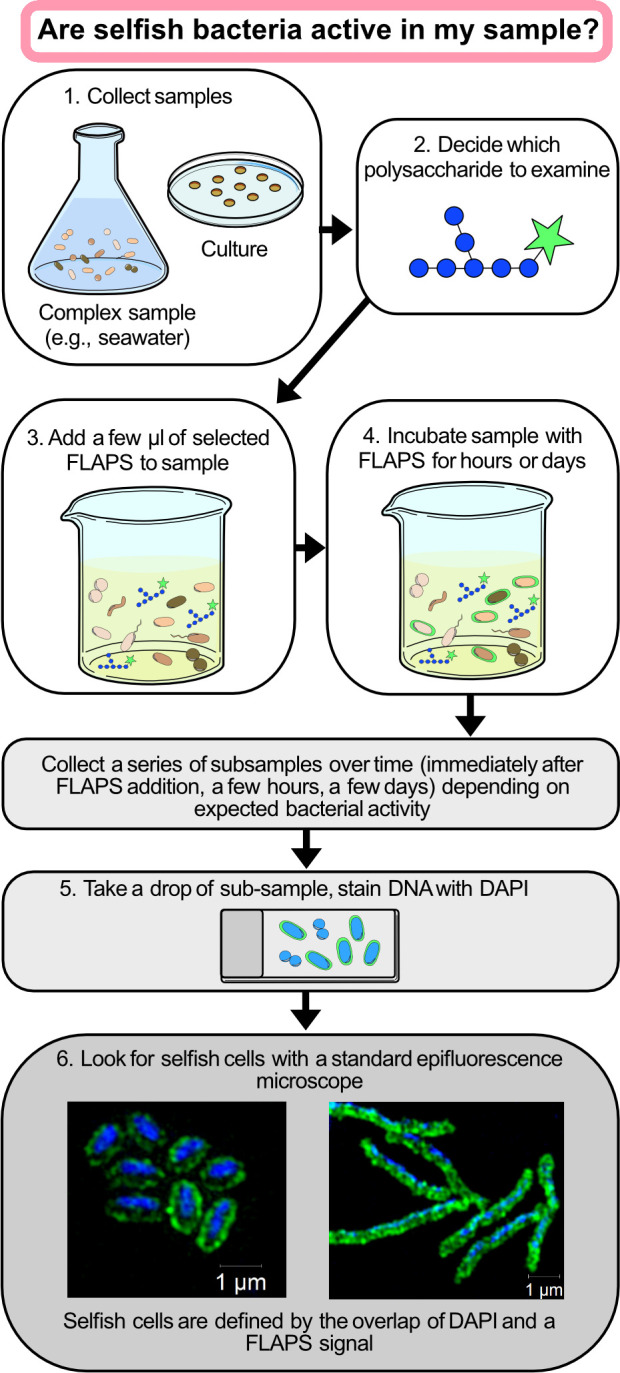 Figure 2
 Figure 3
 Figure 4
Peer Reviews
No public reviews on file for this paper yet. If you reviewed it on a platform where reviews are public (OpenReview, ICLR, NeurIPS, ICML), you can paste yours below so the community can read it here.
Videos
No videos yet. Explain this paper in a talk, walkthrough, or lecture? Add one.
Taxonomy
TopicsMicrobial Community Ecology and Physiology · Wastewater Treatment and Nitrogen Removal · Gut microbiota and health