Rare bacterial subcommunity drives nutrient cycling in phyllosphere habitat of evergreen conifers
Bing Li, Mingyang Fu, Guangze Jin, Zhili Liu

TL;DR
Rare bacteria in the leaf surface of evergreen trees play a key role in nutrient cycling, while abundant bacteria are shaped by dispersal and drift.
Contribution
The study reveals that rare bacterial subcommunities drive nutrient cycling in the phyllosphere of conifers.
Findings
Rare subcommunities are regulated by ecological drift and drive nutrient cycling in the phyllosphere.
Abundant subcommunities are shaped by dispersal limitation and deterministic processes increase with needle aging.
Needle chemical defenses like flavonoids influence bacterial assembly patterns.
Abstract
Phyllosphere bacteria are crucial for pathogen resistance, stress tolerance, and productivity maintenance of host plants and further have potential effects on ecosystem functions. However, whether and how assembly patterns of both abundant and rare subcommunities changed across needle age cohorts, and their relative contributions to nutrient cycling in phyllosphere habitat of evergreen conifers are still unclear. Here, we examined both phyllosphere abundant and rare bacterial subcommunities in three needle age cohorts of the representative evergreen conifers in mixed broadleaved-Korean pine forests throughout Northeast China. We found that dispersal limitation and ecological drift dominated abundant and rare subcommunities, respectively. Deterministic assembly gradually increased with needle aging, which was mainly attributed to the increased needle chemical defense traits such as…
Genes, proteins, chemicals, diseases, species, mutations and cell lines named across the full text — each resolved to its canonical identifier and authoritative record.
Click any figure to enlarge with its caption.
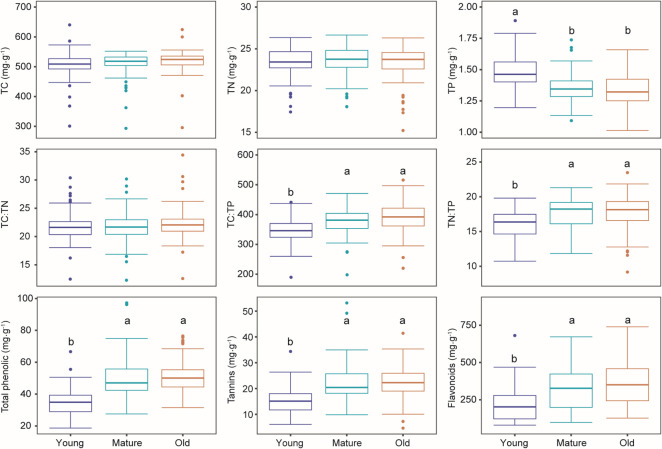 Figure 1
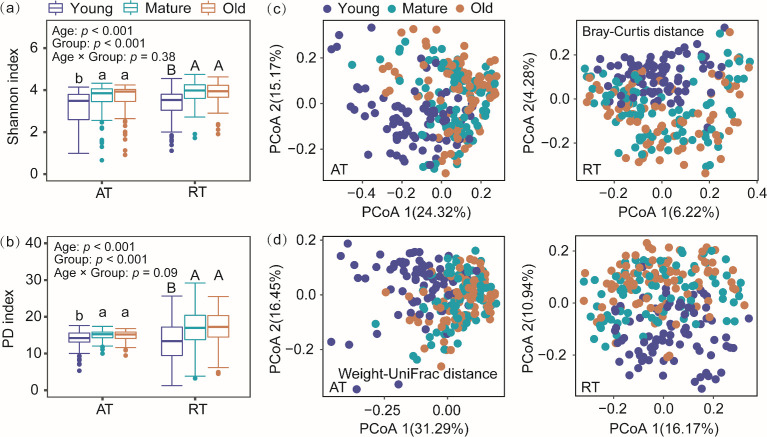 Figure 2
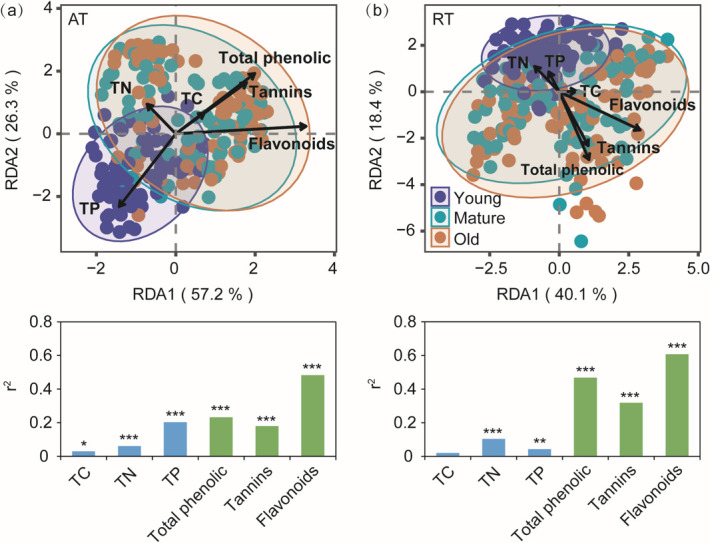 Figure 3
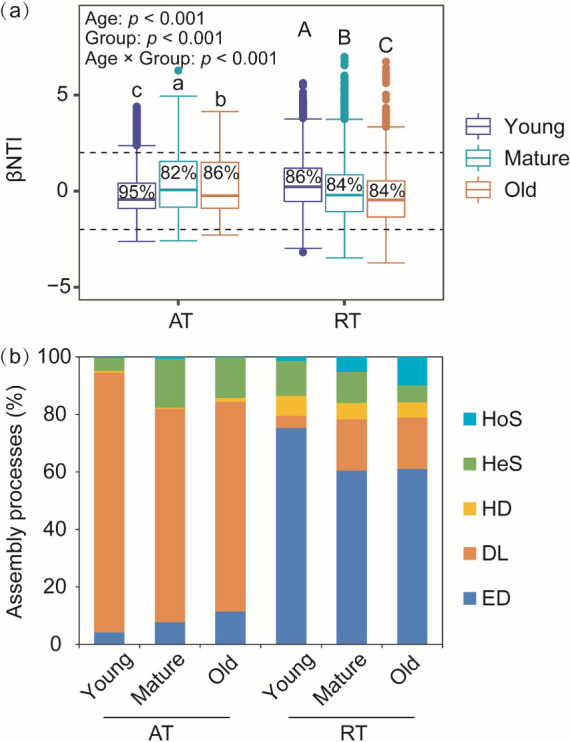 Figure 4
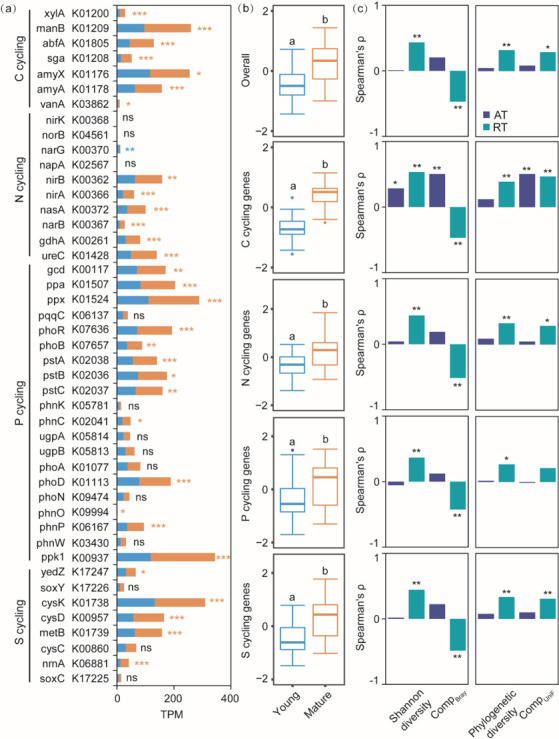 Figure 5
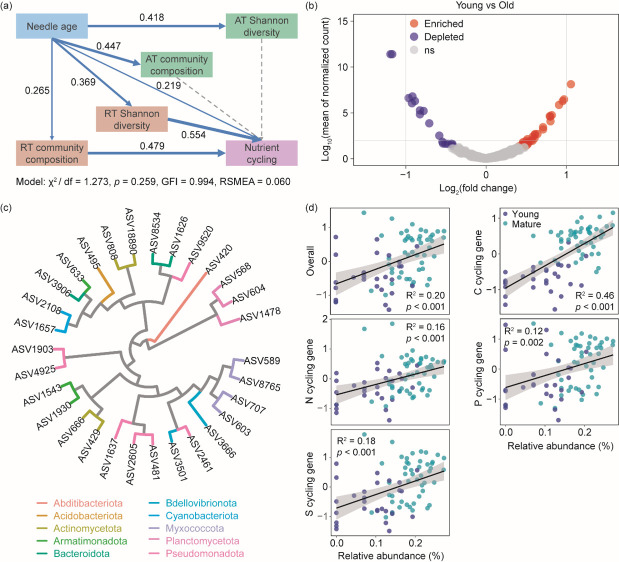 Figure 6
Peer Reviews
No public reviews on file for this paper yet. If you reviewed it on a platform where reviews are public (OpenReview, ICLR, NeurIPS, ICML), you can paste yours below so the community can read it here.
Videos
No videos yet. Explain this paper in a talk, walkthrough, or lecture? Add one.
Taxonomy
TopicsMicrobial Community Ecology and Physiology · Genomics and Phylogenetic Studies · Plant-Microbe Interactions and Immunity