Discovery of endogenous retroviruses in the genome of the red panda (Ailurus fulgens)
Yingying Bao, Lichen Mao, Alfred Ndjekadom, Wenhui Shi, Chenglin Zhou, Juan Xu, Xiaochun Wang, Yuwei Liu, Shixing Yang, Likai Ji, Tongling Shan, Wen Zhang, Quan Shen

TL;DR
This study discovers and characterizes endogenous retroviruses in the genome of the endangered red panda, revealing insights into their evolutionary history and cross-species transmission.
Contribution
The study identifies complete ERV sequences in the red panda genome and provides evidence for cross-species transmission events.
Findings
Eleven ERV sequences were identified in the red panda genome, six of which contain complete viral sequences with LTRs.
Phylogenetic analysis shows nine ERVs belong to Gammaretrovirus and two to Betaretrovirus, with evidence of cross-species transmission.
LTR divergence dating indicates ERV integration occurred after host lineage divergence, supporting trans-species transmission.
Abstract
Endogenous retroviruses (ERVs) are viral genomes that originate from the integration of exogenous retroviruses into host germ cells and can be stably inherited across generations. Despite being mostly incomplete and silent, several ERVs have been observed to play potential pathological roles in numerous diseases, including multiple sclerosis, rheumatoid arthritis, and notably, cancer. Research has revealed the presence of ERVs in the genomes of nearly all mammals. However, the distribution and diversity of these retroviral genes in the endangered red panda (Ailurus fulgens) remain largely unexplored. This study aimed to identify and characterize ERV sequences in the red panda genome using bioinformatic methods. The results revealed the presence of 11 ERV sequences in the red panda genome, among which 6 contain complete viral sequences with long terminal repeats (LTRs), indicating…
Genes, proteins, chemicals, diseases, species, mutations and cell lines named across the full text — each resolved to its canonical identifier and authoritative record.
Click any figure to enlarge with its caption.
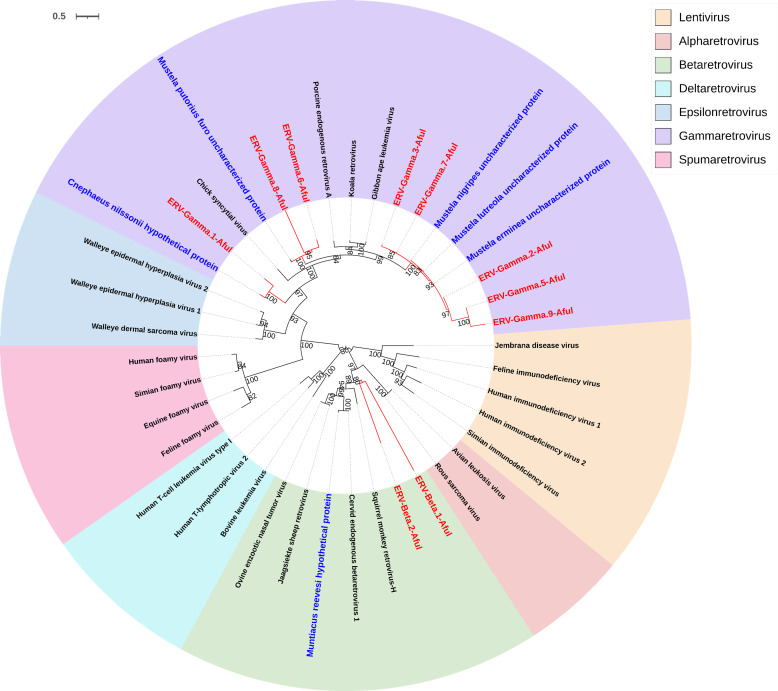 Figure 1
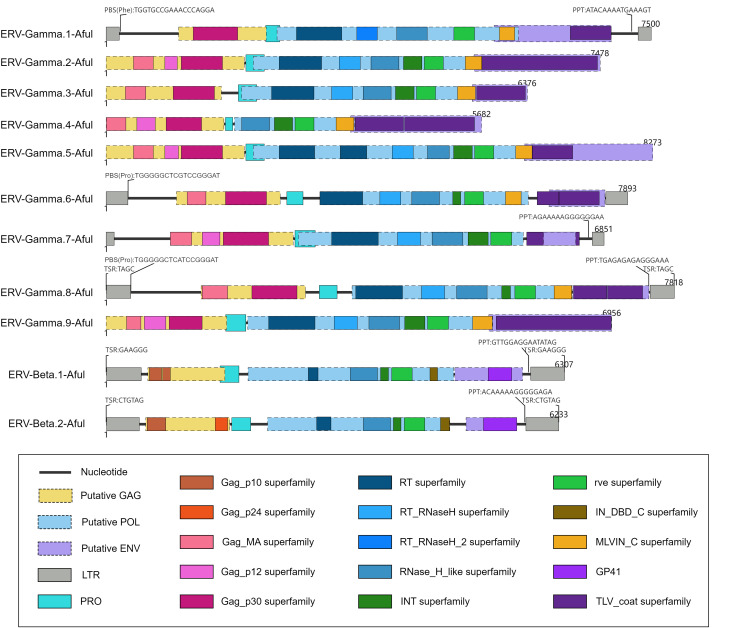 Figure 2
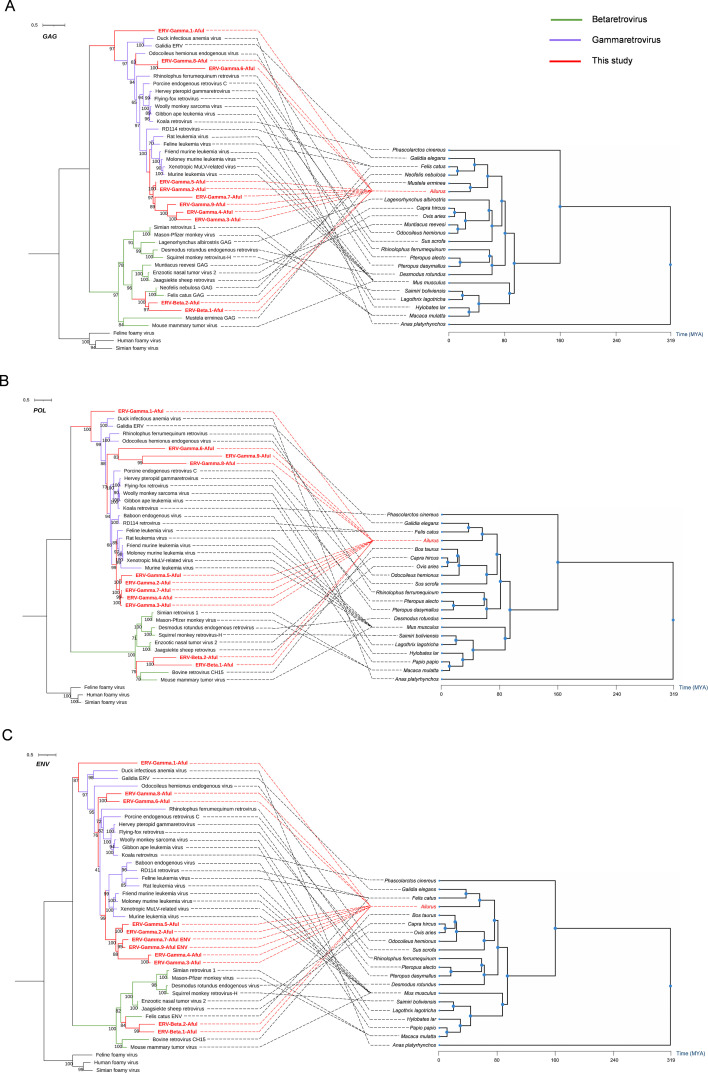 Figure 3
Peer Reviews
No public reviews on file for this paper yet. If you reviewed it on a platform where reviews are public (OpenReview, ICLR, NeurIPS, ICML), you can paste yours below so the community can read it here.
Videos
No videos yet. Explain this paper in a talk, walkthrough, or lecture? Add one.
Taxonomy
TopicsChromosomal and Genetic Variations · Genomics and Phylogenetic Studies · Animal Genetics and Reproduction