Essential histidine residues in Bombyx mori nucleopolyhedrovirus GP64 mediate pH-dependent membrane fusion
Haijue Tian, Kai Chen, Xinyu Li, Ying Xu, Bifang Hao, Jinshan Huang

TL;DR
The study identifies key histidine residues in a virus protein that control pH-dependent membrane fusion, important for virus entry into cells.
Contribution
The study reveals specific histidine residues in BmNPV GP64 that act as pH sensors for membrane fusion.
Findings
Four histidine residues (H168, H172, H342, H351) are essential for pH-induced conformational changes in BmNPV GP64.
Mutations in these residues reduced low-pH-induced syncytia formation and altered antibody binding.
These findings clarify differences in fusion activation between closely related alphabaculoviruses.
Abstract
Enveloped viruses initiate host cell entry through membrane fusion mediated by viral fusion proteins. In group I alphabaculoviruses, the class III membrane fusion protein GP64 mediates virus–cell fusion under acidic conditions. In Autographa californica multicapsid nucleopolyhedrovirus (AcMNPV), three key histidine residues in GP64 function as pH sensors. In contrast, Bombyx mori nucleopolyhedrovirus (BmNPV)—despite its high genomic similarity to AcMNPV—exhibits a lower fusion pH threshold and retains its signal peptide in host cells, introducing additional histidine residues absent in AcMNPV GP64. To elucidate the role of these histidines, we generated 14 single-histidine-to-alanine mutants of BmNPV GP64 and evaluated their expression, membrane localization, and fusogenicity in BmN cells. Although all mutants correctly formed trimers and localized to the cell surface, several mutations…
Genes, proteins, chemicals, diseases, species, mutations and cell lines named across the full text — each resolved to its canonical identifier and authoritative record.
Click any figure to enlarge with its caption.
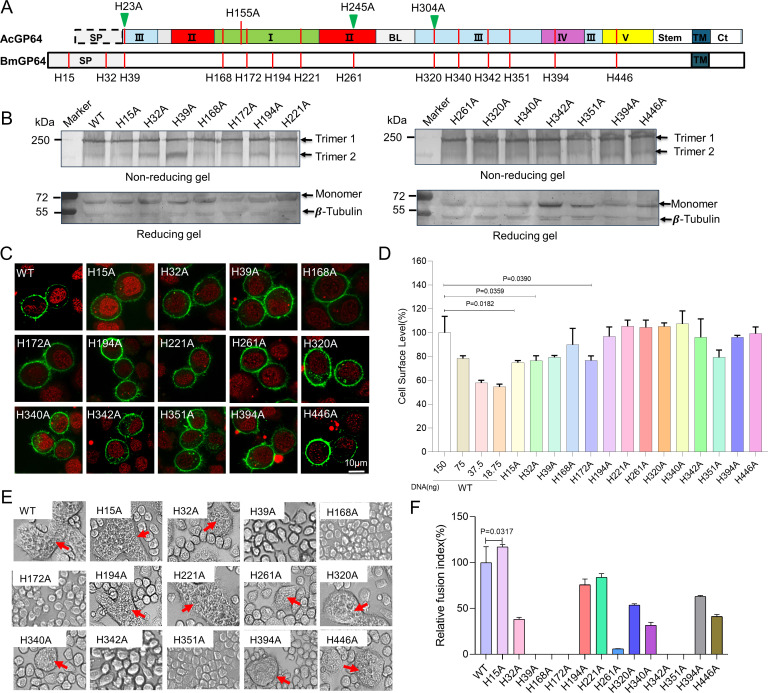 Figure 1
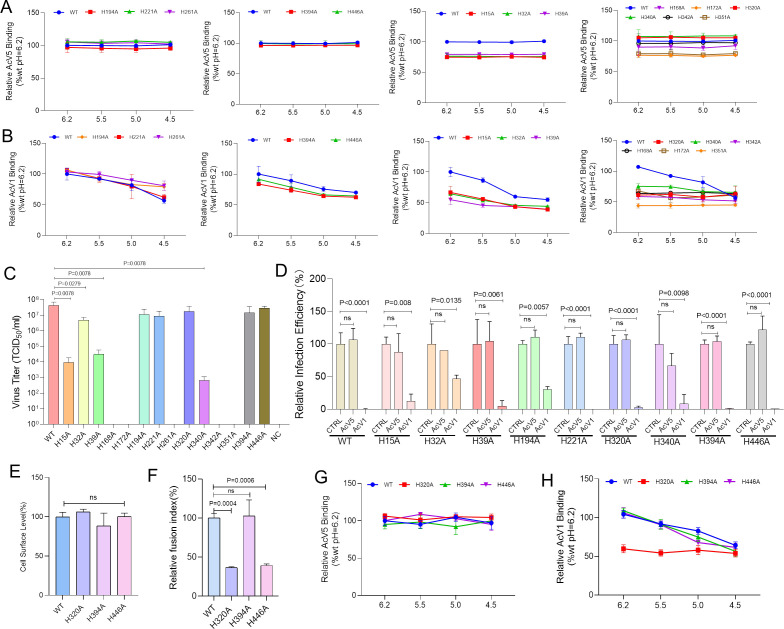 Figure 2
Peer Reviews
No public reviews on file for this paper yet. If you reviewed it on a platform where reviews are public (OpenReview, ICLR, NeurIPS, ICML), you can paste yours below so the community can read it here.
Videos
No videos yet. Explain this paper in a talk, walkthrough, or lecture? Add one.
Taxonomy
TopicsViral Infectious Diseases and Gene Expression in Insects · Insect Resistance and Genetics · Entomopathogenic Microorganisms in Pest Control