Characterization of a novel Phietavirus genus bacteriophage and its potential for efficient transfer of modified shuttle plasmids to Staphylococcus aureus strains of different clonal complexes
Łukasz Kałuski, Emil Stefańczyk, Aleksandra Głowacka-Rutkowska, Jan Gawor, Joanna Empel, Monika Orczykowska-Kotyna, Aleksandra Szczypkowska, Karolina Żuchniewicz, Robert Gromadka, Małgorzata Łobocka

TL;DR
A new bacteriophage, ASZ22RN, can efficiently transfer modified plasmids to various Staphylococcus aureus strains, bypassing internal defenses.
Contribution
A novel Phietavirus genus bacteriophage is shown to enable efficient plasmid transfer to diverse S. aureus strains via transduction.
Findings
ASZ22RN can infect or lyse 47 S. aureus clinical strains across 12 clonal complexes.
Transduction efficiency increases significantly when plasmids contain a fragment of ASZ22RN DNA.
Most transducing particles contain plasmid concatamers, not plasmid-phage DNA hybrids.
Abstract
Staphylococcus aureus is a significant human pathogen responsible for various nosocomial and community-acquired infections, leading to considerable morbidity and mortality worldwide. Temperate bacteriophages contribute to its virulence and facilitate the dissemination of pathogenicity traits. We isolated a novel siphovirus of the Phietavirus genus, ASZ22RN, derived from a prophage of an S. aureus clonal complex 7 strain and capable of propagating in the prophage-free laboratory strain RN4220. ASZ22RN either productively infected or lysed from without all 47 tested S. aureus clinical strains across 12 clonal complexes (CCs), demonstrating its ability to puncture their cell envelopes. When ASZ22RN was propagated in RN4220 cells harboring an S. aureus-Escherichia coli plasmid replicating via theta mode, it transduced the plasmid to plasmid-free RN4220 with low frequency. The transduction…
Genes, proteins, chemicals, diseases, species, mutations and cell lines named across the full text — each resolved to its canonical identifier and authoritative record.
Click any figure to enlarge with its caption.
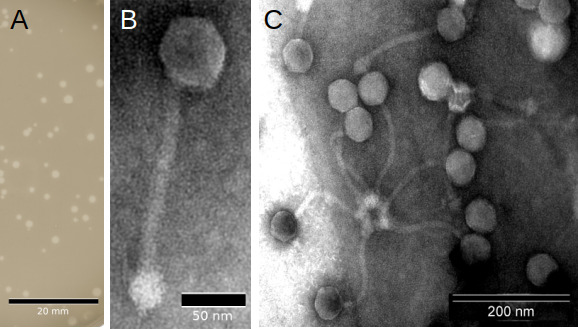 Figure 1
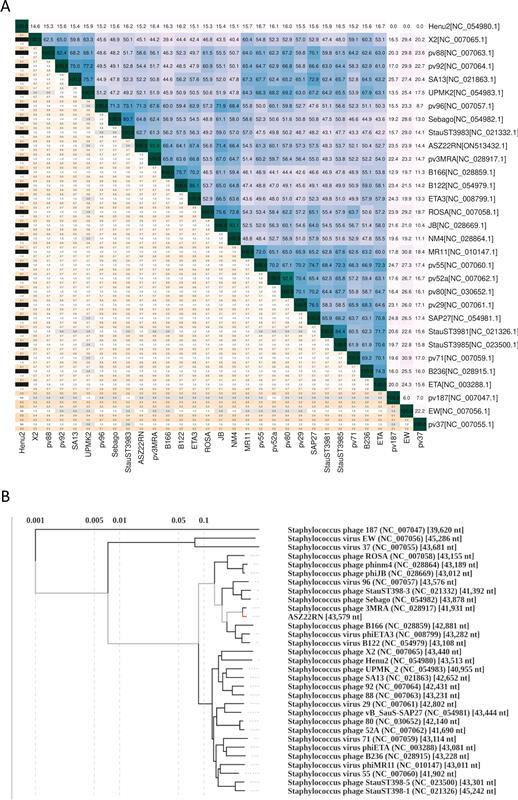 Figure 2
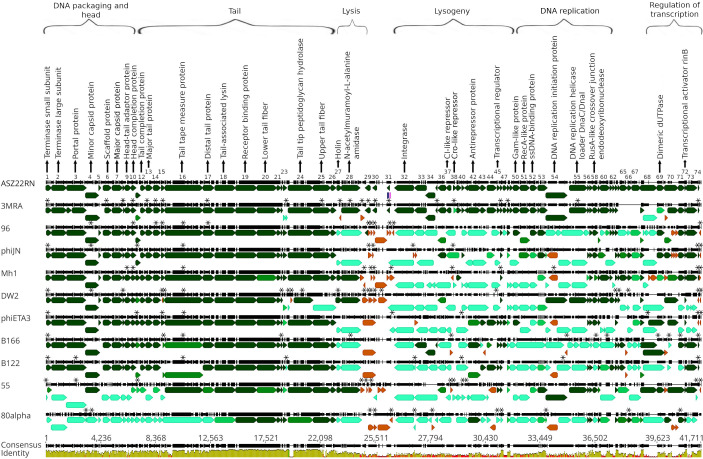 Figure 3
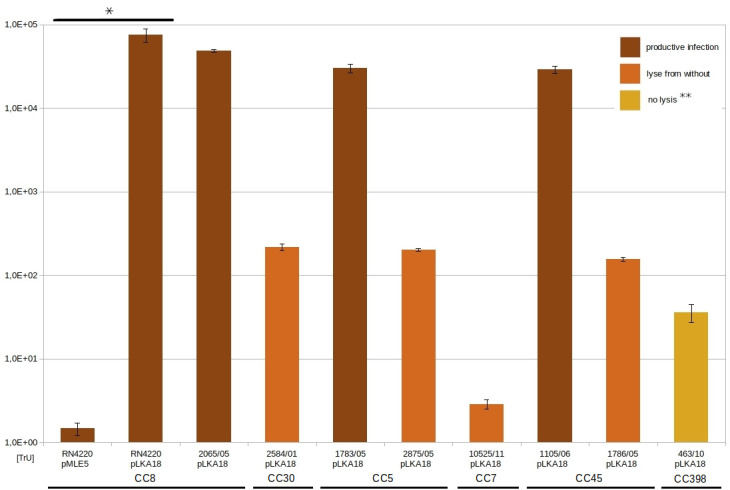 Figure 4
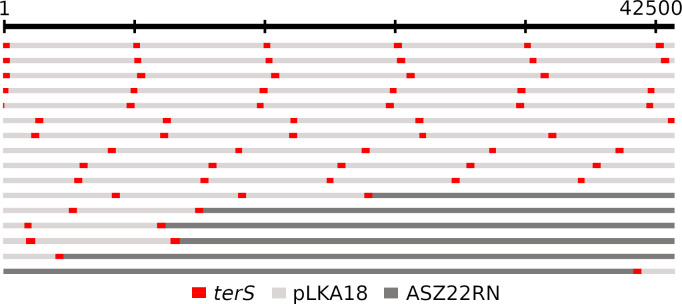 Figure 5
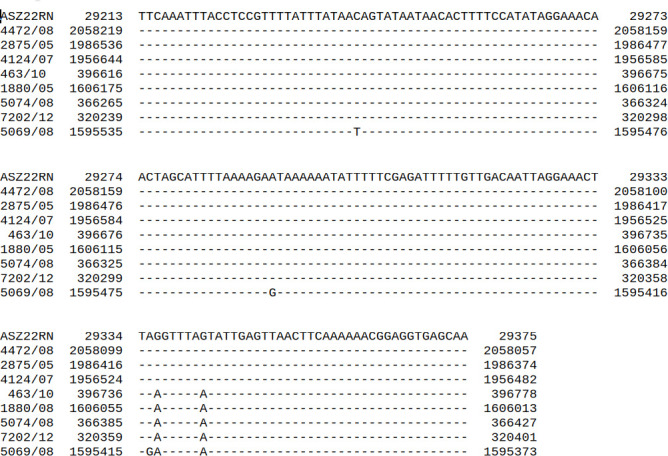 Figure 6
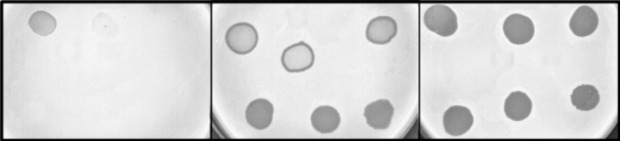 Figure 7
Peer Reviews
No public reviews on file for this paper yet. If you reviewed it on a platform where reviews are public (OpenReview, ICLR, NeurIPS, ICML), you can paste yours below so the community can read it here.
Videos
No videos yet. Explain this paper in a talk, walkthrough, or lecture? Add one.
Taxonomy
TopicsBacteriophages and microbial interactions · Plant Virus Research Studies · Viral gastroenteritis research and epidemiology