Human PrP E219K: a new and promising substrate for robust RT-QuIC amplification of human prions with potential for strain discrimination
A. Marín-Moreno, F. Reine, F. Jaffrézic, L. Herzog, H. Rezaei, I. Quadrio, S. Haïk, V. Béringue, D. Martin

TL;DR
A new human prion protein variant, PrP E219K, improves the detection and differentiation of prion disease strains using a sensitive amplification technique.
Contribution
Human PrP E219K is introduced as a novel and effective substrate for RT-QuIC, enabling robust amplification and strain discrimination of human prions.
Findings
PrP E219K enabled rapid amplification of six sCJD and one vCJD strain from mouse and human samples.
Lag times in amplification reactions reliably distinguished vCJD from sCJD subtypes.
Amplification covered a 5- to 8-log dilution range for most strains, except VV1 which showed a 2-log range.
Abstract
Mammalian prion diseases are fatal neurodegenerative disorders caused by the conformational conversion of the host-encoded prion protein (PrP) into a pathogenic, misfolded isoform, known as PrPSc. Definitive diagnosis currently relies on post-mortem histopathological examination of the central nervous system. Among emerging diagnostic tools, in vitro amplification techniques such as Real-Time Quaking-Induced Conversion (RT-QuIC) have demonstrated high sensitivity, specificity, and speed, although certain prion strains remain difficult to amplify. Here, we evaluate a novel recombinant substrate for RT-QuIC: human PrP E219K, a naturally occurring polymorphism in which lysine substitutes glutamic acid at codon 219. Using this substrate, we successfully amplified six sporadic Creutzfeldt-Jakob disease (sCJD) strains and the variant Creutzfeldt-Jakob disease (vCJD) strain from both human PrP…
Genes, proteins, chemicals, diseases, species, mutations and cell lines named across the full text — each resolved to its canonical identifier and authoritative record.
Click any figure to enlarge with its caption.
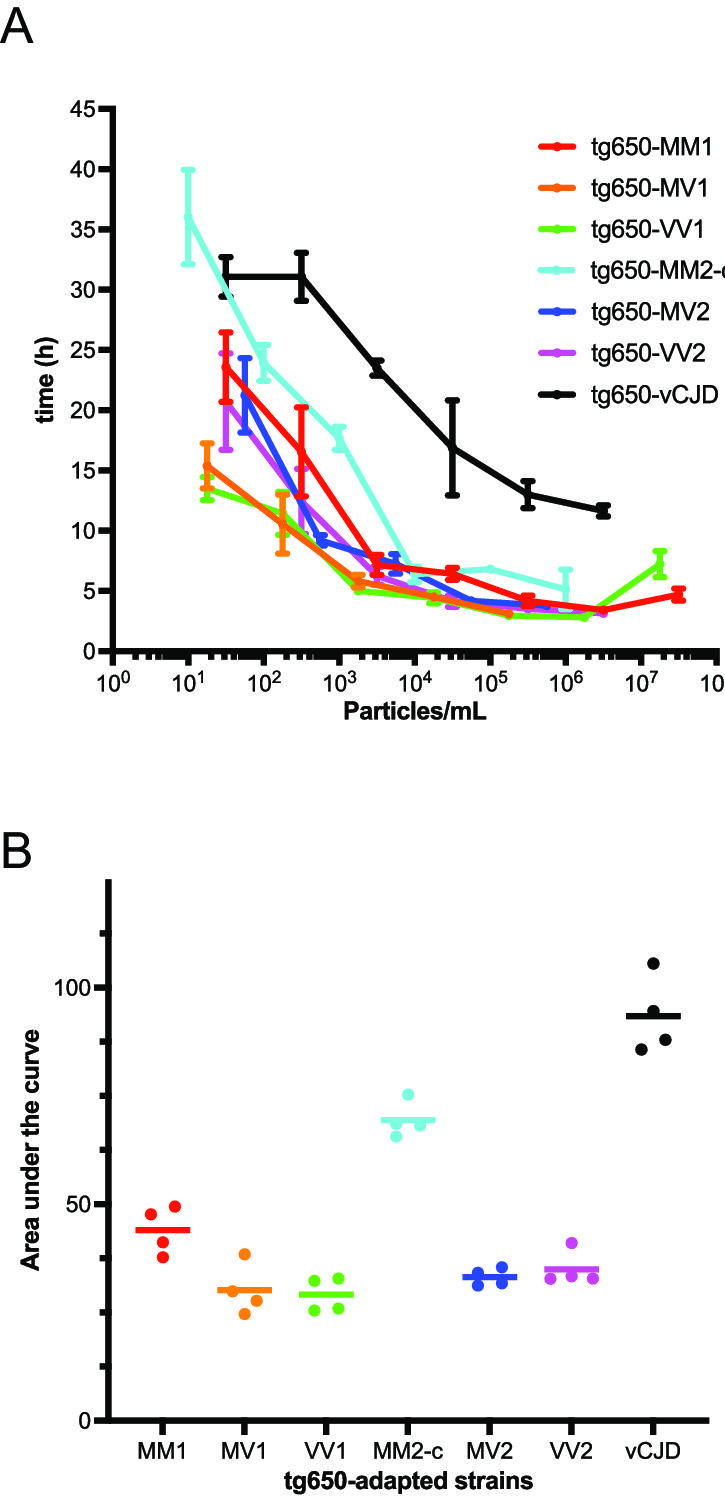 Figure 1
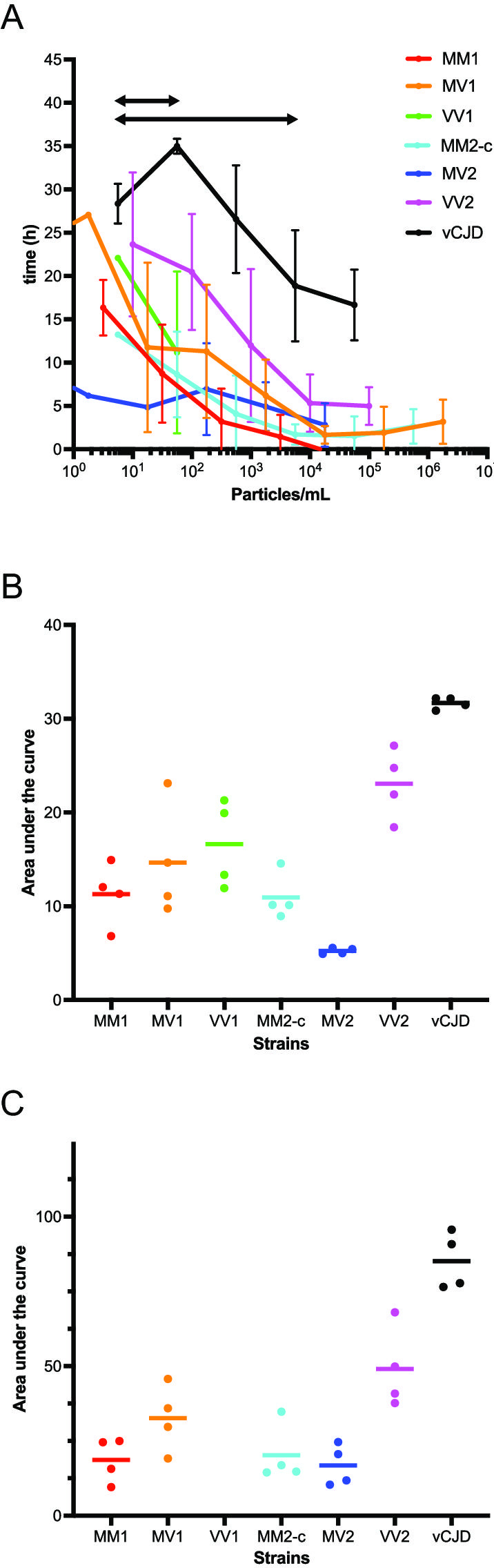 Figure 2
 Figure 3
Peer Reviews
No public reviews on file for this paper yet. If you reviewed it on a platform where reviews are public (OpenReview, ICLR, NeurIPS, ICML), you can paste yours below so the community can read it here.
Videos
No videos yet. Explain this paper in a talk, walkthrough, or lecture? Add one.
Taxonomy
TopicsPrion Diseases and Protein Misfolding · Neurological diseases and metabolism