Synergistic inhibition of pathogenic fungi by oleanolic acid combined with azoles
Tian Chen, Shaolan Liu, Fei Yang, Zhangxuan He, Menghua Tang, Lu Ge, Hongyi Zhang, Sijie Liu, Xiaolei Zhu, Mengqi Peng, Heng Zhang, Wenxu Cheng, Yi Sun

TL;DR
Oleanolic acid combined with azoles shows strong synergy against several pathogenic fungi, offering a potential strategy to combat antifungal resistance.
Contribution
First demonstration of OA/posaconazole synergy against Exophiala dermatitidis and significant synergy rates against Aspergillus and Cryptococcus.
Findings
OA combined with azoles showed high synergy rates, especially with posaconazole against Aspergillus and Cryptococcus.
OA/posaconazole combinations exhibited 52% synergy against Exophiala dermatitidis for the first time.
Synergy significantly reduced azole MIC values, suggesting potential to enhance antifungal efficacy and reduce resistance.
Abstract
Invasive fungal infections and emerging antifungal resistance mediated by pathogenic fungi, notably Candida spp., Aspergillus spp., Cryptococcus neoformans, and Exophiala dermatitidis, pose a critical challenge to global public health systems. This study evaluated the synergistic antifungal activity of oleanolic acid (OA) combined with five azole agents (itraconazole [ITR], voriconazole [VOR], posaconazole [POS], isavuconazole [ISA], and fluconazole) against Candida spp., Aspergillus spp., E. dermatitidis, and C. neoformans. Using CLSI-compliant broth microdilution assays (M27-A3/M38-A2), we determined the minimum inhibitory concentrations (MICs) of oleanolic acid against four fungal pathogens and evaluated in vitro synergistic interactions with five azoles to assess their therapeutic potential. OA exhibited no intrinsic fungicidal activity when administered alone. However, synergistic…
Genes, proteins, chemicals, diseases, species, mutations and cell lines named across the full text — each resolved to its canonical identifier and authoritative record.
Click any figure to enlarge with its caption.
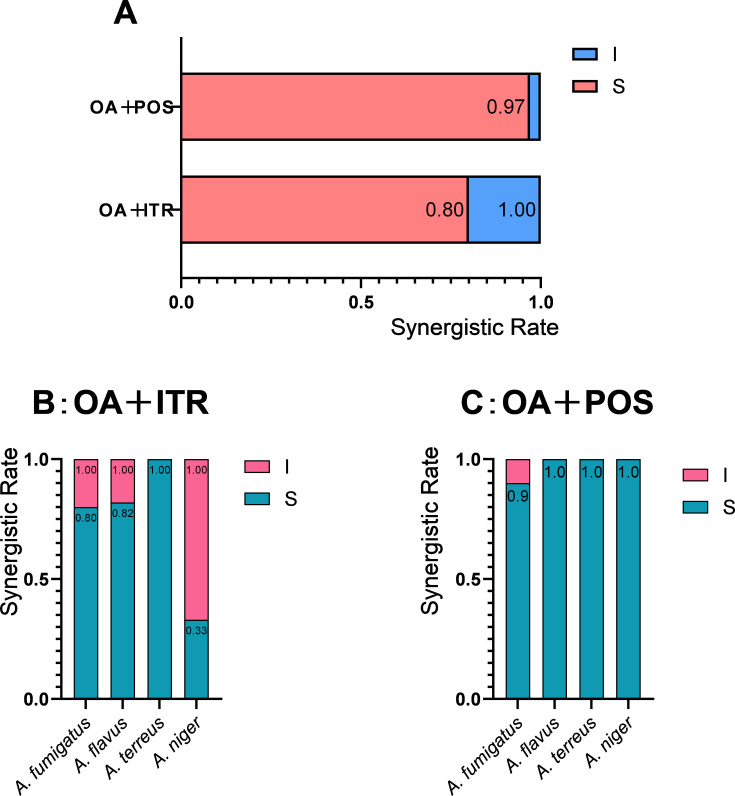 Figure 1
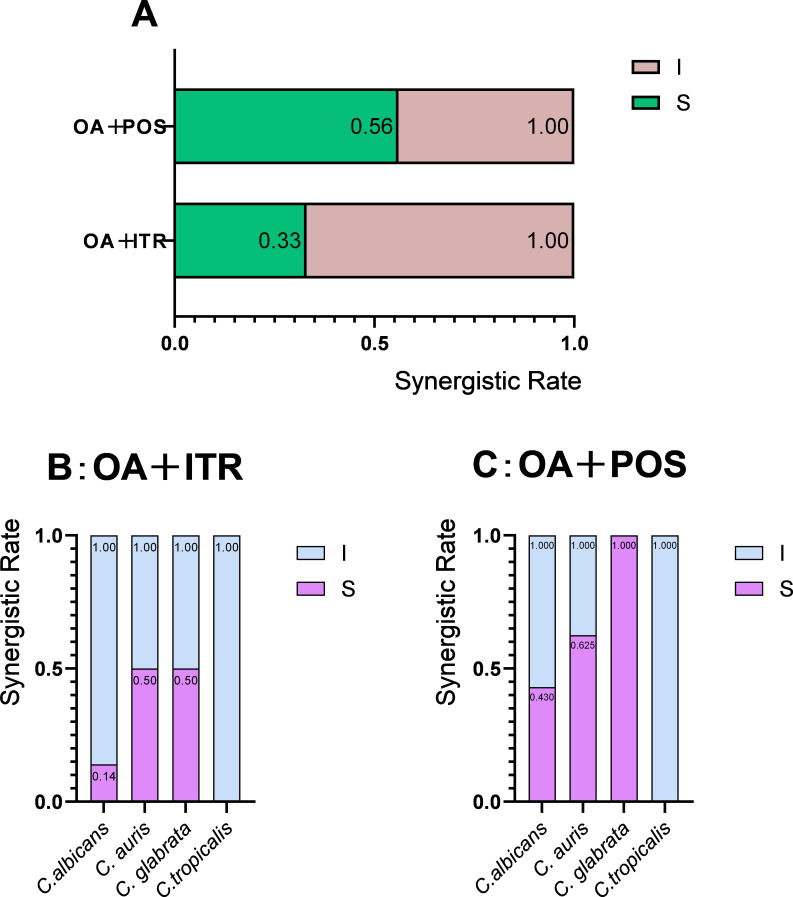 Figure 2
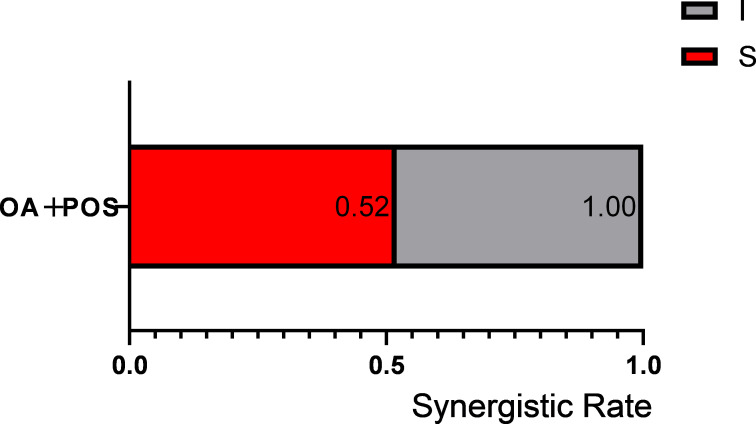 Figure 3
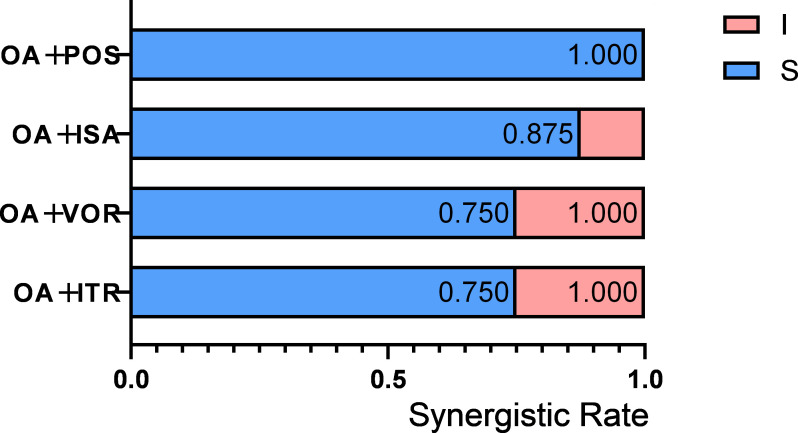 Figure 4
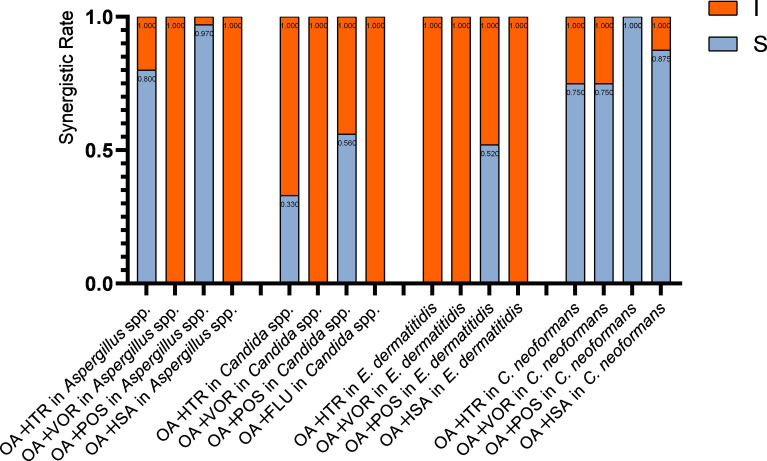 Figure 5
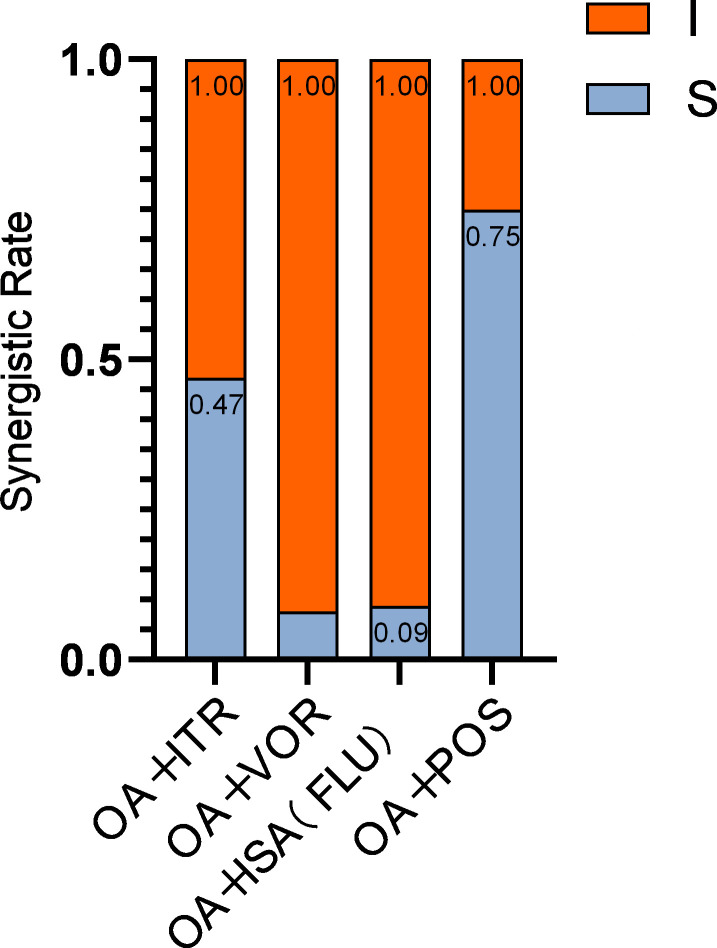 Figure 6
Peer Reviews
No public reviews on file for this paper yet. If you reviewed it on a platform where reviews are public (OpenReview, ICLR, NeurIPS, ICML), you can paste yours below so the community can read it here.
Videos
No videos yet. Explain this paper in a talk, walkthrough, or lecture? Add one.
Taxonomy
TopicsAntifungal resistance and susceptibility · Fungal Infections and Studies · Essential Oils and Antimicrobial Activity