Disparities in the incidence and prevalence of psychotic disorders among people with and without disabilities in south Korea: A national database study
Kyoung Eun Yeob, So Young Kim, Yeon Yong Kim, Jong Hyock Park

TL;DR
People with disabilities in South Korea have higher rates of psychotic disorders compared to those without disabilities, with the gap increasing over time.
Contribution
This study is the first to examine all types of disabilities and the entire adult population over a decade, revealing significant disparities in psychotic disorders.
Findings
People with disabilities had higher incidence and prevalence of psychotic disorders across all age groups.
The prevalence gap between people with and without disabilities widened over time.
Adjusting for sociodemographic and mental health factors reduced the odds ratios of psychotic disorders.
Abstract
Numerous epidemiological studies on psychotic disorders have been conducted, however, most were from an etiological perspective, used small sample sizes, or focused on a limited number of disabilities. Few studies have investigated all types of disabilities over a long observation period, and none have included the entire adult population of a country. To explore potential differences in the incidence and prevalence of psychotic disorders between patients with and without disabilities, we conducted a serial cross-sectional study. This study was conducted using a data set linking the Korean National Health Insurance Service database, and disability registration data. Age-standardized incidence or prevalence rates were calculated for each year during 2008–2017 according to the presence, severity, and type of the disability. Factors associated with psychotic disorders were examined by…
Genes, proteins, chemicals, diseases, species, mutations and cell lines named across the full text — each resolved to its canonical identifier and authoritative record.
Click any figure to enlarge with its caption.
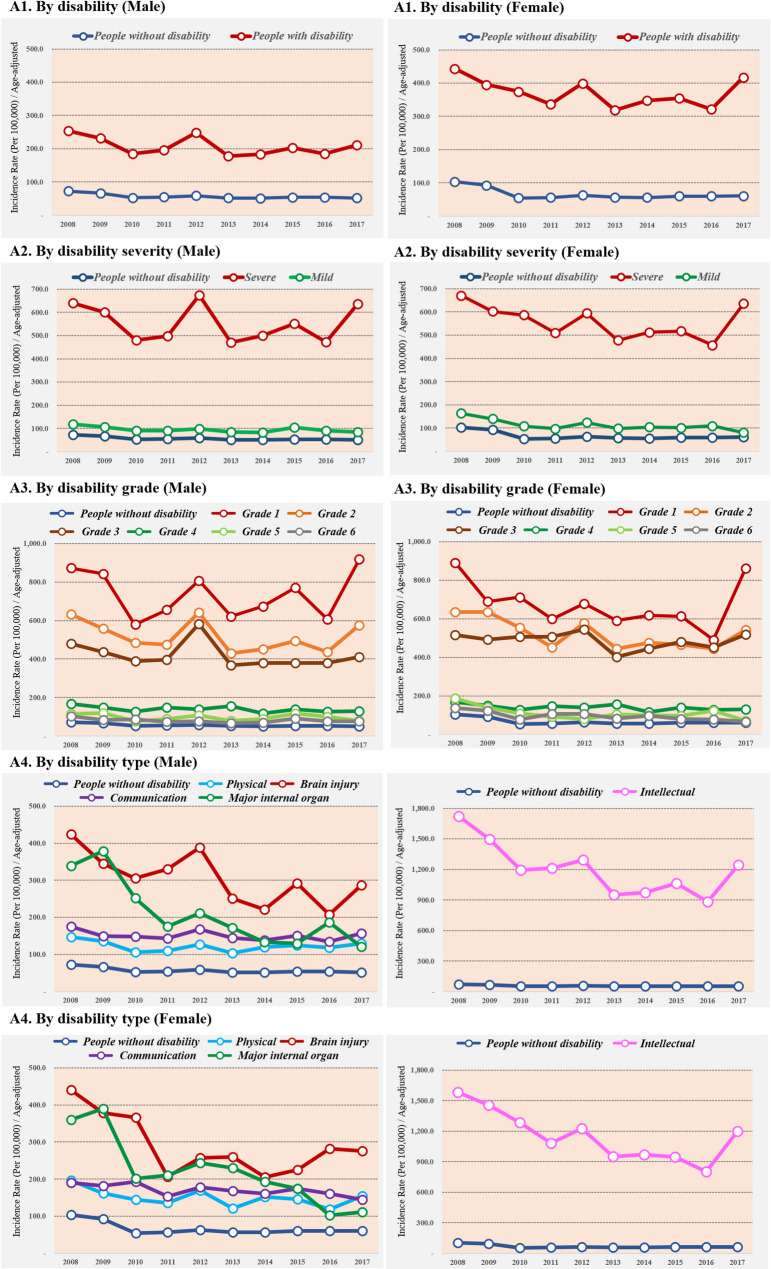 Figure 1
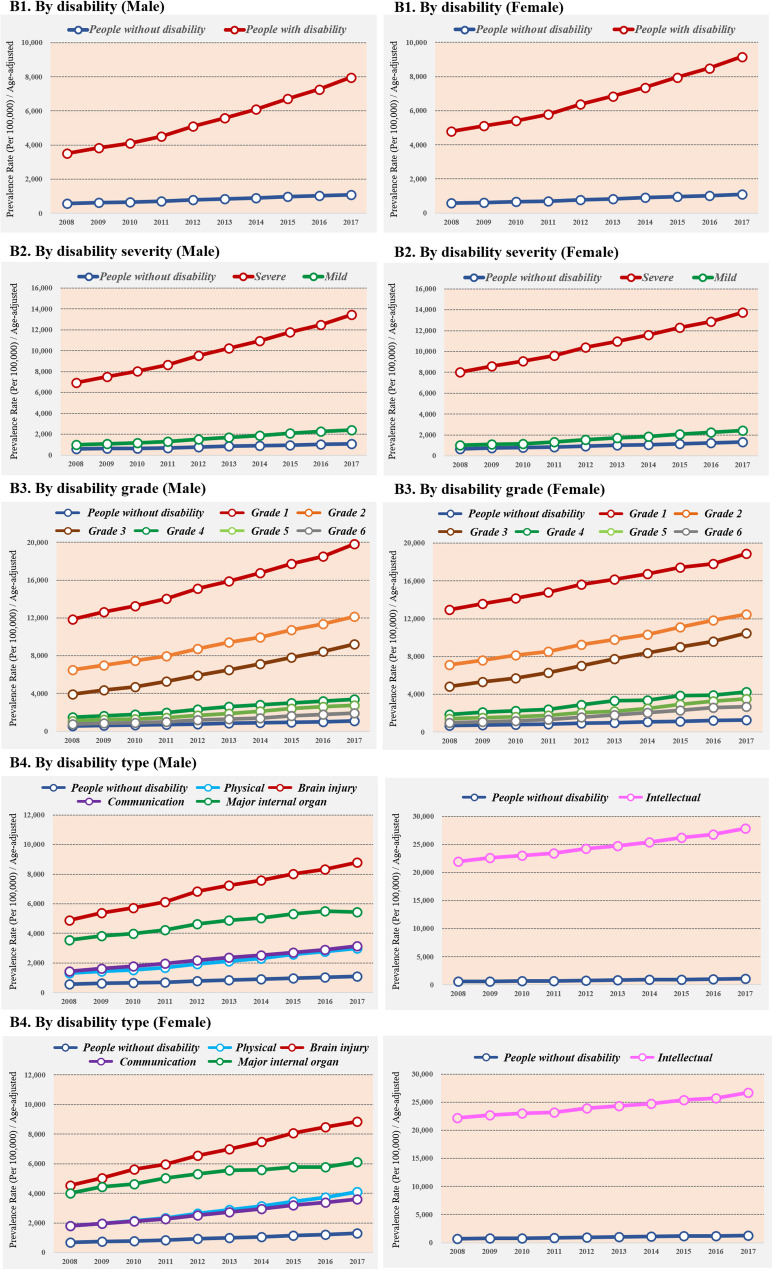 Figure 2
Peer Reviews
No public reviews on file for this paper yet. If you reviewed it on a platform where reviews are public (OpenReview, ICLR, NeurIPS, ICML), you can paste yours below so the community can read it here.
Videos
No videos yet. Explain this paper in a talk, walkthrough, or lecture? Add one.
Taxonomy
TopicsDown syndrome and intellectual disability research · Family and Disability Support Research · Schizophrenia research and treatment