Equity in initial health evaluation utilization among world trade center health program members enrolled during 2012–2022
Ruiling Liu, Michael O’Reilly, Sarah Rockhill, Lillian Fu, Kendra C. Smith, Emma Butturini, Albeliz Santiago-Colón, Rachael L. Shaw, Kevin Pressley, Geoffrey M. Calvert

TL;DR
This study examines how fairly initial health evaluations were used among participants in a healthcare program for 9/11 responders and survivors from 2012 to 2022.
Contribution
The study identifies disparities in health evaluation use based on age, gender, location, and language preferences, offering insights for improving equity.
Findings
Timely health evaluations increased for survivors from 16% in 2017 to 68% in 2021.
Younger members, rural residents, and non-English speakers had lower evaluation rates.
Non-Hispanic Black members had higher utilization compared to non-Hispanic White members.
Abstract
The World Trade Center (WTC) Health Program, a limited federal healthcare program, provides medical monitoring and treatment for WTC-related conditions to eligible Responders and Survivors of the 9/11 terrorist attacks. Free initial health evaluations (IHE) represent the first step towards the Program’s goal of providing equitable and timely member access to healthcare. This study aimed to evaluate equity in IHE utilization among Program members to inform the development of targeted interventions. This surveillance study used administrative and surveillance data collected from January 2012 through February 2024. It included Program members newly enrolled during 2012–2022 who completed an IHE or were alive for ≥ 1 year after enrollment. We conducted descriptive and multivariable logistic regression analyses. Outcomes of interest included timely IHE utilization (proportion of members…
Genes, proteins, chemicals, diseases, species, mutations and cell lines named across the full text — each resolved to its canonical identifier and authoritative record.
Click any figure to enlarge with its caption.
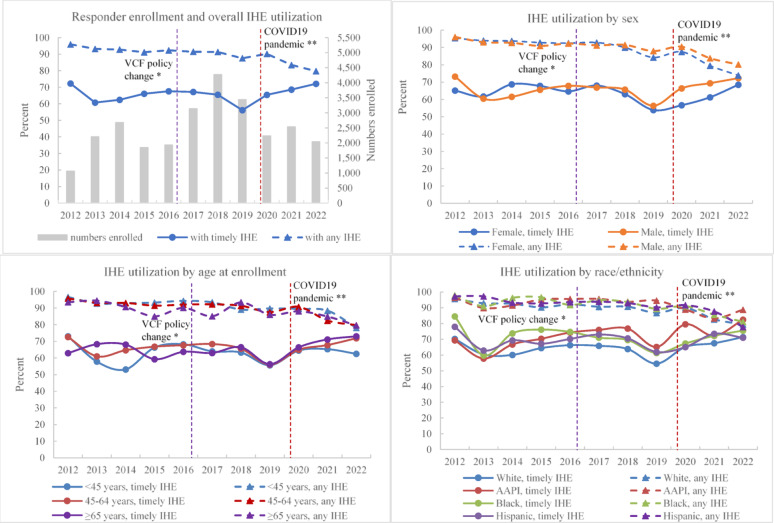 Figure 1
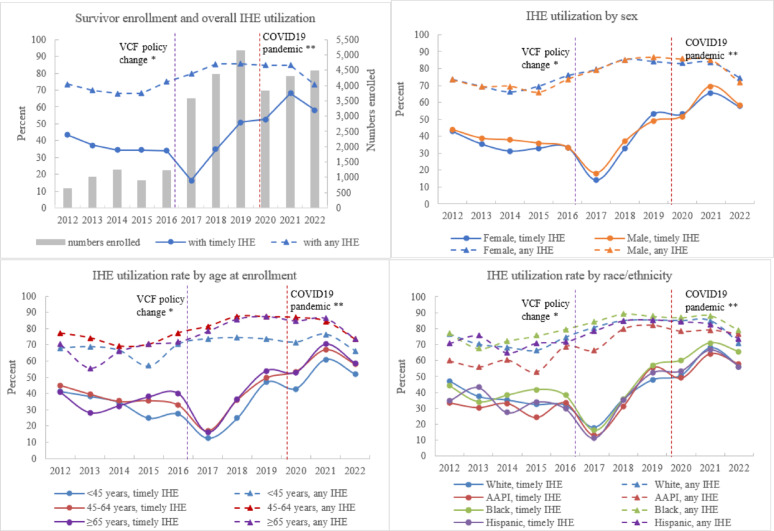 Figure 2
Peer Reviews
No public reviews on file for this paper yet. If you reviewed it on a platform where reviews are public (OpenReview, ICLR, NeurIPS, ICML), you can paste yours below so the community can read it here.
Videos
No videos yet. Explain this paper in a talk, walkthrough, or lecture? Add one.
Taxonomy
TopicsHealthcare Systems and Reforms · Global Public Health Policies and Epidemiology · Data-Driven Disease Surveillance