Integration of HiMoRNA and RNAChrom: Validation of the Functional Role of Long Non-coding RNAs in the Epigenetic Regulation of Human Genes Using RNA-Chromatin Interactome Data
I. S. Ilnitskiy, G. K. Ryabykh, D. A. Marakulina, A. A. Mironov, Yu. A. Medvedeva

TL;DR
This paper integrates two databases to better understand how long non-coding RNAs regulate gene expression through chromatin interactions.
Contribution
The novel integration of HiMoRNA and RNA-Chrom databases enables experimentally supported hypotheses on lncRNA-mediated epigenetic regulation.
Findings
Most HiMoRNA peaks for specific lncRNAs are within 25 kb of RNA-Chrom contacts.
RNA–chromatin contacts of MIR31HG and PVT1 lncRNAs were confirmed with histone modification marks at GLI2 and LATS2 genes.
The integration provides a platform to study lncRNA roles in histone modification regulation at individual and genome-wide levels.
Abstract
Long non-coding RNAs (lncRNAs) play a crucial role in the epigenetic regulation of gene expression by recruiting chromatin-modifying proteins to specific genomic loci. Two databases, previously developed by our groups, HiMoRNA and RNA-Chrom, provide valuable insights into this process. The former contains data on epigenetic modification regions (peaks) correlated with lncRNA expression, while the latter offers genome-wide RNA–chromatin interaction data for tens of thousands of RNAs. This study integrated the two resources to generate experimentally supported, interpretable hypotheses regarding lncRNA-mediated epigenetic gene expression regulation. We adapted the web interfaces of HiMoRNA and RNA-Chrom to enable the retrieval of chromatin contacts for each “lncRNA–pigenetic modification–ssociated gene” triad from HiMoRNA, either at specific genomic loci or genome-wide via RNA-Chrom. The…
Genes, proteins, chemicals, diseases, species, mutations and cell lines named across the full text — each resolved to its canonical identifier and authoritative record.
Click any figure to enlarge with its caption.
 Figure 1
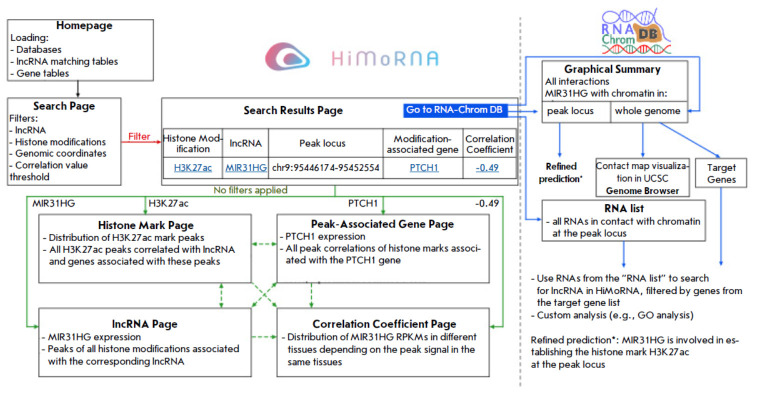 Figure 2
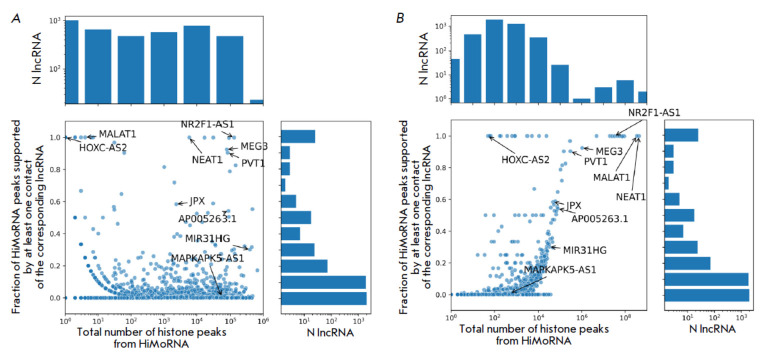 Figure 3
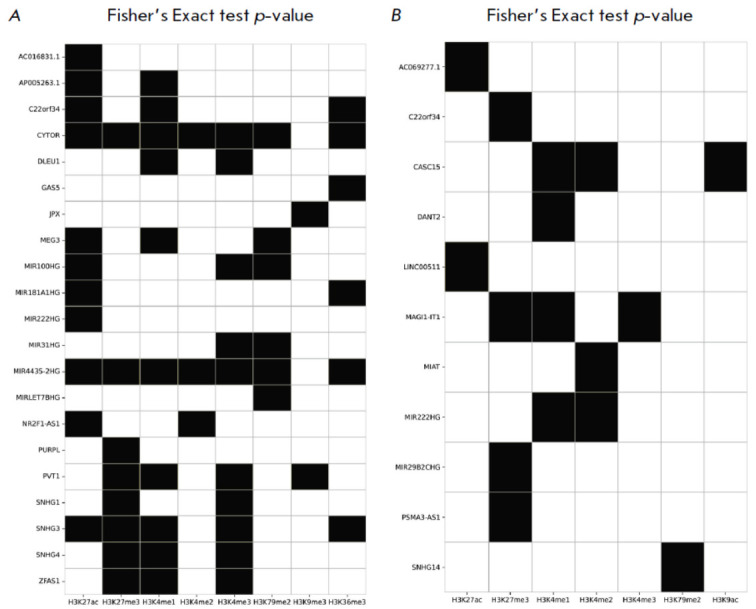 Figure 4
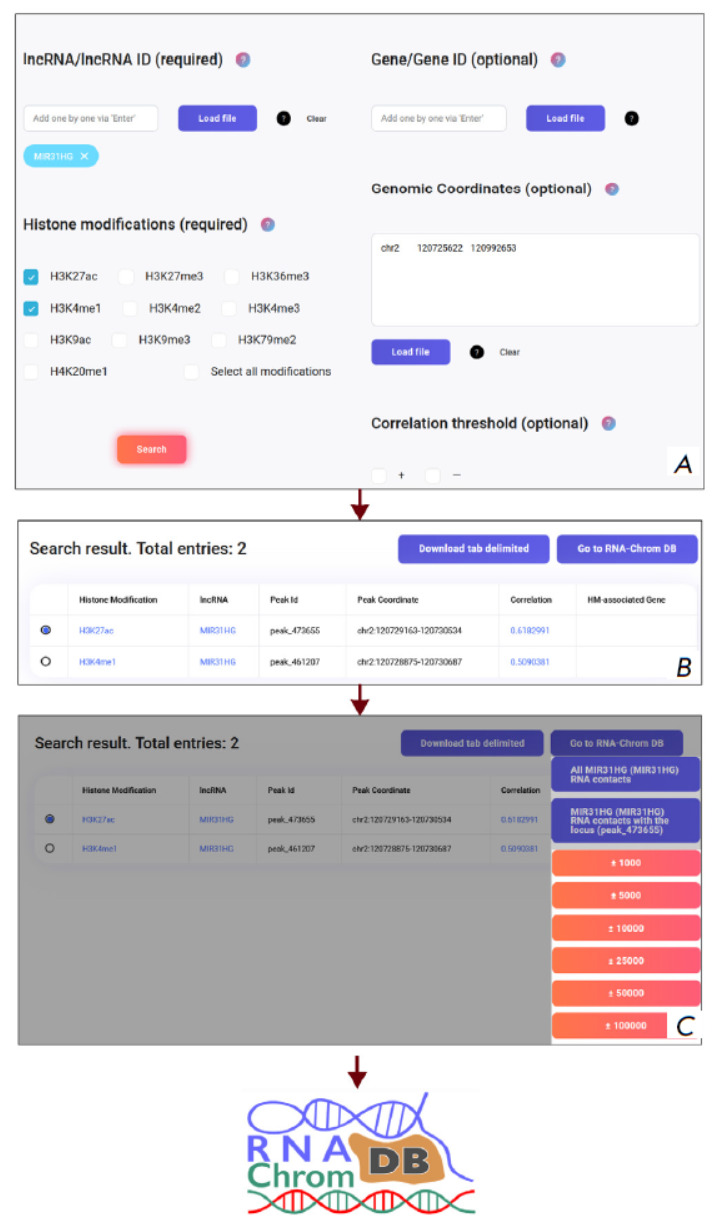 Figure 5
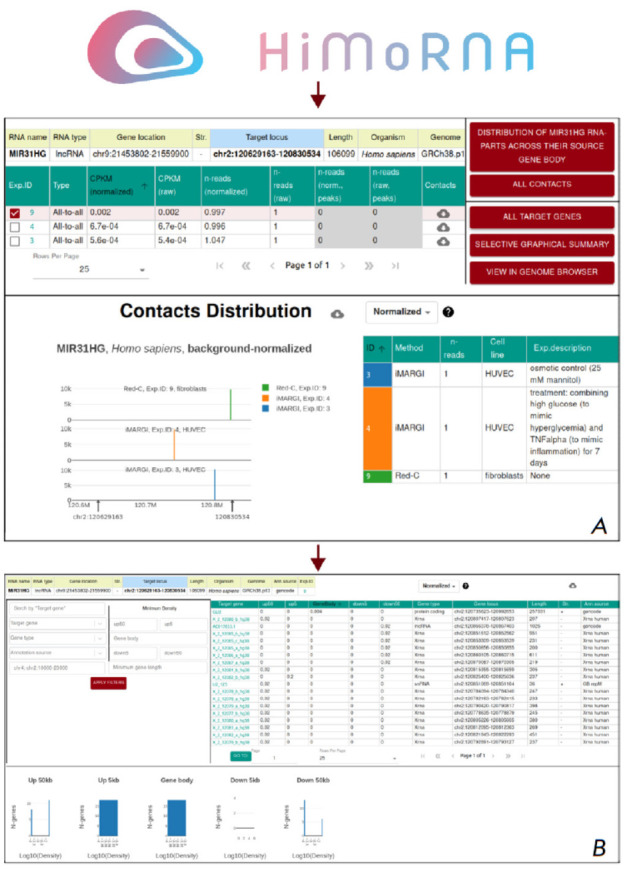 Figure 6
 Figure 7
Peer Reviews
No public reviews on file for this paper yet. If you reviewed it on a platform where reviews are public (OpenReview, ICLR, NeurIPS, ICML), you can paste yours below so the community can read it here.
Videos
No videos yet. Explain this paper in a talk, walkthrough, or lecture? Add one.
Taxonomy
TopicsCancer-related molecular mechanisms research · RNA modifications and cancer · RNA Research and Splicing