The Drosophila Zinc Finger Protein Aef1 Colocalizes with Enhancers and Is Involved in the Transcriptional Regulation of Numerous Genes
N. E. Vorobyeva, J. V. Nikolenko, A. N. Krasnov

TL;DR
This study shows that the Drosophila protein Aef1 is involved in regulating gene transcription by binding to enhancers and promoters.
Contribution
The study reveals that Aef1 is involved in transcriptional regulation at both promoters and enhancers in Drosophila.
Findings
Aef1 binding sites colocalize with SAGA, dSWI/SNF, and ORC complexes and are found in nucleosome-depleted regions.
Aef1 is associated with the H3K27Ac histone mark and CBP protein, indicating a role in enhancer activity.
RNA interference targeting Aef1 affects transcription of 342 genes, with 178 having Aef1 at their regulatory regions.
Abstract
In our previous studies, we demonstrated that the Drosophila zinc finger protein Aef1 interacts with the SAGA DUB module. The Aef1 binding sites colocalize with the SAGA histone acetyltransferase complex and the dSWI/SNF chromatin remodeling complex, as well as the origin recognition complex (ORC). Aef1 predominantly localizes with the promoters of active genes (55% of all sites) and can be involved in transcriptional regulation. In this study, we showed that Aef1 binding sites in Drosophila S2 cells, located outside gene promoters, are nucleosome-depleted regions and colocalize with the SAGA, dSWI/SNF, and ORC complexes. Aef1 binding sites colocalize with the CBP protein and the H3K27Ac histone tag, which is considered to be an active enhancer mark. An RNA-Seq experiment was conducted in Drosophila S2 cells, both normal and with RNA interference targeting the Aef1 protein, to study the…
Genes, proteins, chemicals, diseases, species, mutations and cell lines named across the full text — each resolved to its canonical identifier and authoritative record.
Click any figure to enlarge with its caption.
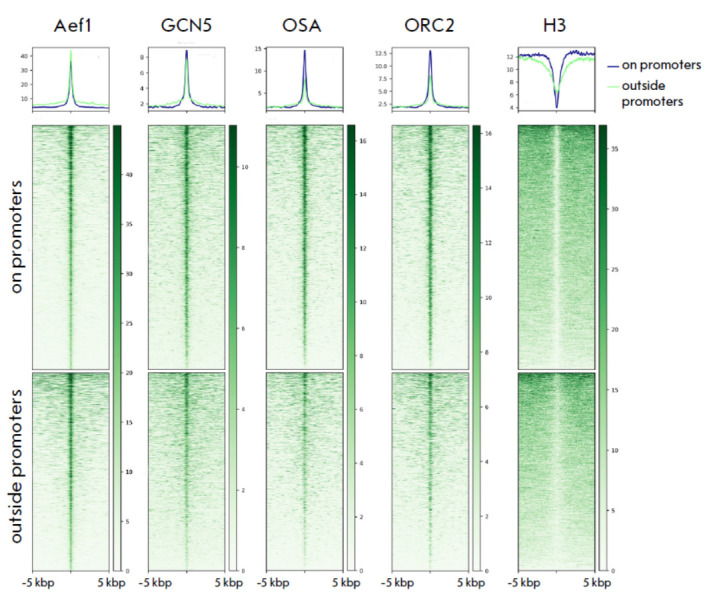 Figure 1
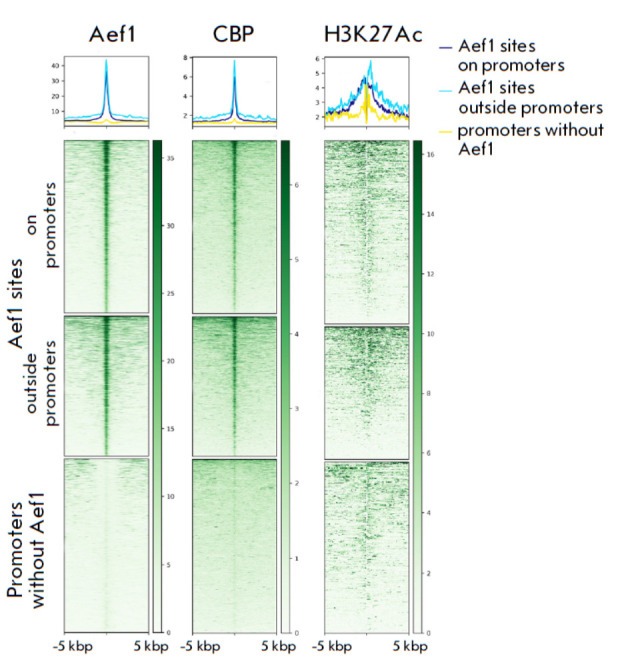 Figure 2
 Figure 3
Peer Reviews
No public reviews on file for this paper yet. If you reviewed it on a platform where reviews are public (OpenReview, ICLR, NeurIPS, ICML), you can paste yours below so the community can read it here.
Videos
No videos yet. Explain this paper in a talk, walkthrough, or lecture? Add one.
Taxonomy
TopicsGenomics and Chromatin Dynamics · RNA Research and Splicing · Genetic and Clinical Aspects of Sex Determination and Chromosomal Abnormalities