Monomeric α-Synuclein Real-Time Induced Conversion: A New Approach to the Diagnostics of Neurodegenerative Synucleinopathies with Weak RT-QuIC Responses
D. A. Orlova, A. A. Kudriaeva, N. A. Kolotyeva, E. O. Ivanova, E. Yu. Fedotova, P. P. Tregub, A. B. Salmina, S. N. Illarioshkin, A. A. Belogurov Jr.

TL;DR
A new diagnostic method for neurodegenerative diseases like Parkinson's uses purified α-synuclein to detect protein aggregates in body fluids, improving early diagnosis accuracy.
Contribution
A three-step purification protocol produces high-purity α-synuclein, enhancing RT-QuIC sensitivity for synucleinopathies with weak responses.
Findings
High-purity recombinant α-synuclein improves RT-QuIC sensitivity and specificity.
Extended incubation times enable detection of weak RT-QuIC responses in multiple-system atrophy subtypes.
Optimized RT-QuIC components allow accurate diagnosis of synucleinopathies.
Abstract
Neurodegenerative disorders classified as synucleinopathies (Parkinson’s disease, dementia with Lewy bodies, and multiple-system atrophy) are characterized by the accumulation of aberrant α-synuclein aggregates in neurons and glial cells. These diseases manifest clinically several years after the initial formation of pathological protein aggregates in the brain, making early and accurate diagnosis challenging. In recent years, a new method, which is based on real-time quaking-induced conversion (RT-QuIC) of α-synuclein, has been developed and validated. This technology holds great promise as a powerful diagnostic tool for the early and precise identification of synucleinopathies, potentially opening new horizons in the study of neurodegenerative diseases. RT-QuIC detects misfolded α-synuclein aggregates in human physiological fluids by introducing an excess of recombinant α-synuclein,…
Genes, proteins, chemicals, diseases, species, mutations and cell lines named across the full text — each resolved to its canonical identifier and authoritative record.
Click any figure to enlarge with its caption.
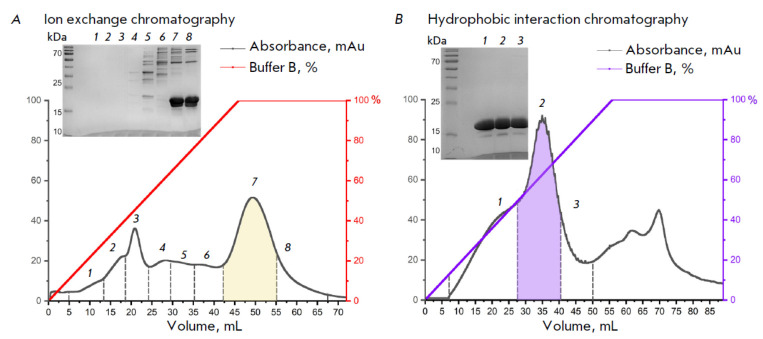 Figure 1
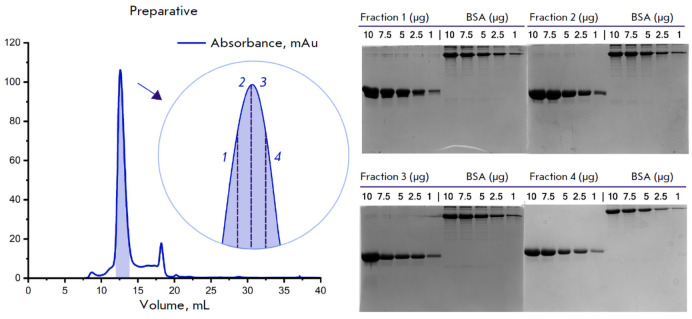 Figure 2
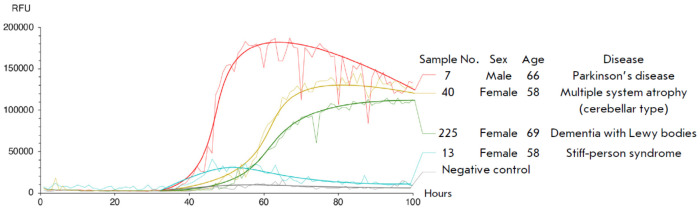 Figure 3
Peer Reviews
No public reviews on file for this paper yet. If you reviewed it on a platform where reviews are public (OpenReview, ICLR, NeurIPS, ICML), you can paste yours below so the community can read it here.
Videos
No videos yet. Explain this paper in a talk, walkthrough, or lecture? Add one.
Taxonomy
TopicsParkinson's Disease Mechanisms and Treatments · Neurological disorders and treatments · Neuroscience and Neuropharmacology Research