The Emergence of a Novel Insertional Mutation in the BCR::ABL/p210 Oncogene in B-Cell Acute Lymphoblastic Leukemia (B-ALL) Correlates with the Development of Resistance to Several Tyrosine Kinase Inhibitors
K. V. Bogdanov, E. S. Kudryavtseva, Y. N. Lobacheva, O. V. Merzlikina, Y. V. Mirolyubova, R. A. Vlasik, R. Sh. Badaev, E. G. Lomaia

TL;DR
A patient with B-cell acute lymphoblastic leukemia developed resistance to multiple drugs due to a new mutation in the BCR::ABL/p210 oncogene, which was eventually overcome through targeted therapies and a stem cell transplant.
Contribution
The study reports the emergence of a novel nine-nucleotide insertion in the BCR::ABL/p210 oncogene associated with drug resistance in B-ALL.
Findings
A new nine-nucleotide insertion in the BCR::ABL/p210 oncogene was identified in a relapsed B-ALL patient.
The insertion mutation persisted through several therapies but was eliminated with ponatinib and blinatumomab.
Allogeneic stem cell transplantation led to complete remission and molecular response.
Abstract
A patient with an immunophenotype characteristic of B-cell acute lymphoblastic leukemia (B-ALL) was found to carry the chromosomal translocation t(9;22)(q34;q11), or Philadelphia (Ph) chromosome and less common variant of the chimeric oncogene BCR::ABL/p210. No additional mutations in the BCR::ABL gene, including point mutations, insertions, or deletions, were identified in the disease onset characterized by elevated blast cell (77.6%) and leukocyte (48×109/L) counts. Ph+ALL-2012m chemotherapy with imatinib (600 mg) and two consolidation phases resulted in complete hematologic remission and a profound molecular response. However, six months later, the patient had relapsed (blasts: 15%, BCR::ABL/p210: 105%). Three weeks after the initiation of dasatinib therapy (100 mg), the number of blasts had decreased to 4.8%, while the expression level of BCR::ABL/p210 had dropped to 11.8%. Sanger…
Genes, proteins, chemicals, diseases, species, mutations and cell lines named across the full text — each resolved to its canonical identifier and authoritative record.
Click any figure to enlarge with its caption.
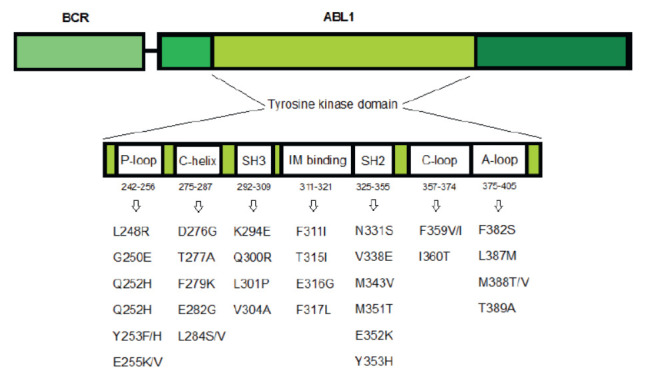 Figure 1
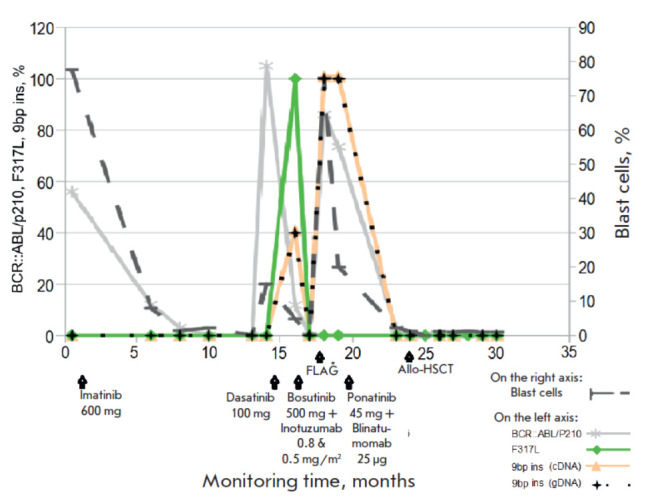 Figure 2
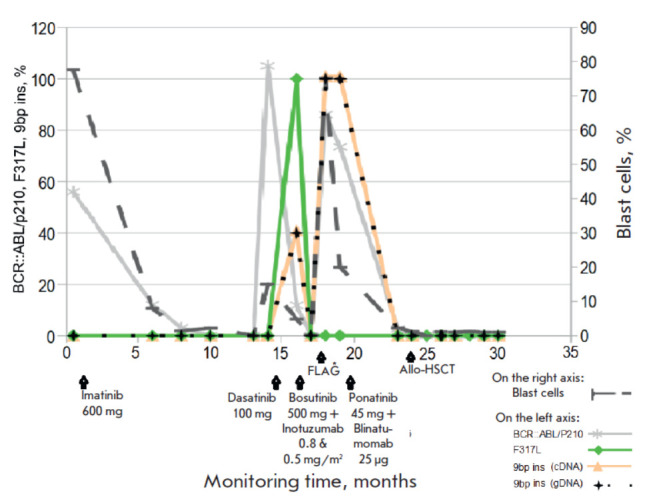 Figure 3
Peer Reviews
No public reviews on file for this paper yet. If you reviewed it on a platform where reviews are public (OpenReview, ICLR, NeurIPS, ICML), you can paste yours below so the community can read it here.
Videos
No videos yet. Explain this paper in a talk, walkthrough, or lecture? Add one.
Taxonomy
TopicsChronic Myeloid Leukemia Treatments · Eosinophilic Disorders and Syndromes · Myeloproliferative Neoplasms: Diagnosis and Treatment