Generation of Regulatory T Cells From Human Memory CD4+T Cells by Upregulation of Naked Cuticle Homolog 2
Jiajun He, Kristy Ou, Michael Schmueck‐Henneresse, Edgar Specker, Jérôme Paul, Marc Nazare, Jens Peter von Kries, Julia K. Polansky, Alf Hamann, Stefan Frischbutter

TL;DR
A new compound converts memory T cells into regulatory T cells, offering a potential treatment for allergies and autoimmune diseases.
Contribution
A novel quinoxaline derivative (IFA005) is identified to induce regulatory T cells by inhibiting the Wnt/β-catenin pathway.
Findings
IFA005 converts human memory CD4+T cells into Foxp3-expressing regulatory T cells.
IFA005 suppresses Th2 cytokines and promotes iTreg phenotype via Wnt/β-catenin inhibition.
Upregulation of naked cuticle homolog 2 (NKD2) is a key mechanism in this conversion.
Abstract
Regulatory T cells are indispensable for immune homeostasis and tolerance to self‐antigens and allergens. The imbalance between immune responses and tolerance causes allergic and autoimmune diseases. A promising therapeutic strategy is to support immune tolerance by converting conventional T cells into suppressive regulatory T cells with small molecular weight compounds, an area that is underexplored. Here, we report the identification, characterization, and validation of a novel quinoxaline derivative (IFA005) that converts human memory CD4+T cells into suppressive Foxp3‐expressing Tregs in vitro. Mechanistically, IFA005 regulated the expression of naked cuticle homolog 2 and impaired the phosphorylation of glycogen synthase kinase‐3β, which led to the degradation of β‐catenin and thus blocked the Wnt‐β‐catenin pathway. Our findings indicate that IFA005 could be a promising candidate…
Genes, proteins, chemicals, diseases, species, mutations and cell lines named across the full text — each resolved to its canonical identifier and authoritative record.
Click any figure to enlarge with its caption.
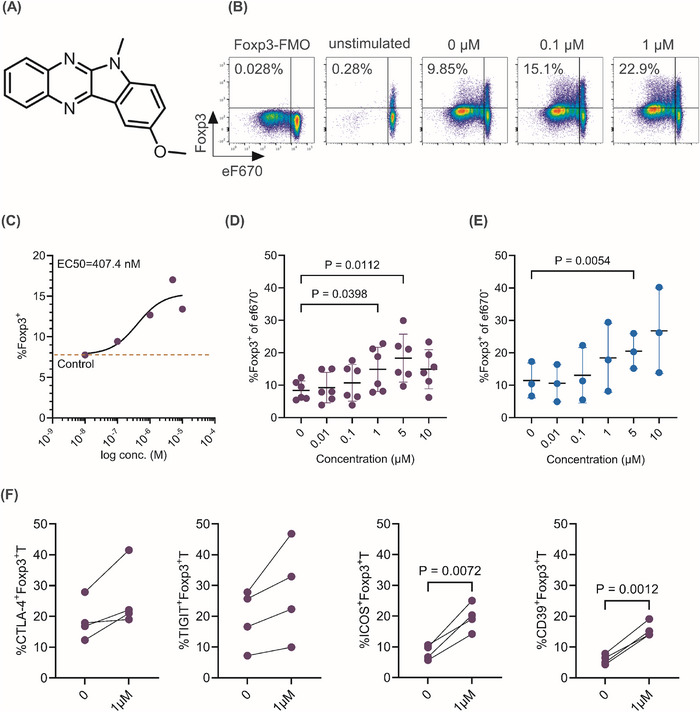 Figure 1
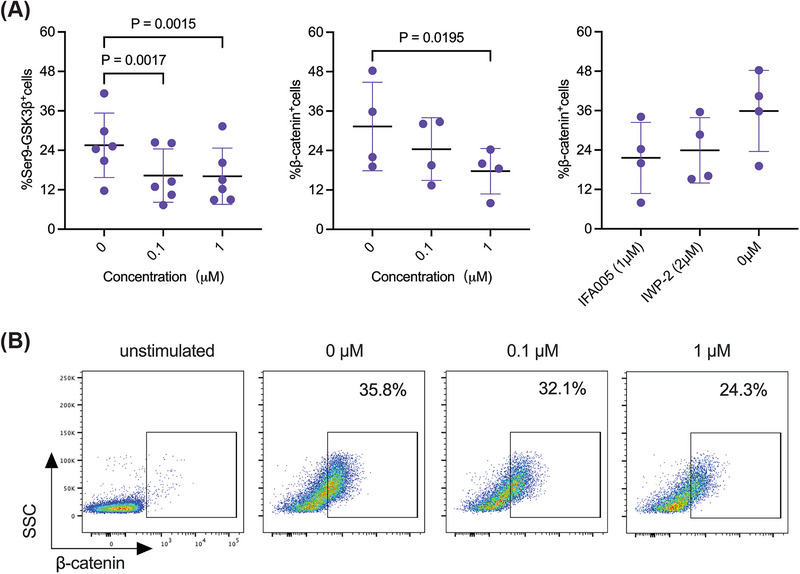 Figure 2
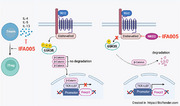 Figure 3
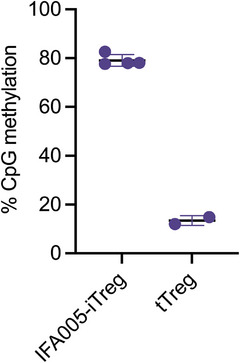 Figure 4
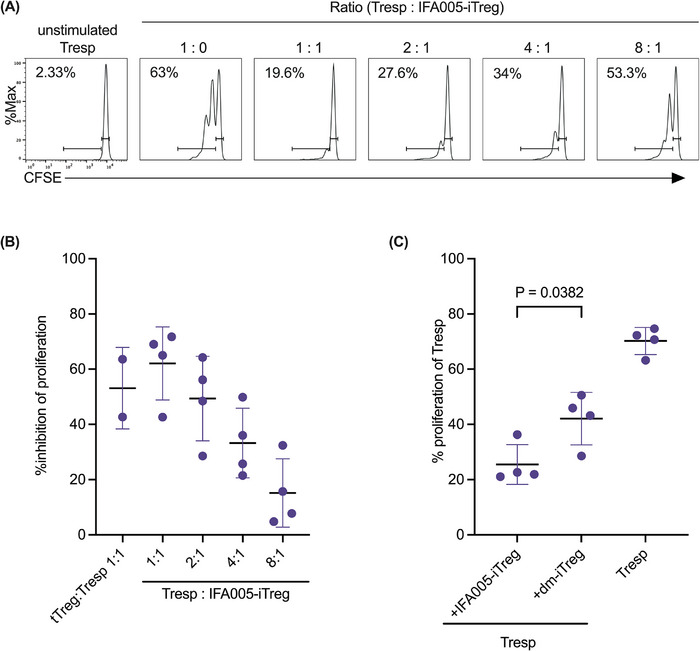 Figure 5
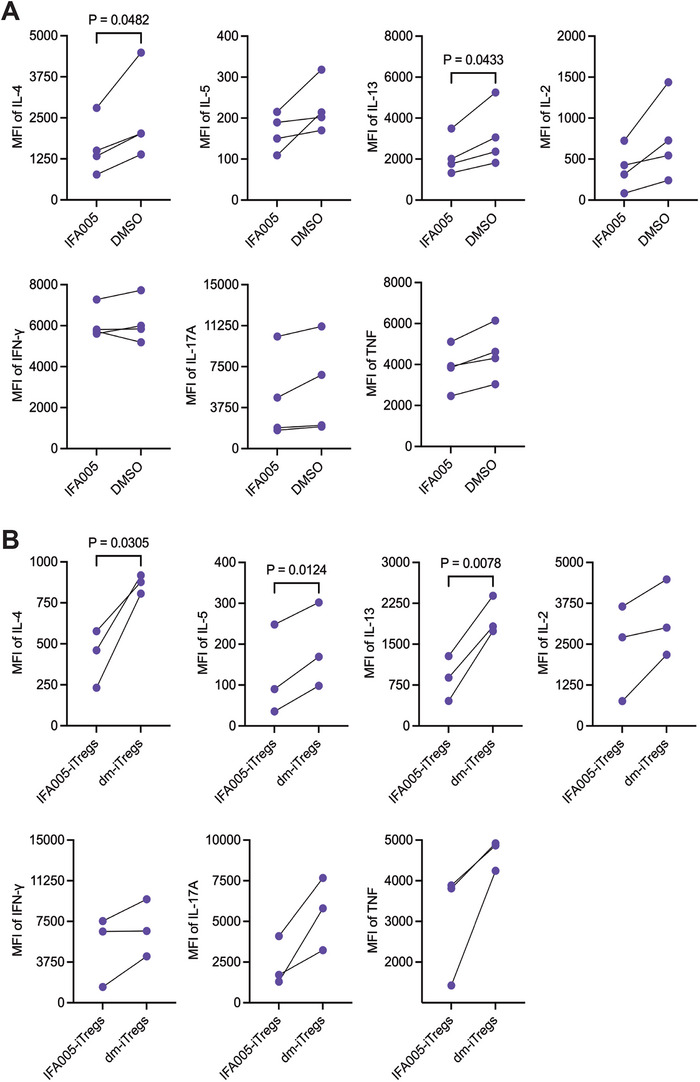 Figure 6
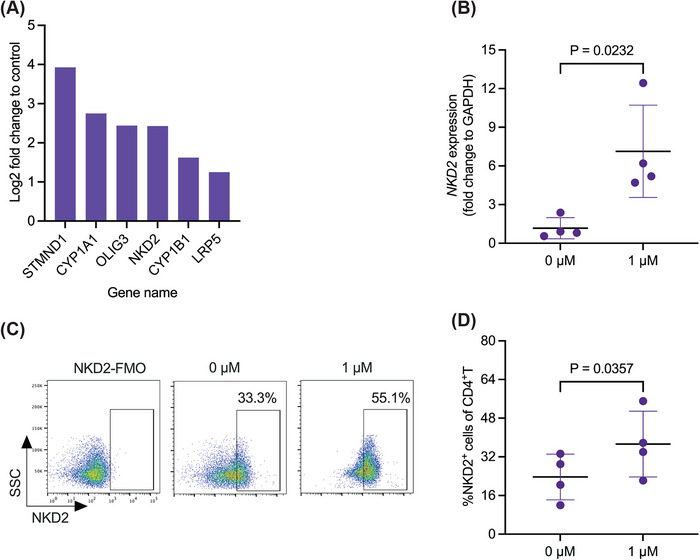 Figure 7
Peer Reviews
No public reviews on file for this paper yet. If you reviewed it on a platform where reviews are public (OpenReview, ICLR, NeurIPS, ICML), you can paste yours below so the community can read it here.
Videos
No videos yet. Explain this paper in a talk, walkthrough, or lecture? Add one.
Taxonomy
TopicsImmune Cell Function and Interaction · T-cell and B-cell Immunology · CAR-T cell therapy research