Neutrophil Heterogeneity Identifies an Association of LAMP1 With Proliferative Lupus Nephritis
Lennard Ostendorf, Panagiotis Garantziotis, Frank Y. Huang, Georg Schett, James A. Lederer, Andrea Fava, Deepak A. Rao, Ricardo Grieshaber‐Bouyer

TL;DR
Researchers found that LAMP1, a protein on activated neutrophils, is elevated in lupus patients and could serve as a noninvasive biomarker for severe kidney disease in lupus.
Contribution
The study identifies LAMP1 as a novel marker of neutrophil activation and potential biomarker for proliferative lupus nephritis.
Findings
LAMP1 is expressed on the surface of activated neutrophils in lupus patients but not in healthy controls.
Serum and urinary LAMP1 levels are significantly higher in lupus patients, especially those with proliferative lupus nephritis.
Urinary LAMP1 correlates with disease severity markers like proteinuria and glomerular filtration rate.
Abstract
Lupus nephritis (LN) is a severe manifestation of systemic lupus erythematosus (SLE) with limited biomarkers for early detection. While neutrophils contribute to SLE pathogenesis, their phenotypic heterogeneity in disease remains poorly characterized. Here, we used mass cytometry to profile blood neutrophils from patients with biopsy‐confirmed proliferative LN and healthy controls. We identified a distinct population of activated neutrophils, marked by surface expression of lysosomal‐associated membrane protein 1 (LAMP1/CD107a), that was virtually absent in healthy individuals. We demonstrate that LAMP1 resides intracellularly in resting neutrophils and translocates to the cell surface upon activation. Transcriptomic analysis revealed no difference in LAMP1 mRNA expression between patients with SLE and controls, confirming that surface LAMP1 reflects neutrophil activation rather than…
Genes, proteins, chemicals, diseases, species, mutations and cell lines named across the full text — each resolved to its canonical identifier and authoritative record.
Click any figure to enlarge with its caption.
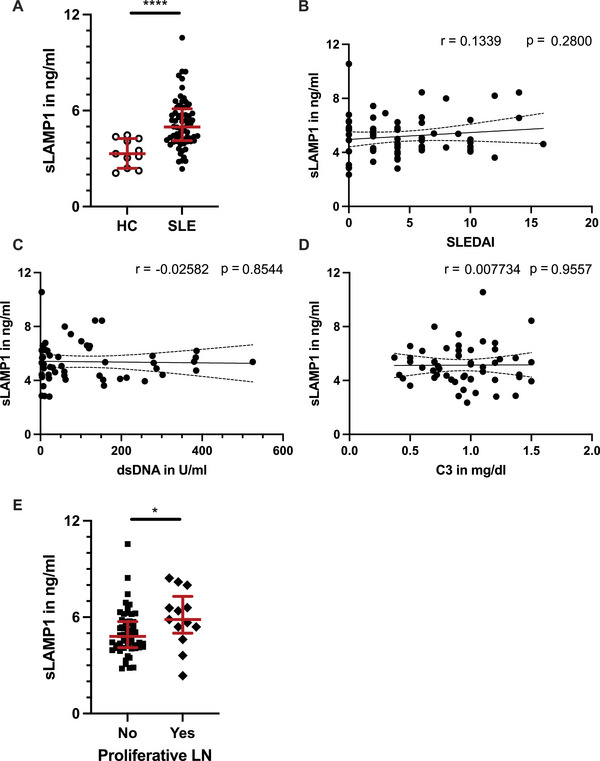 Figure 1
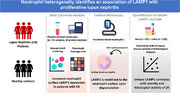 Figure 2
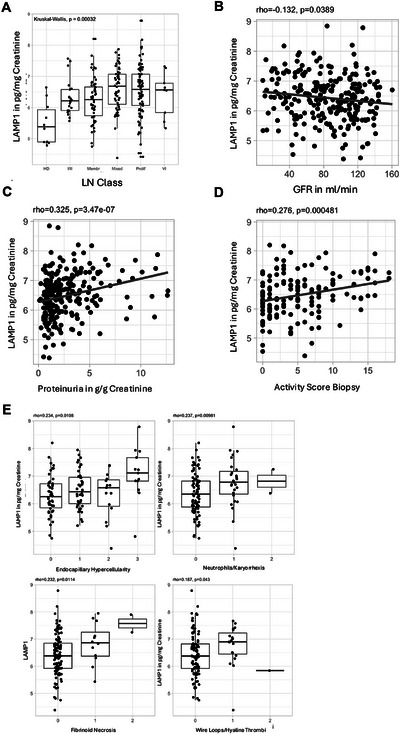 Figure 3
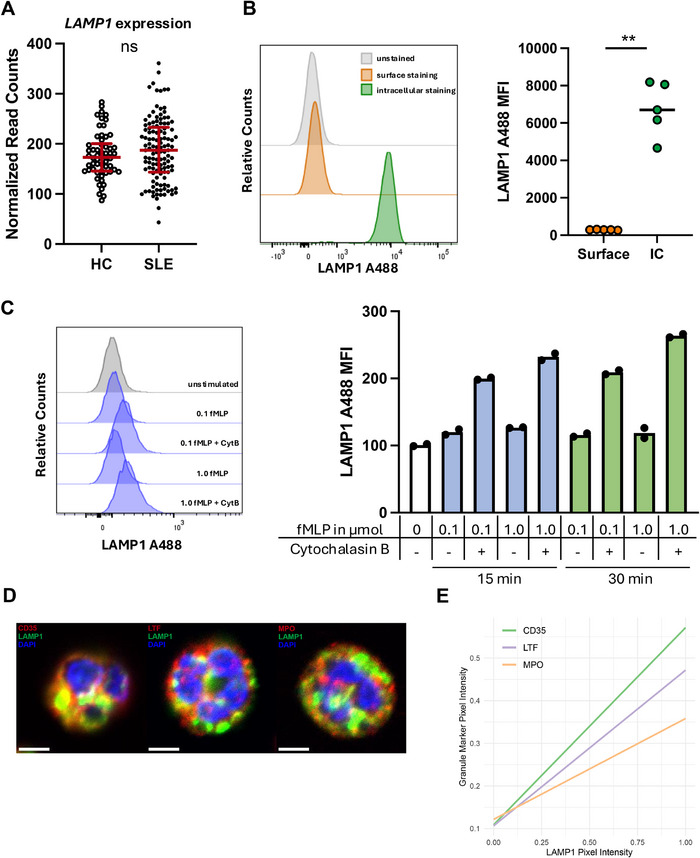 Figure 4
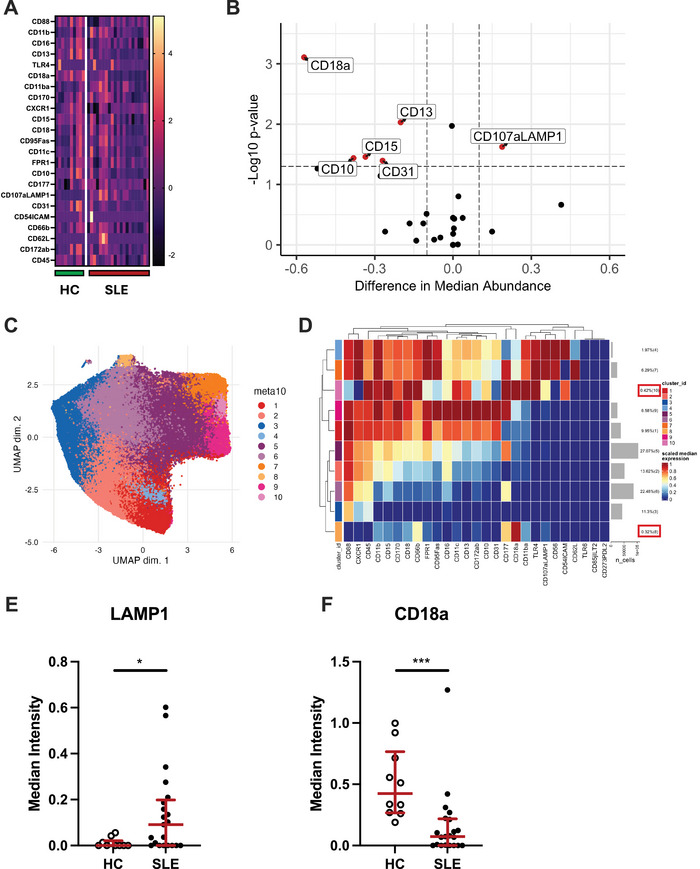 Figure 5
Peer Reviews
No public reviews on file for this paper yet. If you reviewed it on a platform where reviews are public (OpenReview, ICLR, NeurIPS, ICML), you can paste yours below so the community can read it here.
Videos
No videos yet. Explain this paper in a talk, walkthrough, or lecture? Add one.
Taxonomy
TopicsNeutrophil, Myeloperoxidase and Oxidative Mechanisms · Cell Adhesion Molecules Research · Atherosclerosis and Cardiovascular Diseases