Antimicrobial sales profile in Brazil from 2014 to 2021: analysis of records from the National System of Controlled Products Management
Jakeline Ribeiro Barbosa, Giovanny Vinícius Araújo de França, Aurélio Matos Andrade, Beatriz Torres Araújo, Cláudio Maierovitch Pessanha Henriques, Mariana Pastorello Verotti, Jakeline Ribeiro Barbosa, Giovanny Vinícius Araújo de França, Aurélio Matos Andrade

TL;DR
This study analyzed antimicrobial sales in Brazil from 2014 to 2021, revealing regional, gender, and age-based trends and the impact of the pandemic.
Contribution
The study provides a detailed analysis of antimicrobial sales patterns in Brazil using national regulatory data.
Findings
Antimicrobial sales increased until 2019, dropped during the 2020 pandemic, and rose again in 2021.
The Southeast and Northeast regions had the highest sales, with women aged 30–44.9 and those over 60 showing higher usage.
Amoxicillin, azithromycin, ciprofloxacin, and cephalexin were the top-selling antimicrobials.
Abstract
To analyze the antimicrobial dispensing profile in Brazil from 2014 to 2021 based on records from the Brazilian National System of Controlled Products Management (SNGPC) of the Brazilian Health Regulatory Agency (Anvisa). A descriptive, time-series ecological study was carried out using data from private pharmacies and drugstores on the sale of antimicrobial drugs. Drugs sold from January 2014 to November 2021 were included, with analysis of the variables of month, year, municipality, state, active ingredient, prescriber’s professional council, and patient’s sex and age. During the study period, 532,518,866 sales of special control drugs were recorded in SNGPC, 66.8% of which were antimicrobials. There was an increase in sales up to 2019, with a decrease in 2020, during the COVID-19 pandemic, and a new increase in 2021. The Southeast and Northeast regions concentrated the highest…
Genes, proteins, chemicals, diseases, species, mutations and cell lines named across the full text — each resolved to its canonical identifier and authoritative record.
Click any figure to enlarge with its caption.
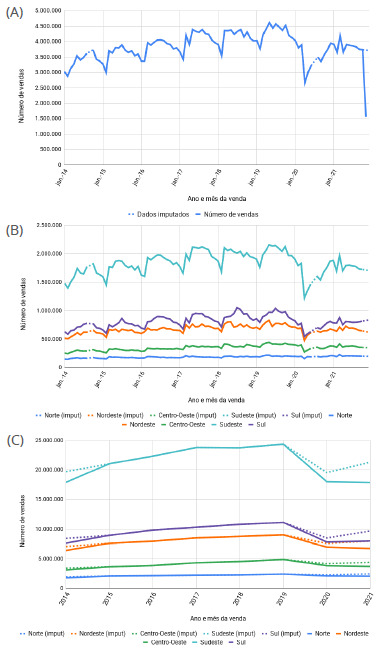 Figure 1
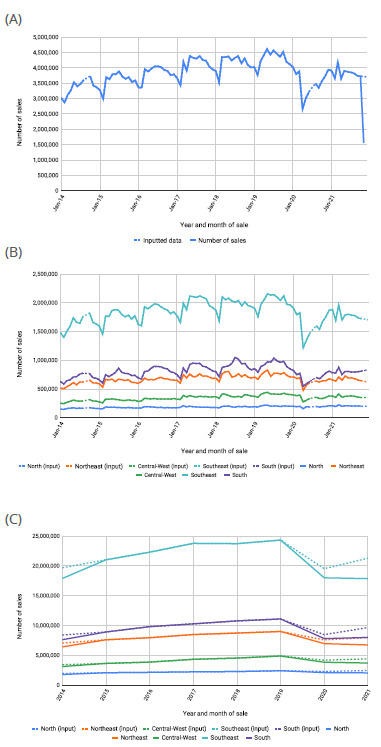 Figure 2
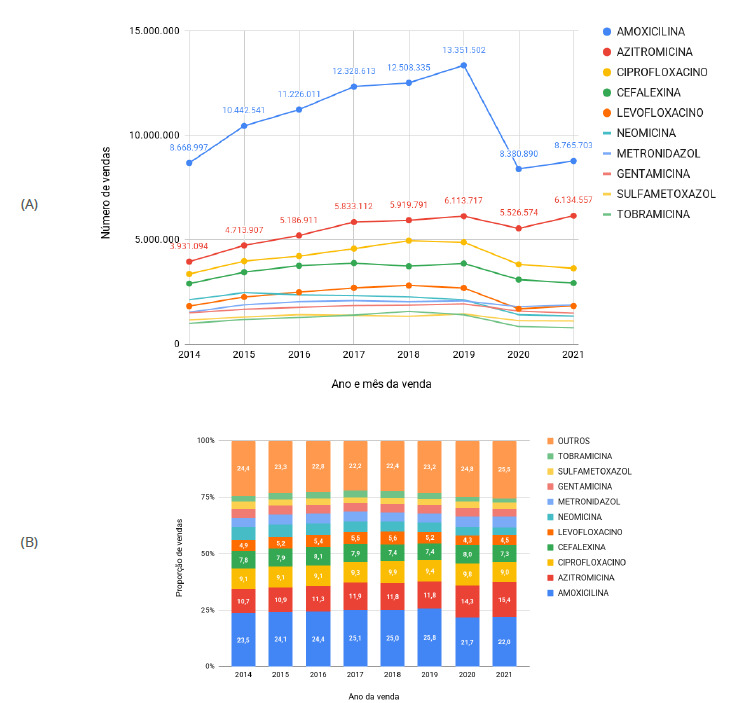 Figure 3
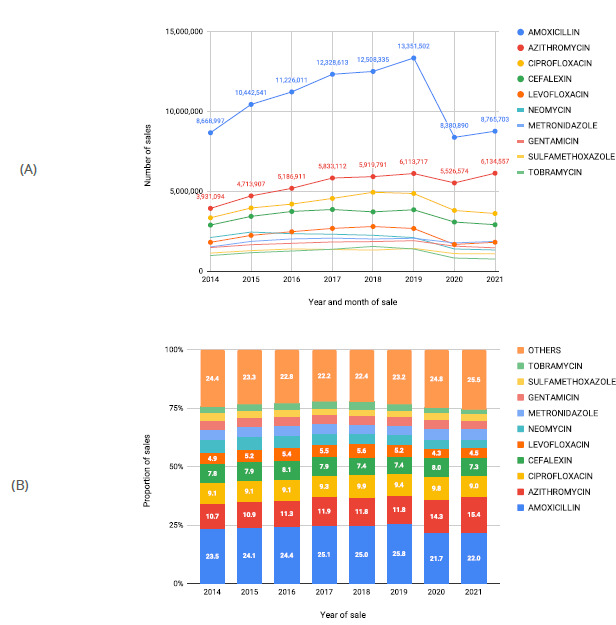 Figure 4
- —National Council for Scientific and Technological Development (CNPq)/Brasília Regional Office/Oswaldo Cruz Foundation
Peer Reviews
No public reviews on file for this paper yet. If you reviewed it on a platform where reviews are public (OpenReview, ICLR, NeurIPS, ICML), you can paste yours below so the community can read it here.
Videos
No videos yet. Explain this paper in a talk, walkthrough, or lecture? Add one.
Taxonomy
TopicsAntibiotic Use and Resistance · Public Health in Brazil · Healthcare Regulation
INTRODUCTION
The use of antimicrobials is a milestone in the history of medicine, providing effective treatment for a wide range of infections, especially bacterial infections, which were previously the most common causes of morbidity and mortality1 ^,^ 2 ^,^ 3. However, the alarming growth of antimicrobial resistance (AMR) currently represents one of the greatest threats to global health. AMR not only limits available therapeutic options, but also increases health care costs and increases the burden of disease worldwide4 ^,^ 5. The situation regarding antimicrobial consumption varies significantly around the world, reflecting differences in prescribing practices, access to medicines and health policies6 ^,^ 7. In developing countries, such as Brazil, the issue is particularly complex because of socioeconomic and structural inequality, in addition to specific challenges related to the implementation of policies for the rational use of antimicrobials8 ^,^ 9.
In the Brazilian context, AMR has become a growing concern10 ^,^ 11 ^,^ 12. Epidemiological studies have shown worrisom levels of bacteria resistant to commonly used antimicrobials, such as penicillins and cephalosporins, both in hospital settings and in the community, compromising the effectiveness of treatments, increasing the severity of infections and the duration of the disease, as well as increasing health care costs9 ^,^ 12 ^,^ 13. The spread of AMR in health care facilities, such as hospitals and clinics, as well as in communities, highlights the urgent need for coordinated strategies to control and mitigate this public health problem11 ^,^ 14.
Accordingly, as of 2011, the Brazilian Health Regulatory Agency (Anvisa) established the control of antimicrobial-based drugs, and in 2014, their registration became mandatory in the National System of Controlled Products Management (SNGPC), as it was already for drugs subject to special control. SNGPC was established to monitor and regulate the dispensing of medicines, including antimicrobials, in private pharmacies and drugstores throughout Brazil15 ^,^ 16.
Over the years, SNGPC has played a crucial role in regulating and monitoring the dispensing of antimicrobials in the country. Since its implementation, SNGPC has provided a powerful infrastructure for collecting and analyzing data on the distribution and use of these drugs in pharmacies and drugstores throughout the country. This system enables a detailed assessment of prescribing and dispensing patterns, as well as the production of essential information for the development of evidence-based health policies17 ^,^ 18 ^,^ 19.
The analysis and monitoring of antimicrobial prescription and consumption habits in the country has improved the understanding of trends in inappropriate use, given that the National Drug Policy (PNM) is still in its infancy regarding the dispensing of antimicrobials in Brazil. This also interferes with public health policies aimed at promoting the rational use of these drugs, which contribute to regulatory decisions and educational actions on prescription use. The aim of the present study was to analyze the antimicrobial dispensing profile in Brazil during the period from 2014 to 2021.
METHODS
A descriptive, time-series ecological study was carried out on the basis of SNGPC databases, made publicly available by Anvisa through the Brazilian Open Data Portal (PBDA), at the electronic address: https://dados.gov.br/dados/organizacoes/visualizar/agencia-nacional-de-vigilancia-sanitaria-anvisa. The data for this study were obtained from SNGPC’s records of dispensing of industrialized medicines, referring to the class of antimicrobials, from private pharmacies and drugstores. The most recent update of the PBDA occurred on August 8, 2023, and the data are available under the Creative Commons Attribution license:
- File with system documentation and variable dictionary;
- Another 95 files in Comma-Separated Values (CSV) format, containing sales of manufactured medicines, month by month, from January 2014 to November 2021.
According to Collegiate Board Resolution (RDC) 586/2021, the deadlines for transmitting data on the sale of drugs subject to special control to the national SNGPC database were temporarily suspended, becoming optional as of October 5, 2021. As of December 23, 2022, access to the system was completely interrupted, with the justification that a technological solution would be implemented. Therefore, in the period considered for analysis, from January 1, 2024 to November 30, 2021, data for the months of September 2014 and July 2020 were not available.
The 95 files were individually extracted from the PBDA website, in “.csv” format and converted to “*.dta” format, to enable analysis using Stata^®^ version 12.0. In each file, records with the prescription type variable equal to “5 - Antimicrobial Prescription in 2 copies” were selected to maintain only antimicrobial sales. Subsequently, the files were grouped by year to optimize processing and analysis.
The following variables were considered: month and year of sale of the medication; city and federative unit of the address of the pharmacy or drugstore where the sale occurred; name of the active ingredient of the manufactured medication, as registered with Anvisa; professional association of the professional who prescribed the medication sold; federative unit of the professional association of the prescribing professional; patient’s sex (male or female); and patient’s age in months or years.
Regarding the missing data for the months of September 2014 and July 2020, the ipolate command of Stata^®^ was used, which considers the historical series and performs the imputation using linear interpolation to estimate the missing points, on the basis of the known points of the series. Considering that sending data to SNGPC became optional as of October 5, 2021, the same technique was used to impute values for the months of November 2021.
This study was carried out in accordance with Resolutions No. 466/2012 and 580/2018 of the National Health Council (CNS). This research is part of a larger project titled «Brazilian Scenario of Antimicrobial Use and the Resistance Profile Identified in SUS», which was approved by the Research Ethics Committee under CAAE 42456920.6.0000.8027 and funded by the National Council for Scientific and Technological Development (CNPq)/Regional Management of Brasília/Fiocruz (call for proposals 41/2018, Process No. 440206/2019-7).
Data Availability Statement
The data are available in: https://dados.gov.br/dados/conjuntos-dados/venda-de-medicamentos-controlados-e-antimicrobianos---medicamentos-industrializados.
RESULTS
From January 2014 to November 2021, 532,518,866 sales of special control and antimicrobial manufactured drugs were recorded in SNGPC. Of these, 355,683,685 had a prescription type equal to “5 - Antimicrobial Prescription in 2 copies”, corresponding to 66.8% of the total. Figure 1 shows the historical series of antimicrobial sales by year and month of sale, total (A) and stratified by region (B), as well as the series with the consolidated sales by year and region (C). In the graphs, it is possible to compare the raw data obtained in relation to the series considering the imputations made.
Figure 1.Number of sales of manufactured medicines containing an antimicrobial as an active ingredient, (A) by year/month of sale, (B) by year/month of sale and region and (C) by year of sale and region, comparing the series with observed values with the series including inputted values, Brazil, 2014 to 2021*.*Sales data for the months of September 2014 and July 2020 are not available.
A linear trend of growth in sales was observed over the years from 2014 to 2019 and apparent seasonality, with a notable increase in the middle of the year in the South and Southeast regions, during the winter, and a reduction in all regions at the beginning of each year. The aforementioned growth until 2019 was interrupted, with a sharp drop in 2020, the year in which the COVID-19 pandemic began. In November 2021, the imputed data suggests that the data observed in this period was significantly underestimated, with a slight drop expected in the months of November and December, following the trend of decreasing sales observed from June 2021 (Figure 1A).
The Southeast and Northeast regions stand out, as they concentrated most of the sales in the analyzed period, with the Southeast region ranking first, being consistently higher than the other regions throughout the series (Figure 1B and 1C). The ordering of sales volumes by geographic region corresponds directly to the order of number of inhabitants. Considering the data aggregated by year and by region, different patterns are noted in the series with and without imputed values, especially in the Southeast and Northeast regions. On the basis of imputation analyses, there was a sharp drop in sales in 2020 and a trend of significant increase in sales in 2021, which was not possible to identify through the raw data.
The Southeast and South regions showed high proportion of municipalities with sales records in SNGPC throughout the period, with little variability. The states of Espírito Santo and Rio de Janeiro reached 100% of municipalities with records in 2021; Rio de Janeiro had 100% coverage between 2015 and 2021. The Central-West region also showed high coverage, but with greater variability, going from 87.0% in 2014 to 95.0% in 2021. The states of Goiás, Mato Grosso do Sul and Mato Grosso had homogeneous coverage among themselves throughout the series (Table 1).
Table 1.Total number and percentage of municipalities in each federative unit (FU) that registered sales of antimicrobials in the National System of Management of Controlled Products (SNGPC), stratified by year, Brazil, 2014 to 2021.Region/FUTotal cities2014 2015 2016 2017 2018 2019 2020 2021 n%n%N%n%n%n%n%n%North45020044.419844.021547.822550.023251.625155.825256.027561.1Acre221881.81881.81777.31881.81777.31777.31777.31881.8Amapá16212.5212.5212.5850.0531.3531.3318.8425.0Amazonas621117.71016.11219.41117.71016.11524.21625.82032.3Pará1446847.26444.46545.16444.46645.87048.66847.27451.4Rondônia524688.54586.54790.44892.34994.25096.25198.15198.1Roraima15533.3640.0853.3960.01066.71066.71173.31386.7Tocantins1395036.05338.16446.06748.27554.08460.48661.99568.3Northeast1,7941,23368.71,28271.51,30973.01,34675.01,34875.11,37176.41,41178.71,43780.1Alagoas1026563.77371.67775.58179.48381.48785.38785.38886.3Bahia41730172.232477.734282.034883.535986.137088.737589.937589.9Ceará18414578.814478.314679.314981.014981.014679.315383.215684.8Maranhão21710749.310648.810347.511251.611151.211151.211452.511854.4Paraíba22317578.518783.918783.919687.919687.919788.320290.621094.2Pernambuco18515885.415583.815583.815985.915985.916287.616287.616187.0Piauí22410044.610245.59944.29743.38738.89140.610747.811149.6Rio Grande do Norte16713178.413882.614586.814888.614989.214989.214888.615291.0Sergipe755168.05370.75573.35674.75573.35877.36384.06688.0Southeast1,6681,54392.51,57194.21,58895.21,60095.91,60196.01,61196.61,61596.81,62197.2Espírito Santo787494.97494.97494.97596.27697.47798.778100.078100.0Minas Gerais85377691.079292.880494.381395.381996.082596.782596.782997.2Rio de Janeiro929198.992100.092100.092100.092100.092100.092100.092100.0São Paulo64560293.361395.061895.862096.161495.261795.762096.162296.4Central-West50143687.044789.245190.045490.646292.247093.847194.047695.0Federal District352160.02262.92262.92262.92262.92365.72674.32674.3Goiás24621888.622491.123093.523093.523394.723896.723796.323997.2Mato Grosso14112790.113293.612991.513192.913495.013595.713495.013897.9Mato Grosso do Sul797088.66987.37088.67189.97392.47493.77493.77392.4South1,1911,09992.31,11793.81,12494.41,14095.71,14095.71,14696.21,14696.21,15597.0Paraná39937393.537594.037894.738696.738496.238295.738295.738897.2Rio Grande do Sul49745491.346693.846693.846894.247094.647295.047495.447595.6Santa Catarina29527292.227693.628094.928696.928696.929299.029098.329299.0The Federal District (FD) is divided into administrative regions and not cities.
The North region had the lowest coverage, ranging from 44.4% in 2014 to 61.1% in 2021. The states with the fewest antimicrobial sales records in SNGPC were Amapá and Amazonas, where 25 and 32.3% of municipalities had sales records in 2021, respectively. The state of Roraima showed a significant increase in the number of municipalities with records, rising from 5 in 2014 to 13 in 2021 out of a total of 15 municipalities (Table 1).
Sales were higher for females in the period 2014-2021, with percentages ranging from 55.1% to 55.7%. The distribution of sales by patient age was predominant in the age group of 30 to 44.9 years, varying between 24.9% in 2014 and 28.2% in 2021. The category «60 years or older» showed growth in consumption over the years, going from 16.0% in 2014 to 19.9% in 2021, which corresponds approximately to the proportion of people in this age group in the population. The age group of people under 15 years old was the one that showed the sharpest decrease in prescriptions between 2019 and 2020, with a slight increase in 2021 compared to the previous year (Table 2).
Table 2.Number of sales of manufactured medicines containing an antimicrobial as an active ingredient by year of sale, according to the prescriber’s council and sex and age of the patient, Brazil, 2014 to 2021^!^.VariablesYear of sale20142015201620172018201920202021n (%)n (%)n (%)n (%)n (%)n (%)n (%)n (%)Patient’s sexMale16,263,873 (44.9)19,145,755 (45.0)20,266,780 (44.8)21,499,749 (44.6)21,838,691 (44.4)22,702,196 (44.7)16,719,276 (44.3)17,680,913 (45.4)Female19,967,350 (55.1)23,419,952 (55.0)25,021,209 (55.3)26,744,166 (55.4)27,313,786 (55.6)28,060,636 (55.3)21,044,771 (55.7)21,307,587 (54.7)Patient’s age (years)*<1 709,344 (2.0)854,255 (2.0)879,123 (2.0)886,564 (1.9)911,925 (1.9)900,690 (1.8)408,184 (1.1)442,932 (1.2)1 to 4.93,058,217 (8.5)3,494,539 (8.3)3,619,163 (8.1)3,795,684 (8.0)3,733,843 (7.7)3,835,213 (7.6)1,751,344 (4.7)1,848,141 (4.8)5 to 14.93,402,712 (9.5)3,894,502 (9.3)4,049,984 (9.1)4,386,178 (9.2)4,293,157 (8.8)4,379,506 (8.7)2,205,215 (5.9)2,142,629 (5.5)15 to 29.97,796,556 (21.8)9,002,458 (21.4)9,385,892 (21.0)9,753,613 (20.5)9,775,338 (20.1)9,808,803 (19.5)7,614,007 (20.4)7,448,333 (19.3)30 to 44.98,922,339 (24.9)10,388,808 (24.7)11,062,088 (24.7)11,787,197 (24.7)12,183,376 (25.1)12,685,148 (25.3)10,362,078 (27.8)10,884,012 (28.2)45 to 59.96,231,790 (17.4)7,418,734 (17.6)7,981,458 (17.8)8,519,424 (17.9)8,759,086 (18.0)9,126,173 (18.2)7,646,706 (20.5)8,182,464 (21.2)60+5,732,859 (16.0)7,029,558 (16.7)7,752,723 (17.3)8,532,576 (17.9)8,941,365 (18.4)9,460,669 (18.9)7,359,823 (19.7)7,698,928 (19.9)Prescriber’s councilCRM33,702,721 (91 5)39,339,662 (90.9)41,724,263 (90.6)44,310,145 (90.2)45,023,321 (90.0)46,671,793 (90.2)34,032,944 (87.9)34,953,230 (87.6)CRMV497,879 (1 4)602,224 (1.4)650,362 (1.4)701,737 (1.4)727,526 (1.5)766,791 (1.5)770,106 (2.0)780,056 (2.0)CRO2,495,885 (6 8)3,051,959 (7.1)3,336,078 (7.2)3,754,846 (7.7)3,938,117 (7.9)4,150,998 (8.0)3,742,077 (9.7)3,987,628 (10.0)RMS146,472 (0 4)286,608 (0.7)359,441 (0.8)339,350 (0.7)363,998 (0.7)129,990 (0.3)153,137 (0.4)192,341 (0.5) ^!^The variable “prescriber’s council” did not show missing values. *Sales data for the months of September 2014 and July 202 are not available. **Missing values for the patient’s sex ranged from 1.65% in 2015 to 2.41% in 2020. ***Missing values for patient’s age ranged from 2.68% in 2014 to 3.49% in 2020.
Prescribers from the medical category accredited by the Regional Council of Medicine (CRM) were responsible for the majority of sales, representing between 87.6 and 91.5% in 2014 and 2021, respectively. Dentists, registered with the Regional Council of Dentistry (CRO), appear in smaller proportions, between 6.8 and 10% in 2014 and 2021, followed, in decreasing order, by veterinarians registered with the Regional Council of Veterinary Medicine (CRMV) and doctors registered with the Ministry of Health (RMS) (Table 2).
The top ten active ingredients registered with SNGPC were in decreasing order: amoxicillin (85,672,592 sales), azithromycin (43,359,663), ciprofloxacin (33,272,063), cephalexin (27,463,286), levofloxacin (18,149,559), neomycin (16,279,510), metronidazole (15,176,847), gentamicin (13,492,715), sulfamethoxazole (10,103,194) and tobramycin (9,287,485). Together, these active ingredients account for 76.5% of total sales from 2014 to 2021. Amoxicillin was the best-selling active ingredient (24.1% of the total), with a growth trend from 2014 to 2019 (from 23.5 to 25.8%), followed by a reduction in 2020 (21.7%). Azithromycin, the second best-selling active ingredient, showed a modest increase between 2014 and 2019 (from 10.7 to 11.8%), with a sharper increase from 2020 (14.3%) to 2021 (15.4%), compared to previous years. An increase of more than 600 thousand sales of medicines containing azithromycin was observed in 2021 compared to 2020 (Figure 2A and 2B).
Figure 2.Sales of manufactured medicines containing an antimicrobial as an active ingredient, as recorded in the National System for the Management of Controlled Products (SNGPC), regarding the (A) number and (B) proportion represented by the ten main active ingredients sold, by year of sale, Brazil, 2014 to 2021*.Note: Missing data for the months of September/2014 and July/2020.
DISCUSSION
The data analyzed in this study represent the scenario of antimicrobial sales recorded in SNGPC, during the period from 2014 to 2021 in Brazil, and their variations over time and between the different regions of the country. The importance of a comprehensive analysis that incorporates both observed and imputed data is emphasized, allowing a better understanding of sales trends and their implications for public health. This integrated approach is essential for the development of applicable policies that respond to changes in market behavior and emerging health needs.
A growing pattern in antimicrobial sales was observed in the period from 2014 to 2019, followed by a decrease in 2020, a trend similar to that observed in national and international literature, especially in low- and middle-income countries8 ^,^ 18 ^,^ 19 ^,^ 20. The most widely dispensed antibiotics in Brazil were amoxicillin, azithromycin, ciprofloxacin, and cephalexin. This consumption profile can be attributed to several factors, including the widespread prescription of these drugs for respiratory infections and common bacterial diseases such as pharyngitis, ear infections and urinary tract infections. Amoxicillin, for example, is frequently used for its safety and efficacy profile against a variety of pathogens, making it a popular choice among health care professionals6 ^,^ 9.
It is worth noting that 2020 was markedly affected by the COVID-19 pandemic. Previous studies have shown that the pandemic led to a reduction in sales of some categories of medicines, whether due to difficulties in accessing health services, interruption of production of the active ingredient, difficulties in transporting inputs due to restrictions imposed because of the pandemic and underreporting of sales in the system, or other factors17 ^,^ 19 ^,^ 21 ^,^ 22.
On the other hand, during the COVID-19 pandemic, there was a significant increase in the dispensing of azithromycin in Brazil, driven by the use of the “COVID-kit”, which included drugs such as azithromycin, chloroquine and ivermectin. The indiscriminate use of these drugs compromised the rational use of antimicrobials, favoring the development of AMR and the emergence of resistant strains. In addition, the lack of robust scientific evidence on their efficacy against the SARS-CoV-2 hampered the response to the pandemic and put the control of future infections at risk18 ^,^ 23. Therefore, continuous analysis of antimicrobial sales is crucial, since AMR is a growing concern worldwide, as highlighted by the World Health Organization24.
The drop in sales of all drugs in 2021 can be explained by the change in the mandatory registration with SNGPC, starting in October of that year, as pointed out in other similar studies on the registration of sales of antidepressants and antibiotics19 ^,^ 25 ^,^ 26. The deregulation of this registry is quite detrimental to pharmacovigilance in Brazil. Although Anvisa’s RDC No. 586/202125 establishes that pharmacies must keep records of the movement in their internal records, for the purposes of proving stock and inspection, during the temporary suspension of the mandatory registration in SNGPC, this data ceased to form a national database, compromising the monitoring of sales of critical drugs17 ^,^ 19 ^,^ 26. In January 2025, Anvisa announced that SNGPC was fully operational and that establishments should prepare for the return of mandatory registration at the beginning of the year27. However, as of March 2025, no regulation had been published that resumed the mandatory registration of controlled drugs in SNGPC.
There was heterogeneity in the coverage of municipalities with sales registered in SNGPC, which suggests the existence of regional inequalities in access to antimicrobials, as well as in the supply of the system. Although some areas have shown progress, others still face substantial challenges that require specific interventions. The literature indicates that these inequalities can compromise the effectiveness of public health policies, requiring targeted strategies to ensure equitable and responsible access to medicines, in addition to adherence to SNGPC11 ^,^ 23.
The predominance of sales to women, higher than the proportion of women in the population, suggests that the prescription pattern may be influenced by demographic characteristics and by differences in the behavior of men and women in seeking health care. Furthermore, it is pertinent to note the significant participation of CRM in prescriptions, as well as of physicians without CRM but who were registered with the Ministry of Health. This registry was created by Law No. 12,871/2013 and Ordinance No. 2,477/2013, for application within the scope of the Mais Médicos Program, to authorize the work of professionals who did not yet have the necessary requirements to register with the CRM. These findings reinforce the importance of implementing educational interventions aimed at health professionals to improve the responsible use of antimicrobials, especially in vulnerable populations8 ^,^ 11 ^,^ 28.
Regarding age group, the higher consumption of antibiotics among individuals aged “60 or over” during the COVID-19 pandemic may be related to the change in the age profile of the Brazilian population, which is aging, and the higher prevalence of comorbidities at this stage of life. These conditions were associated with a higher risk and predisposition to developing severe cases of COVID-19, which led to a greater use of medications, including antibiotics29. On the other hand, the sharp reduction in antibiotic sales among children under 15 years of age may be related to the fact that children were less exposed to infections during the period of confinement and suspension of school activities, which limited the contagion and spread of diseases and, consequently, may have reduced the need for medical treatments for common respiratory infections in this age group30.
These facts highlight the need to implement public policies, educational and intervention strategies that promote the rational use of these drugs, aiming to improve public health outcomes and the economic impact on society and the Brazilian Unified Health System (SUS)11 ^,^ 28. In this context, the Stewardship Brazil Project, carried out in 2019, stands out, which evaluated the Antimicrobial Use Management Programs (PGUA) in the adult intensive care unit (ICU) in Brazilian hospitals, highlighting the importance of the rational and controlled use of antimicrobials to combat bacterial infections. It is therefore understood that the implementation of stewardship protocols, focusing on reducing the indiscriminate use of antibiotics and on accurate microbiological diagnosis, prevents AMR by optimizing treatment in the ICU31 ^,^ 32.
In view of this, we recognize the importance of similar strategies aimed at the community, considering that the rational use of antimicrobials outside the hospital environment is also a relevant challenge. Some international initiatives propose stewardship approaches aimed at primary care and self-medication, aiming to reduce the inappropriate use of these drugs in the general population, outside the hospital environment33 ^,^ 34.
The reduction in the number of antimicrobial sales records in SNGPC as of November 2021, as reported by the PBDA, is a matter of concern. The suspension of the mandatory data transmission by RDC 586/2021 is already producing significant gaps in the information available for analysis, compromising the ability to monitor trends and prescribing practices. This problem has been highlighted by other studies17 ^,^ 18 ^,^ 19 ^,^ 22 ^,^ 26, which highlighted the importance of a robust data collection system to monitor and understand actual drug consumption.
It is important to consider the limitations of this study, including the distinction between sales and actual drug consumption, which may not accurately reflect the reality of use. The literature suggests that sales records do not necessarily translate into actual consumption, which is a critical factor to be considered in future analyses17 ^,^ 18. However, during the period analyzed, the registration conditions were kept constant, so that the data for each year are comparable, which allows for the assessment of fluctuations and trends.
In summary, this study highlights the importance of continuous monitoring of antimicrobial sales in Brazil to understand consumption patterns, factors that influence prescription, and availability of these drugs. Detailed analysis of these data, including regional and demographic variations, can support regulatory policies and educational interventions aimed at the responsible use of these drugs. The suspension of the mandatory data transmission by SNGPC, as per RDC 586/2021, compromises the integrity of monitoring, which may negatively impact public health policies. Thus, it is urgent to reestablish a robust data registration system and implement educational strategies to combat AMR and improve health outcomes in the country.
The reference list from the paper itself. Each links out to its DOI / PubMed record.
- 1Mohr KI History of antibiotics research Curr Top Microbiol Immunol 201639823727210.1007/82_2016_49927738915 · doi ↗ · pubmed ↗
- 2Yazdankhah S Lassen J Midtvedt T Solberg CO [The history of antibiotics]Tidsskr Nor Laegeforen 201313323-242502250710.4045/tidsskr.13.014524326504 · doi ↗ · pubmed ↗
- 3Aminov RI A brief history of the antibiotic era: lessons learned and challenges for the future Front Microbiol 2010113413410.3389/fmicb.2010.0013421687759 PMC 3109405 · doi ↗ · pubmed ↗
- 4Hutchings MI Truman AW Wilkinson B Antibiotics: past, present and future Curr Opin Microbiol 201951728010.1016/j.mib.2019.10.00831733401 · doi ↗ · pubmed ↗
- 5World Health Organization (WHO) Antimicrobial resistance[Internet]WHO 2023 Apr 15, 2025 Available at: https://www.who.int/news-room/fact-sheets/detail/antimicrobial-resistance
- 6Klein EY Van Boeckel TP Martinez EM Pant S Gandra S Levin SA Global increase and geographic convergence in antibiotic consumption between 2000 and 2015 Proc Natl Acad Sci U S A 201811515 E 3463 E 3E 7010.1073/pnas.171729511529581252 PMC 5899442 · doi ↗ · pubmed ↗
- 7Van Boeckel TP Gandra S Ashok A Caudron Q Grenfell BT Levin SA Global antibiotic consumption 2000 to 2010: an analysis of national pharmaceutical sales data Lancet Infect Dis 201414874275010.1016/s 1473-3099(14)70780-725022435 · doi ↗ · pubmed ↗
- 8Sulis G Adam P Nafade V Gore G Daniels B Daftary A Antibiotic prescription practices in primary care in low- and middle-income countries: A systematic review and meta-analysis P Lo S Med 2020176 e 100313910.1371/journal.pmed.100313932544153 PMC 7297306 · doi ↗ · pubmed ↗