Evaluation of an alternative positive control strain of Salmonella enterica subsp. enterica serovar Typhimurium for microbial assays
Yu-Si Lee, Su-Hyeon Joung, Yongchjun Park, Seung Hwan Kim, Soon Han Kim, Insun Joo, Eun Sook An

TL;DR
This study identifies two domestic Salmonella strains as suitable replacements for an imported control strain used in microbiological testing.
Contribution
The study proposes two domestic Salmonella Typhimurium strains as alternatives to the foreign ATCC 14028 strain for microbial assays.
Findings
Strains MFDS 1004022 and 1004023 showed identical genetic profiles to the control strain ATCC 14028.
The two domestic strains shared the same sequence type (ST19) and had fewer than 20 SNPs with the control strain.
The proposed strains exhibited 99.94% genomic homology with the standard control strain.
Abstract
Officially certified microbiological testing methods utilize positive control strains to enhance experimental reproducibility and ensure standardized procedures among experimenters. Salmonella enterica subsp. enterica serovar Typhimurium ATCC 14028 is designated as a positive control strain for microbiological testing by the International Organization for Standardization, the Korean Pharmacopoeia, and Ministry of Food and Drug Safety (MFDS) foodborne investigation methods. However, using such foreign strains involves complicated import procedures and significant financial burdens. In this study, we aimed to select a domestic isolate strain that can replace S. Typhimurium ATCC 14028. The target strains used were S. Typhimurium strains preserved in the Korean Culture Collection for foodborne pathogens (MFDS). To confirm the equivalent characteristics between the candidate strains and the…
Genes, proteins, chemicals, diseases, species, mutations and cell lines named across the full text — each resolved to its canonical identifier and authoritative record.
Click any figure to enlarge with its caption.
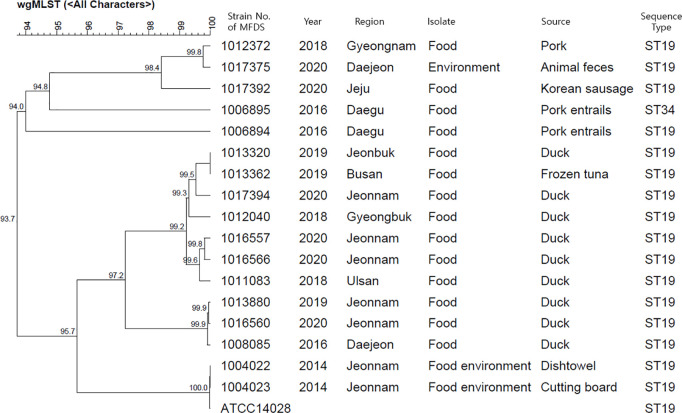 Fig 1
Fig 1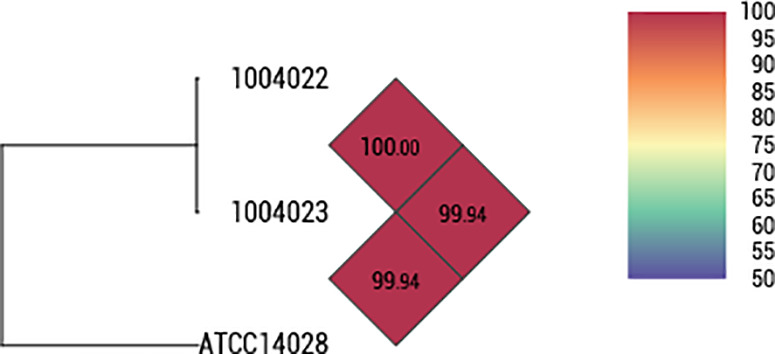 Fig 2
Fig 2- —http://dx.doi.org/10.13039/501100003569Ministry of Food and Drug Safety
Peer Reviews
No public reviews on file for this paper yet. If you reviewed it on a platform where reviews are public (OpenReview, ICLR, NeurIPS, ICML), you can paste yours below so the community can read it here.
Videos
No videos yet. Explain this paper in a talk, walkthrough, or lecture? Add one.
Taxonomy
TopicsSalmonella and Campylobacter epidemiology · Listeria monocytogenes in Food Safety · Vibrio bacteria research studies
Introduction
Officially certified test methods for detecting microorganisms in food include those of the International Organization for Standardization (ISO) and the Association of Official Analytical Chemists (AOAC). In Korea, test methods are specified in the Food Code, the Food Additives Code, and the Health Functional Food Code [1].
To increase the reproducibility of experiments and ensure the application of standardized methods among experimenters, officially certified microbiological test methods include positive controls [2–4]. Most of these positive controls are strains obtained from overseas resource banks such as the American Type Culture Collection (ATCC) and the National Collection of Type Cultures (NCTC). According to one report, 37,530 domestic microbial resources were secured in 2020, while a total of 2,016,211 resources (cumulative) were held. However, dependence on imported pathogen resources amounted to 88.7% [5]. In addition, Kim et al. (2020) reported that the supply of domestic resources was 751,490 (81.6%), 111,506 (12.1%), 44,547 (4.8%), and 13,320 (1.5%) for plants, human-derived materials, animals, and microorganisms, respectively [6]. In other words, while the distribution ratio of microorganisms among secured resources remains low, around 13,000 cases are still distributed annually. Considering the distribution rate of microbial resources and the high dependence on overseas resources, a significant amount of foreign currency is spent each year to purchase imported microbial strains. Furthermore, the enforcement of the Nagoya Protocol—which regulates access to and utilization of genetic resources essential for biotechnology research—has imposed practical challenges for researchers. By asserting national sovereignty over genetic resources, the Protocol imposes legal and financial restrictions on access and requires benefit-sharing for commercial applications [7]. As a result, researchers often face cumbersome import procedures, extended delivery times, and prohibitively high costs—sometimes up to 50 times higher than for domestic strains—when acquiring necessary foreign positive control strains [7,8]. Consequently, there is a growing need for research to identify domestic alternatives to imported positive control strains through comprehensive biochemical and genomic characterization.
Salmonella enterica subsp. enterica serovar Typhimurium ATCC 14028 is designated as a positive control strain in the ISO test methods, the microbial limit tests specified in the Korean Pharmacopoeia, and the confirmatory genetic test in food poisoning investigations by the Ministry of Food and Drug Safety (MFDS) [9–11]. This study aims to select a domestic isolate strain that can replace the strain S. Typhimurium ATCC 14028.
The Korean Culture Collection for Foodborne Pathogens of the MFDS, recognizing the importance of securing such resources, has been collecting and managing foodborne pathogens since 2012. These accumulated resources are actively utilized in various research projects, including the development of detection methods for foodborne pathogens and studies on their characteristics.
The characterization analysis of Salmonella Typhimurium in the Korean Culture Collection for Foodborne Pathogens of the MFDS was carried out, and a strain with high genomic homology among those with the same characteristics was selected as a replacement strain.
Materials and methods
Isolate collection
Nineteen Salmonella enterica subsp. enterica serovar Typhimurium candidate strains held in the Korean Culture Collection for foodborne pathogens (MFDS), isolated from domestic food and environments between 2014 and 2020 (Table 1). Salmonella enterica subsp. enterica serovar Typhimurium ATCC 14028 was purchased from American Type Culture Collection. The strains used in the experiment were stored in a freezer at −80°C, and subcultured on tryptic soy agar (TSA, Oxoid, London, England) at 37°C for 24 hours.
Table 1: List of the 19 candidate strains used in this study.
Biochemical and molecular characterization
Typical colonies were identified according to ISO and Food Code test methods. The media used for enrichment and isolation included Müller-Kauffmann tetrathionate-novobiocin broth (MKTTn broth), Rappaport-Vassiliadis medium with soya broth (RVS broth), and xylose lysine deoxycholate agar (XLD agar). Biochemical characterization was performed for triple sugar iron (TSI), urease, lysine decarboxylase, malonate, KCN, indole, methyl red (MR), voges proskauer (VP), and citrate in accordance with the test methods of the ISO, the Food Code, and the U.S. FDA’s Bacteriological Analytical Manual [9,12,13]. The TSI and KCN tests were performed using culture media (KisanBio Co., Ltd., Seoul, Korea). The citrate, urease, lysine decarboxylase, and malonate tests were performed using a VITEK 2 automated system (BioMérieux Inc., France) while the indole, MR, and VP tests were performed using a commercial kit (KisanBio Co., Ltd., Seoul, Korea). All of the tests were subject to the protocols provided by the manufacturers. Molecular biological characterization was performed according to the method of investing the causes of foodborne by the Ministry Food and Drug Safety, targeting S. Typhimurium (typh), Salmonella serogroup C2 (had), tetrathionate respiration (ttr), and invasion protein (invA) genes to determine whether they were detected [11]. Genomic DNA was extracted using the MagListo^TM^ 5M Genomic DNA Extraction Kit (Bioneer, Daejeon, Korea) in accordance with the manufacturer’s protocol, and then PCR and whole genome sequencing were performed. A conventional PCR reaction mixture was prepared by mixing 5 μL of DNA and 1 μL each of the forward and reverse primers (10 pmol/μL) with AccuPower PCR Premix (Bioneer) to make a final volume of 20 μL. The PCR reaction conditions and primer sequencing information are shown in Table 2.
Table 2: Primer sequence and PCR conditions used for Salmonella spp.
Gene amplification was performed for each gene using a C1000 Touch^TM^ Thermal Cycler (Bio-Rad Laboratories, Inc., Singapore), and the results were confirmed by electrophoresis on a 1.5% agarose gel. The primer/probe sequences and experimental conditions of the real-time PCR are shown in Table 3. Amplification was conducted using ABI 7500 Fast Real-time PCR System (Applied Biosystems, Waltham, MA, USA).
Table 3: Primer/probe sequence and real-time PCR conditions used for Salmonella spp.
Comparative genomics
Whole genome sequencing and genome assembly
The concentration of extracted gDNA was measured using a Qubit^TM^ 3.0 Fluorometer (Life Technologies, Carlsbad, CA, USA) to set the final concentration to 30 ng. Sequencing libraries were constructed using Nextera^TM^ DNA Flex and a Nextera DNA Flex Library Prep Kit (Illumina, San Diego, CA, USA). The amplified libraries were identified using a Bioanalyzer 2100 instrument (Agilent Technologies, Waldbronn, Germany) and a QubitTM 3.0 Fluorometer (Life Technologies, Carlsbad, CA, USA). Sequencing was performed using a MiSeq sequencing system (Illumina) and MiSeq Reagent Kit v3 (600 cycles) (Illumina) [14]. Raw reads (FASTQ sequence files) were subjected to assembly using SPAdes v4.0.0 [15] (S1 Table). Sequence data have been submitted to the publicly accessible NCBI (https://ncbi.nlm.nih.gov, accessed on 12 February 2025).
Phylogenetic analyses
Analyses of whole-genome multilocus sequence typing (wgMLST), single nucleotide polymorphism (SNP), and orthologous average nucleotide identity (OrthoANI) were performed to compare the genetic homology between the positive control strain and the candidate strains. Whole-genome multilocus sequence typing (wgMLST) was performed with a BioNumerics v7.5 (Applied Maths, Sint-Martens-Latem, Belgium) calculation engine using the default settings. The reads were de novo assembled by wgMLST analysis of assembly-free, and assembly-based allele calls were performed. Categorical coefficients were used to define similarity levels and the unweighted pair group method with arithmetic mean (UPGMA) was used as the clustering algorithm [16,17]. Single nucleotide polymorphism (SNP) was performed using the National Genome Information Network for Foodborne Pathogen (NGIN-F) of the Ministry of Food and Drug Safety (https://nginf.nifds.go.kr/cm/main.do). The orthologous average nucleotide identity (OrthoANI) was analyzed using the Orthologous Average Nucleotide Identity Tool (http://www.ezbiocloud.net/sw/oat) [15,18].
Results
Biochemical and molecular characterization
Typical Salmonella colonies on XLD agar, characterized by red colonies with black centers, were observed in all 19 strains. In the biochemical characterization, two strains showed different results in the citrate test. In the genetic analysis, 17 strains (excluding the two with different citrate results) showed the same results as S. Typhimurium ATCC 14028, and were selected as final candidate strains (Table 4).
Table 4: Detailed biochemical and molecular characteristics of Salmonella Typhimurium ATCC 14028 and candidate strains. Two strains different results in the citrate test. All other characteristics were identical to those of the positive control strain.
Comparative genomics
The genetic homology analysis of the 17 strains with biochemical characteristics equivalent to those of S. Typhimurium ATCC 14028 was performed using wgMLST and SNP. The wgMLST analysis revealed a homology range of 93.7% to 100% among all strains. Regarding sequence type (ST), the positive control strain was identified as ST19. Similarly, 16 out of 17 candidate strains were classified as ST19, while one strain belonged to ST34 (Fig 1). SNP analysis showed that among the candidate strains, MFDS 1004022 and 1004023 exhibited the highest similarity to the positive control strain, with fewer than 20 SNP differences (S2 Table). The sequence similarity between the positive control strain (S. Typhimurium ATCC 14028) and the alternative candidate strains (MFDS 1004022 and 1004023) were analyzed using the OrthoANI program. The OrthoANI values indicated a high genomic homology of 99.94% (Fig 2). Overall, the gene homology analysis confirmed a high genomic similarity between the positive control strain (S. Typhimurium ATCC 14028) and the domestically isolated strains MFDS 1004022 and 1004023. Therefore, these strains are proposed as suitable domestic replacements for the imported S. Typhimurium ATCC 14028 strain.
wgMLST dendrogram showing the phylogenetic relationships between S. Typhimurium ATCC 14028 and 17 candidate strains.Branch lengths represent genetic distance based on allelic differences, with higher values indicating greater divergence.
Heatmap generated based on orthologous average nucleotide identity (OrthoANI) values calculated between S.Typhimurium ATCC 14028 and candidate strains. OrthoANI values indicate genetic similarity between genomes (red indicates high similarity, whereas purple indicates lower similarity).
Discussion
Practitioners from Korean testing and inspection agencies purchase and utilize positive control strains to ensure the reliability of experimental results. Domestically and internationally certified microbiological test methods primarily specify strains from overseas resource banks, such as the ATCC and NCTC, as positive control strains. However, strains specified in official test methods are costly and their import procedures are complex, creating a significant burden for domestic researchers. This study aimed to identify domestic isolates with characteristics equivalent to those of positive control strains specified in domestic and international test methods for use in laboratories, method development, educational materials, and research. The S. Typhimurium ATCC 14028 strain is used as a positive control strain in ISO method for microbial analysis and is also referenced in the Korean Pharmacopoeia. Previous studies have shown that S. Typhimurium ATCC 14028 is commonly utilized in biochemical reaction tests and genetic analyses using PCR. To replace the ATCC strain, comparative experiments were conducted with MFDS strains isolated in Korea. The results revealed that the morphological, biochemical, and molecular characteristics of MFDS strains 1004022 and 1004023 were identical to those of the positive control strain. Furthermore, whole-genome sequence comparison revealed a high level of genomic similarity, with an OrthoANI value of 99.94%, shared sequence type (ST19), and fewer than 20 SNPs. For OrthoANI values, a similarity of 94% or higher indicates that the genome composition is nearly identical within the same species, as it measures DNA sequence similarity between two strains at the species level [19,20]. Pightling et al. [21] indicate that an SNP distance of less than 21 strongly supports the genetic identity or very close relatedness of two isolates, suggesting a common source of origin. The S. Typhimurium MFDS 1004022 and 1004023 strains, isolated from environmental sources such as dish towels and cutting boards in 2014, are proposed as potential replacement strains for S. Typhimurium ATCC 14028.
An et al. [8] conducted a study to identify a domestic strain capable of replacing Staphylococcus aureus ATCC 6538P, as referenced in the Korean Pharmacopoeia. From the National Culture Collection of Pathogens (NCCP), a strain (NCCP 16830) was identified with characteristics equivalent to those of the ATCC 6538P reference strain, and its potential as a replacement strain was proposed.
The United States Pharmacopeia (USP) specifies that replacement strains proven to be identical to reference strains can be used as substitutes [8,22]. In this study, the proposed alternative strains demonstrated both identity and specificity to the positive control strain through phenotypic, biochemical, genetic, and whole-genome analyses. In particular, the high genetic similarity revealed by whole-genome analyses, including OrthoANI and SNP comparisons, indicates their equivalence to the positive control strain. Although this study did not include the process of verifying whether the proposed alternative strains can fully substitute ATCC 14028 in actual microbiological test assays, these strains were previously isolated and identified from food and environmental samples during foodborne outbreak investigations. Given that they have already undergone biochemical and genetic identification, their reproducibility was considered demonstrated. Nevertheless, additional validation—such as viability and stability tests under various environmental conditions—will be needed before distribution.
The strains selected in this study have been validated for use as alternative positive control strains in microbiological testing under ISO standards and the Korean Food Code. However, to apply them as alternatives in other sectors, further functional validation will be required in accordance with the relevant test methods, including the general testing methods outlined in the Korean Pharmacopoeia and the sterilization and disinfection test methods in the Food Additives Code.
S. Typhimurium MFDS 1004022 and 1004023 are preserved in The Korean Culture Collection for Foodborne Pathogens of the Ministry of Food and Drug Safety (MFDS), which is designated as a specialized pathogen resource bank under the “Act on the Management and Utilization of Pathogen Resources” [23]. These alternative strains are available for distribution to testing and inspection agencies for use in microbiological testing and analysis, which will contribute to food safety management.
This is expected to increase the utilization of domestic strains, significantly reduce the costs and time associated with importing foreign strains, and decrease dependence on overseas resources, thereby alleviating the burden on researchers. Moreover, the use of domestic microbial resources may enhance the efficiency of microbiological testing and contribute to strengthening the national bioresource infrastructure.
Nucleotide sequence accession numbers
The draft genome sequences of Salmonella Typhimurium MFDS 1004022 and Salmonella Typhimurium MFDS 1004023 have been deposited with GenBank under the accession numbers JBLQAJ000000000 and JBLQAK000000000, respectively.
Supporting information
S1 TableStatistics of the assembly results of the whole genome of 17 *S.*Typhimurium strains.(DOCX)
S2 TableThe number of SNP differences in 17 S. Typhimurium strains.(XLSX)
The reference list from the paper itself. Each links out to its DOI / PubMed record.
- 1Bang HJ, Lee SH, Kim YS, Kim AP, Lee WJ, Ha SD. International trends of official analytical methods for food microorganisms and the principles of detection methods. Safe Food. 2015;10(3):42–51.
- 2Nysten J, Sofras D, Van Dijck P. One species, many faces: The underappreciated importance of strain diversity. P Lo S Pathog. 2024;20(1):e 1011931. doi: 10.1371/journal.ppat.1011931 38271302 PMC 10810500 · doi ↗ · pubmed ↗
- 3Petersen EJ, Nguyen A, Brown J, Elliott JT, Clippinger A, Gordon J, et al. Characteristics to consider when selecting a positive control material for an in vitro assay. ALTEX. 2021;38(2):365–76. doi: 10.14573/altex.2102111 33637998 · doi ↗ · pubmed ↗
- 4Hornung BVH, Zwittink RD, Kuijper EJ. Issues and current standards of controls in microbiome research. FEMS Microbiol Ecol. 2019;95(5):fiz 045. doi: 10.1093/femsec/fiz 045 30997495 PMC 6469980 · doi ↗ · pubmed ↗
- 5MSIT (Ministry of Science and ICT). 2021 National life science research resource management and utilization implementation plan. 2020. pp. 20–52.
- 6Kim C-M, Park K-M, Cho K-H, Jo G-H, Jin T-E. The Current Status and Policy Measure of Biological Research Resources in Korea. jepa. 2020;28(4):91–112. doi: 10.15301/jepa.2020.28.4.91 · doi ↗
- 7Lee J, An M, Chang Y-H. Understanding the Access and Benefit-Sharing of Genetic Resources for Microbiology Researchers. Kor J Microbiol Biotechnol. 2021. doi: 10.48022/mbl.2104.04015 · doi ↗
- 8An YW, Choi YS, Yun M-R, Choi C, Kim SY. Characterization and validation of an alternative reference bacterium Korean Pharmacopoeia Staphylococcus aureus strain. J Microbiol. 2022;60(2):187–91. doi: 10.1007/s 12275-022-1335-5 34994956 PMC 8739380 · doi ↗ · pubmed ↗