Immune checkpoint inhibitor-associated gastritis complicated by cytomegalovirus infection: A rare case report
Pingfan Mo, Wenli Xu, Yanqin Long

Abstract
Genes, proteins, chemicals, diseases, species, mutations and cell lines named across the full text — each resolved to its canonical identifier and authoritative record.
Click any figure to enlarge with its caption.
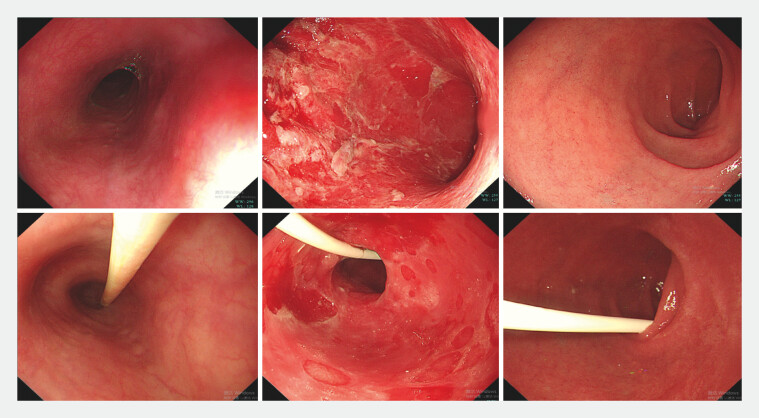 Fig. 1
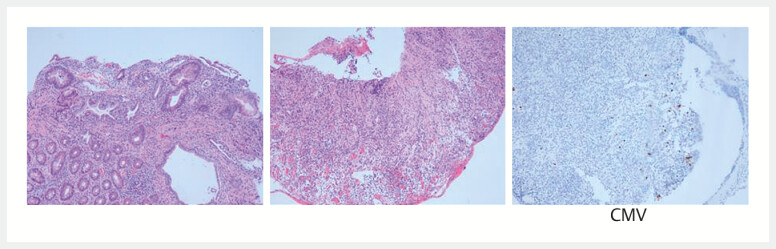 Fig. 2
Peer Reviews
No public reviews on file for this paper yet. If you reviewed it on a platform where reviews are public (OpenReview, ICLR, NeurIPS, ICML), you can paste yours below so the community can read it here.
Videos
No videos yet. Explain this paper in a talk, walkthrough, or lecture? Add one.
Taxonomy
TopicsCancer Immunotherapy and Biomarkers · Immune Cell Function and Interaction · Colorectal Cancer Treatments and Studies
We report the case of a 60-year-old Chinese woman admitted to the hospital presenting with persistent vomiting and abdominal pain for one month. She had a history of endometrial cancer treated with surgery two years ago followed by serplulimab (a PD-1 inhibitor) therapy. Initial gastroscopy at a local clinic showed no abnormalities, which prompted a referral to our institution. Upon admission, a diagnostic gastroscopy revealed extensive gastric exfoliative changes without involvement of the esophagus or duodenum, and a nasojejunal tube was placed for nutritional support ( Video 1 , Fig. 1 ). Serological and pathological testing further confirmed a cytomegalovirus infection in the gastric mucosa ( Fig. 2 ). Treatment was therefore initiated with methylprednisolone (80 mg intravenous injection daily) and ganciclovir (0.5 g orally three times daily) with clinical improvement.
Gastroscopy showing gastric mucosal changes in the patient with PD-1 inhibitor-associated gastritis complicated by cytomegalovirus infection.Video 1
Image during gastroscopy showing signs of extensive gastric mucosa damage without involvement of the esophagus or duodenum in the patient with PD-1 inhibitor treatment and cytomegalovirus infection. A nasojejunal tube was placed for nutritional support.
Histologic appearance showing small fragments of granulation tissue with inflammatory necrotic exudate, consistent with ulceration, accompanied by cytomegalovirus infection (magnification × 40).
Since immune checkpoint inhibitors have significantly transformed the therapeutic landscape of malignancies 1 , immune-related adverse events have emerged as a concomitant challenge that can involve multiple organ systems 2 . This case describes a rare manifestation of a PD-1 inhibitor-related gastritis complicated by a cytomegalovirus infection, which was characterized by isolated gastric mucosal damage in the gastrointestinal tract. The combination of steroid and antiviral therapy proved to be effective in managing this condition. Interestingly, although the interval between the gastroscopy performed at our hospital and the one conducted at the local clinic was less than one month, the results differed significantly, even though the patient had undergone immune checkpoint inhibitor therapy for nearly two years. In addition, we provide detailed imaging and video documentation to support recognition by endoscopists and clinicians.
Endoscopy_UCTN_Code_CCL_1AB_2AC_3AZ
The reference list from the paper itself. Each links out to its DOI / PubMed record.
- 1Drew MP The blockade of immune checkpoints in cancer immunotherapy Nat Rev Cancer 20121225226422437870 10.1038/nrc 3239 PMC 4856023 · doi ↗ · pubmed ↗
- 2Ying J Jingwen Y Douglas BJ Harnessing big data to characterize immune-related adverse events Nat Rev Clin Oncol 20221926928035039679 10.1038/s 41571-021-00597-8 · doi ↗ · pubmed ↗