Expression of Concern: Ontological Differences in First Compared to Third Trimester Human Fetal Placental Chorionic Stem Cells

Abstract
Genes, proteins, chemicals, diseases, species, mutations and cell lines named across the full text — each resolved to its canonical identifier and authoritative record.
Click any figure to enlarge with its caption.
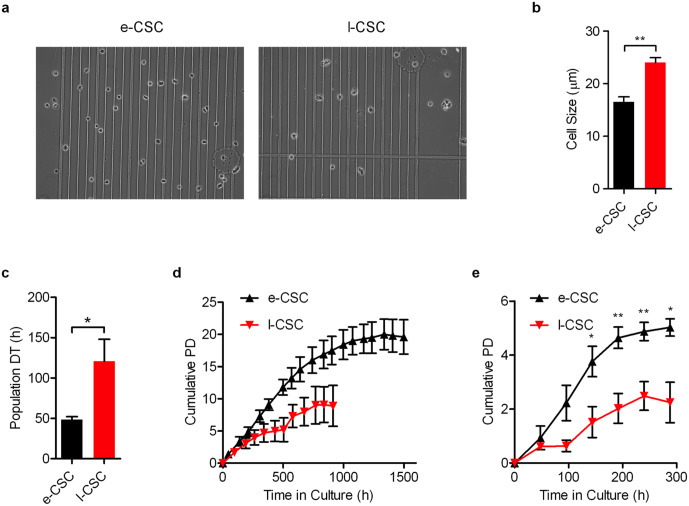 Figure 1
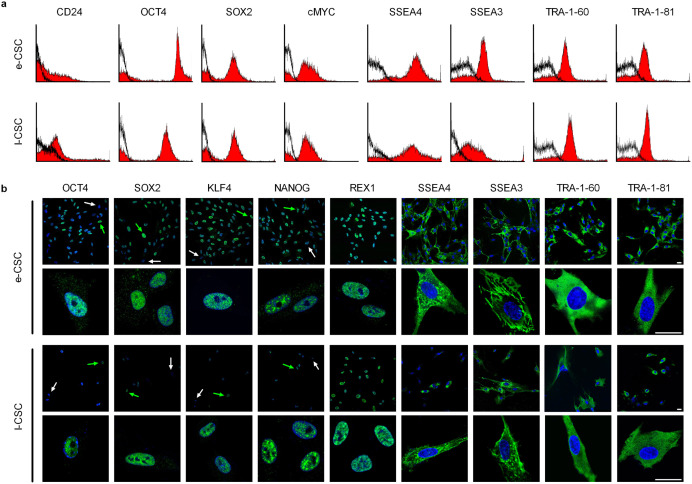 Figure 2
Peer Reviews
No public reviews on file for this paper yet. If you reviewed it on a platform where reviews are public (OpenReview, ICLR, NeurIPS, ICML), you can paste yours below so the community can read it here.
Videos
No videos yet. Explain this paper in a talk, walkthrough, or lecture? Add one.
Taxonomy
TopicsPluripotent Stem Cells Research · Prenatal Screening and Diagnostics · Ethics and Legal Issues in Pediatric Healthcare
Following the publication of this article [1], concerns were raised regarding results presented in Figs 1, 2, and 6. Specifically,
Regarding the concerns in Figs 1a and 2a, the corresponding author commented that the Fig 1a I-CSC panel and the Fig 2a panels present composite images. The individual image data used to compile these panels are provided in the S1–6 Files. The corresponding author clarified that the quantified results presented in Fig 2b were not measured directly from the composite image, but from original raw images of these cells (S4–6 Files). The authors provided an updated Fig 2 presenting representative images used for the cell size quantification. Composite images presenting unmarked grouping of image elements obtained from different fields or different parts of the same image is a breach of the PLOS One Image Manipulation guidelines in place at the time this article was submitted.
Regarding the concern with Fig 6B, the corresponding author stated that an incorrect panel was used during the preparation of this figure and provided an updated Fig 6.
The originally published Fig 6b I-CSC TRA-1–60 panel reports material from [2,3] published in 2012 by Elsevier, which is not offered under a CC BY license and is therefore excluded from this article’s [1] license.
The PLOS One Editors issue this Expression of Concern to notify readers of the above concerns and to relay the available data provided by the corresponding author.
Supporting information
S1 FileOriginal image data underlying Figs 1a-d.(ZIP)
S2 FileUnderlying data Fig 2a - Individual cropped images eCSC (the Editors note that “Picture 3” and “Picture 13” appear similar).(ZIP)
S3 FileUnderlying data Fig 2a - Individual cropped images ICSC.(ZIP)
S4 FileUnderlying data Fig 2a - l-CSC full collection of raw images part 1.(ZIP)
S5 FileUnderlying data Fig 2a - l-CSC full collection of raw images part 2.(ZIP)
S6 FileUnderlying data Fig 2a - l-CSC full collection of raw images part 3.(ZIP)
S7 FileIndividual level data underlying Figs 2b–e.(ZIP)
S8 FileOriginal image data underlying Fig 6b.(ZIP)
The reference list from the paper itself. Each links out to its DOI / PubMed record.
- 1Jones GN, Moschidou D, Puga-Iglesias T-I, Kuleszewicz K, Vanleene M, Shefelbine SJ, et al. Ontological differences in first compared to third trimester human fetal placental chorionic stem cells. P Lo S One. 2012;7(9):e 43395. doi: 10.1371/journal.pone.0043395 22962584 PMC 3433473 · doi ↗ · pubmed ↗
- 2Moschidou D, Mukherjee S, Blundell MP, Drews K, Jones GN, Abdulrazzak H, et al. Valproic acid confers functional pluripotency to human amniotic fluid stem cells in a transgene-free approach. Mol Ther. 2012;20(10):1953–67. doi: 10.1038/mt.2012.117 22760542 PMC 3464631 · doi ↗ · pubmed ↗
- 3Moschidou D, Mukherjee S, Blundell MP, Drews K, Jones GN, Abdulrazzak H, et al. Valproic Acid Confers Functional Pluripotency to Human Amniotic Fluid Stem Cells in a Transgene-free Approach. Mol Ther. 2024;32(8):2798. doi: 10.1016/j.ymthe.2024.06.015 39122329 PMC 11405143 · doi ↗ · pubmed ↗