Commentary: Role of gut microbiota in infectious and inflammatory diseases
Gabriela Angélica Martínez-Nava, Alberto López-Reyes, Carlos Pineda

Abstract
Genes, proteins, chemicals, diseases, species, mutations and cell lines named across the full text — each resolved to its canonical identifier and authoritative record.
Click any figure to enlarge with its caption.
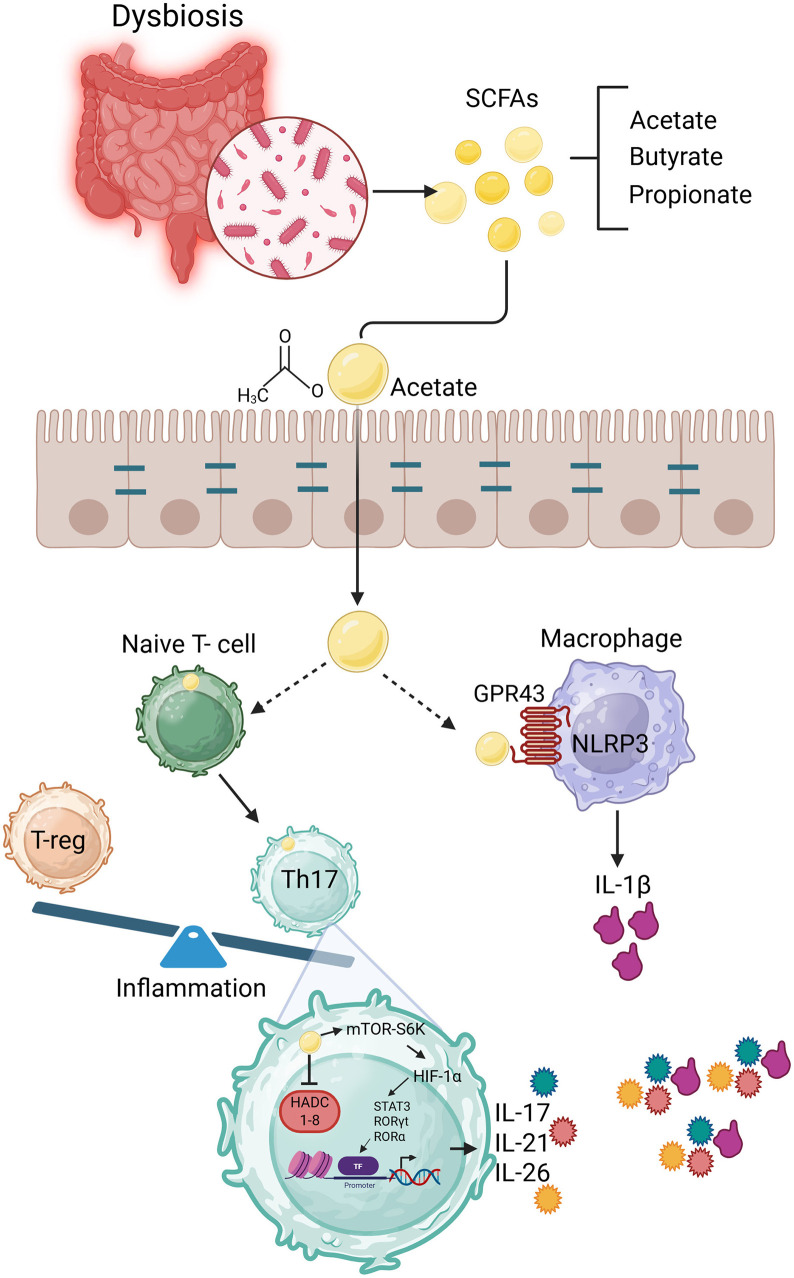 Figure 1
Peer Reviews
No public reviews on file for this paper yet. If you reviewed it on a platform where reviews are public (OpenReview, ICLR, NeurIPS, ICML), you can paste yours below so the community can read it here.
Videos
No videos yet. Explain this paper in a talk, walkthrough, or lecture? Add one.
Taxonomy
TopicsGut microbiota and health · Clostridium difficile and Clostridium perfringens research · Helicobacter pylori-related gastroenterology studies
1 Introduction
The human gut microbiota plays a critical role in maintaining immune homeostasis and modulating inflammatory processes. The review article by Maciel-Fiuza et al. (2023) entitled “Role of Gut Microbiota in Infectious and Inflammatory Diseases” provides a valuable overview of the current knowledge in this field, with a focus on autoimmune and infectious diseases. While the article presents a broad and detailed analysis, we noticed that gout, one of the most common forms of inflammatory arthritis, was not discussed. Given the growing body of evidence linking the gut microbiota to gout pathogenesis, we believe its inclusion could further enhance the review and provide a more complete overview on microbiota-associated inflammatory diseases.
1.1 Gout: a common and neglected inflammatory arthropathy
Gout is preceded by a prolonged period of hyperuricemia, which triggers the formation and deposition of monosodium urate (MSU) crystals in joints and soft tissues. MSU crystals elicit a potent acute inflammatory response leading to chronic joint damage. Gout affects millions of individuals worldwide, and is associated with a significant morbidity (FitzGerald, 2025). Despite its high prevalence, it is frequently underrepresented in discussions concerning inflammatory diseases related to the microbiome.
1.2 Immunometabolic mechanisms in gout
A central component of the inflammatory cascade during gout attacks is the NLRP3 inflammasome, which senses MSU crystals through its LRR domain. NLRP3 inflammasome activation initiates the production of the pro-inflammatory cytokine IL-1β. The ultimate result of this cascade is neutrophil recruitment and the formation of neutrophil extracellular traps (NETs). This process results in joint damage (Liu-Bryan, 2010; Martinon et al., 2006).
Beyond innate immunity, adaptive responses involving T helper 17 (Th17) and regulatory T cells (Tregs) are also implicated in the disease. Th17 cells contribute to sustained inflammation through IL-17 production. On the other hand, Tregs serve to counteract this effect and maintain immune tolerance. An imbalance between these cell types has been associated with exacerbated inflammation in gout (Zi et al., 2024). Notably, microbial-derived metabolites such as short-chain fatty acids (SCFAs) modulate the immune system. Of these SCFAs, acetate has been shown to promote the differentiation of naïve T cells into Th17 cells. This effect involves suppression of histone deacetylases and modulation of the mTOR-S6K pathway (Figure 1). Al together, potentially amplifying inflammatory responses (Park et al., 2015) (Figure 1).
Schematic diagram of the microbiota-SCFA-immune axis in gout pathogenesis. Gut dysbiosis leads to altered SCFA production (notably acetate), which acts through GPR43 to promote IL-1β release in macrophages and Th17 differentiation in naïve T cells, fueling joint inflammation.
In addition, SCFA-sensing receptors such as GPR43 (FFAR2) and GPR41 (FFAR3), present on neutrophils and macrophages, have emerged as important modulators of the inflammatory response (Maslowski et al., 2009). The recognition of microbiota-derived SCFA, particularly, GPR43 may trigger acute inflammatory arthritis by promoting IL-1β maturation and release through NLRP3 inflammasome activation in macrophage lineage cells (Haslberger and Terkeltaub, 2015).
1.3 Gut microbiota–mediated immunometabolic modulation in gout
Emerging evidence demonstrated how the gut microbiota influence both urate metabolism but and the immunometabolic pathways involved in gout (Terkeltaub and Dodd, 2025; Martínez-Nava et al., 2023). Extensive evidence suggests that certain bacteria have developed adaptive mechanisms for purine biosynthesis and salvage, potentially altering systemic urate levels. Additionally, microbial metabolites from the gut microbiota may reach the liver via the portal vein, promoting the synthesis of purinogenic amino acids and urate (Méndez-Salazar and Martínez-Nava, 2022). Notably, fecal microbiota transplants from hyperuricemic (HUA) rats toward germ-free recipients have been shown to increase serum urate levels (Liu et al., 2020).
While most early studies focused on the role of the microbiota in urate metabolism, there is now growing evidence that it also plays a crucial role in modulating the inflammatory response in gout. In a paradigm-shifting study, Vieira et al. (2015) demonstrated that germ-free mice had an impaired inflammatory response to MSU crystals, which was reversed by introducing acetate. This was the first study to highlight the essential role of the gut microbiota in regulating immune response in gout (Vieira et al., 2015).
Studies in in several populations have demonstrated the presence of gut dysbiosis in gout patients, supported by reduced α diversity measures, such as Chao1 and Abundance-base coverage estimator (ACE) indices (Guo et al., 2016; Méndez-Salazar et al., 2021). This dysbiosis is characterized by reduced beneficial taxa (e.g., Faecalibacterium, Ruminococcus) and increased pro-inflammatory genera in gout patients (e.g., Prevotella and Bacteroides) (Martínez-Nava et al., 2023). Moreover, in a metatranscriptomic analysis, Martínez-Nava and colleagues identified at least three orthologues genes (K00161, K00162, and K01621) involved in acetate production pathways that were differentially expressed in the gut microbiota of gout patients compared to normouricemic and asymptomatic hyperuricemic individuals (Martínez-Nava et al., 2025).
Together, these findings suggest that the gut microbiota not only shapes host immunity but also participates in key metabolic and inflammatory processes relevant to gout pathophysiology. This highlights its potential as a therapeutic target in the management of gout.
2 Discussion and future directions
The influence of the gut microbiota on systemic immunity has become a focal point in the understanding of chronic inflammatory diseases. While Maciel-Fiuza et al. (2023) address conditions such as rheumatoid arthritis, inflammatory bowel disease, and systemic lupus erythematosus, the omission of gout overlooks a critical intersection of metabolic and inflammatory pathology. Like rheumatoid arthritis, gout is associated with specific dysbiotic signatures and inflammasome activation. However, since gout has a strong connection to diet, metabolism, and microbial metabolites makes it uniquely positioned to benefit from microbiota-centered research.
Current knowledge has unraveled promising strategies for modulating gout associated inflammation. For instance, microbiota-targeted interventions such as probiotics (e.g., Lactobacillus or Bifidobacterium); dietary modifications (beyond purine restricted diets to include anti-inflammatory approaches like the Mediterranean diet and diets with high content of fiber); or even SCFA supplementation, specifically butyrate. However, several challenges must be addressed, including individual microbiota variability, safety and efficacy of interventions such as fecal microbiota transplantation: additionally, clinical trials are needed to evaluate the therapeutic impact of such interventions.
Inclusion of gout in future microbiota-focused reviews would help fill this knowledge gap and highlight emerging opportunities for microbiome-based interventions. This is particularly relevant given the increasing prevalence of gout and its strong association with lifestyle factors affecting gut microbial balance. A broader, integrative approach will allow for a more comprehensive understanding of microbiota-driven mechanisms in inflammatory diseases, offering new perspectives for prevention and treatment.
The reference list from the paper itself. Each links out to its DOI / PubMed record.
- 1Fitz Gerald J. D. (2025). Gout. Ann. Intern. Med. 178, ITC 33–ITC 48. 10.7326/ANNALS-24-0395140063960 · doi ↗ · pubmed ↗
- 2Guo Z.Zhang J.Wang Z.Ang K. Y.Huang S.Hou Q.. (2016). Intestinal microbiota distinguish gout patients from healthy humans. Sci Rep. 6:20602. 10.1038/srep 2060226852926 PMC 4757479 · doi ↗ · pubmed ↗
- 3Haslberger A.Terkeltaub R. (2015). Editorial: Can GPR 43 sensing of short-chain fatty acids unchain inflammasome-driven arthritis? Arthritis Rheumatol. 67, 1419–1423. 10.1002/art.3910225914362 PMC 4446232 · doi ↗ · pubmed ↗
- 4Liu X.Lv Q.Ren H.Gao L.Zhao P.Yang X.. (2020). The altered gut microbiota of high-purine-induced hyperuricemia rats and its correlation with hyperuricemia. Peer J. 8:e 8664. 10.7717/peerj.866432185104 PMC 7061907 · doi ↗ · pubmed ↗
- 5Liu-Bryan R. (2010). Intracellular innate immunity in gouty arthritis: role of NALP 3 inflammasome. Immunol. Cell Biol. 88, 20–23. 10.1038/icb.2009.9319935768 PMC 4337950 · doi ↗ · pubmed ↗
- 6Maciel-Fiuza M. F.Muller G. C.Campos D. M. S.do Socorro Silva Costa P.Peruzzo J.Bonamigo R. R.. (2023). Role of gut microbiota in infectious and inflammatory diseases. Front. Microbiol. 14:1098386. 10.3389/fmicb.2023.109838637051522 PMC 10083300 · doi ↗ · pubmed ↗
- 7Martínez-Nava G. A.Altamirano-Molina E.Vázquez-Mellado J.Casimiro-Soriguer C. S.Dopazo J.Lozada-Pérez C.. (2025). Metatranscriptomic analysis reveals gut microbiome bacterial genes in pyruvate and amino acid metabolism associated with hyperuricemia and gout in humans. Sci Rep. 15:9981. 10.1038/s 41598-025-93899-140121243 PMC 11929762 · doi ↗ · pubmed ↗
- 8Martínez-Nava G. A.Méndez-Salazar E. O.Vázquez-Mellado J.Zamudio-Cuevas Y.Francisco-Balderas A.Martínez-Flores K.. (2023). The impact of short-chain fatty acid-producing bacteria of the gut microbiota in hyperuricemia and gout diagnosis. Clin. Rheumatol. 42, 203–214. 10.1007/s 10067-022-06392-936201123 · doi ↗ · pubmed ↗