A Multimodal Approach to the Early Treatment of a Facial Scar: A Case Report
Jennifer Akl, Hamad El Hajj, Dima Jeha, Maya Habre

TL;DR
This case report shows how combining botulinum toxin and laser treatments early improves facial scar appearance and quality of life.
Contribution
A novel multimodal treatment combining botulinum toxin and laser therapy is proposed for early facial scar management.
Findings
Combining botulinum toxin and laser treatments improves scar appearance.
Early treatment enhances cosmetic and psychological outcomes for facial scars.
Abstract
Facial scarring is associated with considerable psychosocial distress and can adversely affect overall quality of life. The combination of intralesional botulinum toxin injection and laser treatments in the early stage of wound healing markedly enhances scar appearance and improves cosmetic and psychological outcomes.
Genes, proteins, chemicals, diseases, species, mutations and cell lines named across the full text — each resolved to its canonical identifier and authoritative record.
Click any figure to enlarge with its caption.
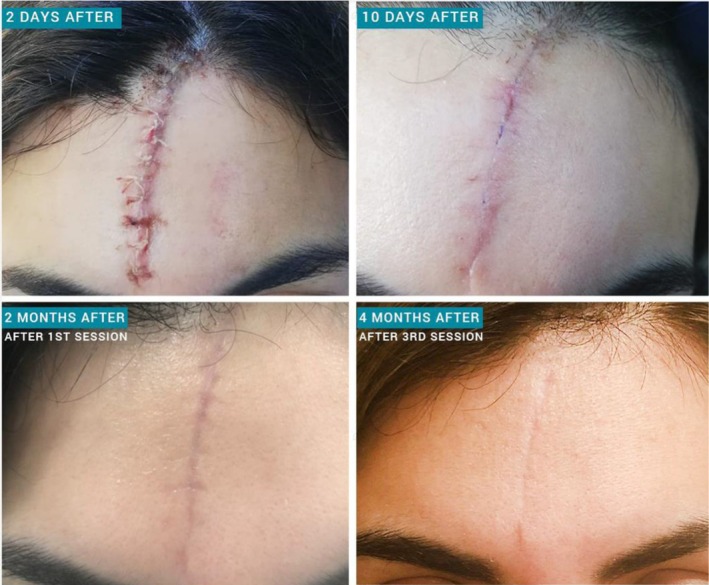 FIGURE 1
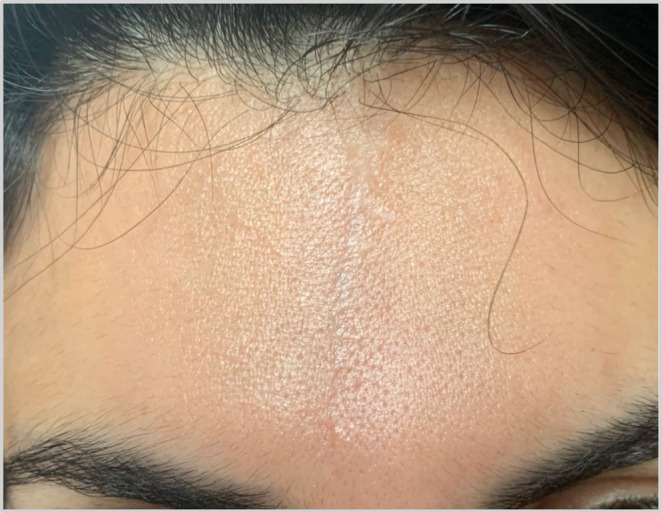 FIGURE 2
Peer Reviews
No public reviews on file for this paper yet. If you reviewed it on a platform where reviews are public (OpenReview, ICLR, NeurIPS, ICML), you can paste yours below so the community can read it here.
Videos
No videos yet. Explain this paper in a talk, walkthrough, or lecture? Add one.
Taxonomy
TopicsDermatologic Treatments and Research · Facial Rejuvenation and Surgery Techniques · Reconstructive Facial Surgery Techniques
Introduction
1
Wound healing is a multistep and complex process that leads to scar formation, resulting in physical, psychological, and aesthetic concerns. Therefore, treating wounds properly can help improve such inevitable consequences [1].
The combination of early postoperative interventions (laser, intralesional botulinum toxin, and topical antiscarring drugs) could aid patients in achieving an optimal and better cosmetic appearance [2].
Case History/Examination
2
A 27‐year‐old healthy woman presented with a 12 cm perpendicular, full‐thickness forehead wound sustained during the Beirut blast on August 4, 2020, as shown in Figure 1.
Sequential appearance of the facial scar following the 4th of August Beirut Blast.
Differential Diagnosis, Investigations, and Treatment
3
Treatment of the forehead with Botulinum toxin A (BTX‐A), as well as perilesional injection of 2 units for every 1 cm around the edges of the wound, was done 2 weeks after the injury. This was followed by 4 sessions of laser treatments separated by a 4‐week interval (Figure 1). Each laser session consisted of 3 steps. The first step consisted of 2 passes by the Nd:YAG laser. The laser parameters were a fluence of 15 J, a spot size of 9 mm, and a pulse duration of 0.6 ms. The second step entailed one pass of total ablative resurfacing with a 2940 nm Er:YAG laser. The laser parameters were a fluence of 2 J, a spot size of 5 mm, and a frequency of 2 Hz. Finally, the third and last step comprised 3 passes of fractional resurfacing with a 2940 nm Er:YAG laser. The laser parameters were a fluence of 30 J, a frequency of 1.4 Hz, and a pulse duration of 200 ms.
Conclusion and Results (Outcome and Follow‐Up)
4
Progressive improvement was noted at one‐month interval follow‐ups, with significantly decreased erythema and vascularity, scar width, thickness, and overall appearance (Figure 1). One year later (Figure 2), a noticeable improvement in the scar is noted, a translation of the continuous collagen remodeling months after the last session.
Photo taken a year after the 4th of August Beirut Blast.
Discussion
5
Laser treatment of scars has long been utilized to promote the remodeling of mature scar tissue [3]. Recently, the concept of early laser intervention to reduce scar formation has been investigated in several clinical studies. Laser initiation during the inflammatory phase of wound healing has shown the most benefit, with significant improvement in scar formation [1, 3].
Jang et al. [4] mentioned that the use of a 532‐nm Nd:YAG laser at an early stage of scar formation, within 1–2 weeks after suture removal, resulted in improvements in redness, hyperpigmentation, and hypertrophy of scars within a short period (6 weeks). In another study, Osman et al. [5] demonstrated the equivalent efficacy of Er:YAG and CO_2_ fractional ablative lasers in scar reduction, adding that immature scars respond better than mature scars.
On the other hand, botulinum toxin has been used for decades in the treatment of facial paralysis and cosmetic procedures. It plays a crucial role in scar prevention by relaxing adjacent muscles and minimizing contracture through the inhibition of myofibroblast differentiation and type I collagen synthesis. This was demonstrated in a study by Kim et al. [6] on forehead lacerations, where scar tissue injected with 5 IU/cm of BTX‐A into multiple symmetrical sites at the lower border of the scar resulted in improved aesthetic, functional, and emotional aspects of scar formation in this group.
Additionally, Winayanuwattikun et al. [7] found that post‐mastectomy scar severity decreased, and overall scar appearance improved after BTX‐A injection. The injection was administered 1 cm away from the surgical scar, with 5 units per injection point, totaling 50 units.
Furthermore, the combination of BTX‐A with ablative or nonablative laser treatments may offer superior efficacy compared to monotherapy. Previous studies have shown that both topical and injected forms of BTX‐A can be combined with laser therapy to enhance therapeutic outcomes. Wang et al. studied the injection of BTX‐A before fractional CO_2_ laser treatment and topical growth factors, demonstrating superior efficacy in reducing scars [8].
In our patient, the combination of early perilesional botulinum toxin injection and laser treatments significantly improved scar appearance. We suggest early intervention and repeated treatments for optimal clinical results. Such an outcome may hopefully help erase the memories of the traumatic event that caused the wound in the first place.
Author Contributions
Jennifer Akl: conceptualization, investigation, methodology, writing – original draft, writing – review and editing. Hamad El Hajj: conceptualization, investigation, methodology, writing – original draft. Dima Jeha: conceptualization, investigation, writing – original draft. Maya Habre: conceptualization, investigation, methodology, validation, writing – review and editing.
Consent
Written informed consent was taken from the patient.
Conflicts of Interest
The authors declare no conflicts of interest.
The reference list from the paper itself. Each links out to its DOI / PubMed record.
- 1S. Qiang , X. Fan , Y. Yin , et al., “Timing of Laser Intervention on Facial Scars: A 3D Imaging and Scar Scale Analysis in a Retrospective Study,” Lasers in Surgery and Medicine 56, no. 9 (2024): 770–775, 10.1002/lsm.23846.39308039 · doi ↗ · pubmed ↗
- 2N. Hong , B. Sheng , and P. Yu , “Early Postoperative Interventions in the Prevention and Management of Thyroidectomy Scars,” Frontiers in Physiology 15 (2024): 1341287, 10.3389/fphys.2024.1341287.38523809 PMC 10958159 · doi ↗ · pubmed ↗
- 3K. E. Karmisholt , C. A. Banzhaf , M. Glud , et al., “Laser Treatments in Early Wound Healing Improve Scar Appearance: A Randomized Split‐Wound Trial With Nonablative Fractional Laser Exposures vs. Untreated Controls,” British Journal of Dermatology 179, no. 6 (2018): 1307–1314, 10.1111/bjd.17076.30101519 · doi ↗ · pubmed ↗
- 4J. Y. Jang , J. H. Han , K. C. Yoon , H. W. Shin , Y. S. Kim , and J. K. Kim , “Early Management of Scars Using a 532‐Nm Nd:YAG Laser. Archives of,” Aesthetic Plastic Surgery 23, no. 2 (2017): 62, 10.14730/aaps.2017.23.2.62. · doi ↗
- 5M. A. Osman and A. N. Kassab , “Fractional Er:YAG Laser Versus Fractional CO 2 Laser in the Treatment of Immature and Mature Scars: A Comparative Randomized Study,” Archives of Dermatological Research 316, no. 2 (2024): 75, 10.1007/s 00403-023-02764-6.38236287 PMC 10796705 · doi ↗ · pubmed ↗
- 6S. H. Kim , S. J. Lee , J. W. Lee , H. S. Jeong , and I. S. Suh , “Clinical Trial to Evaluate the Efficacy of Botulinum Toxin Type A Injection for Reducing Scars in Patients With Forehead Laceration: A Double‐Blinded, Randomized Controlled Study,” Medicine (Baltimore) 98, no. 34 (2019): e 16952, 10.1097/MD.0000000000016952.31441893 PMC 6716761 · doi ↗ · pubmed ↗
- 7W. Winayanuwattikun , V. Vachiramon , T. Rattananukrom , P. Palakornkitti , and N. Sitpahul , “Efficacy of Botulinum Toxin Type A for Prevention of Post‐Mastectomy Scar in Transmen: A Prospective, Randomized Study,” Toxins 15, no. 11 (2023): 636, 10.3390/toxins 15110636.37999499 PMC 10680993 · doi ↗ · pubmed ↗
- 8J. Wang , L. Huang , J. Li , et al., “Efficacy and Safety of Sequential Treatment With Botulinum Toxin Type A, Fractional CO 2 Laser, and Topical Growth Factor for Hypertrophic Scar Management: A Retrospective Analysis,” Scientific Reports 14, no. 1 (2024): 27233, 10.1038/s 41598-024-78094-y.39516539 PMC 11549097 · doi ↗ · pubmed ↗