Modification of the existing maximum residue levels for fenazaquin in strawberries, sweet peppers, tomatoes and aubergines
Giulia Bellisai, Giovanni Bernasconi, Luis Carrasco Cabrera, Irene Castellan, Monica del Aguila, Lucien Ferreira, Luna Greco, Samira Jarrah, Renata Leuschner, Andrea Mioč, Stefanie Nave, Hermine Reich, Silvia Ruocco, Alessia Pia Scarlato, Andrea Simonati, Marta Szot

TL;DR
This paper discusses a request to update the maximum residue levels for fenazaquin in several crops, based on new data and risk assessments.
Contribution
The paper provides updated MRL proposals for fenazaquin in strawberries, sweet peppers, tomatoes, and aubergines.
Findings
Adequate analytical methods are available to enforce residue limits at 0.01 mg/kg.
Short-term and long-term consumer health risks from fenazaquin residues are unlikely.
Consumer risk assessment has uncertainties due to data gaps and limited TBPE residue information.
Abstract
In accordance with Article 6 of Regulation (EC) No 396/2005, the applicant Gowan Crop Protection Limited submitted a request to the competent national authority in Italy to modify the existing maximum residue levels (MRLs) for the active substance fenazaquin in strawberries, sweet peppers, tomatoes and aubergines. The data submitted in support of the request were found to be sufficient to derive MRL proposals for the requested commodities. Adequate analytical methods for enforcement are available to control the residues of fenazaquin on the commodities under consideration at the validated limit of quantification (LOQ) of 0.01 mg/kg. Based on the risk assessment results, EFSA concluded that the short‐term and long‐term intake of residues of fenazaquin and its toxicologically relevant plant metabolite 2‐(4‐tert‐butylphenyl)ethanol (TBPE) resulting from the use of fenazaquin according to…
Genes, proteins, chemicals, diseases, species, mutations and cell lines named across the full text — each resolved to its canonical identifier and authoritative record.
Click any figure to enlarge with its caption.
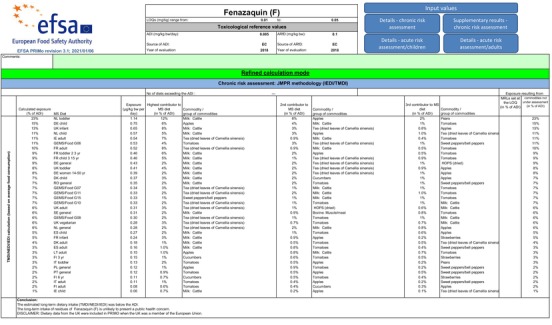 Figure 1
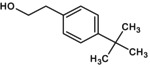 Figure 2
 Figure 3
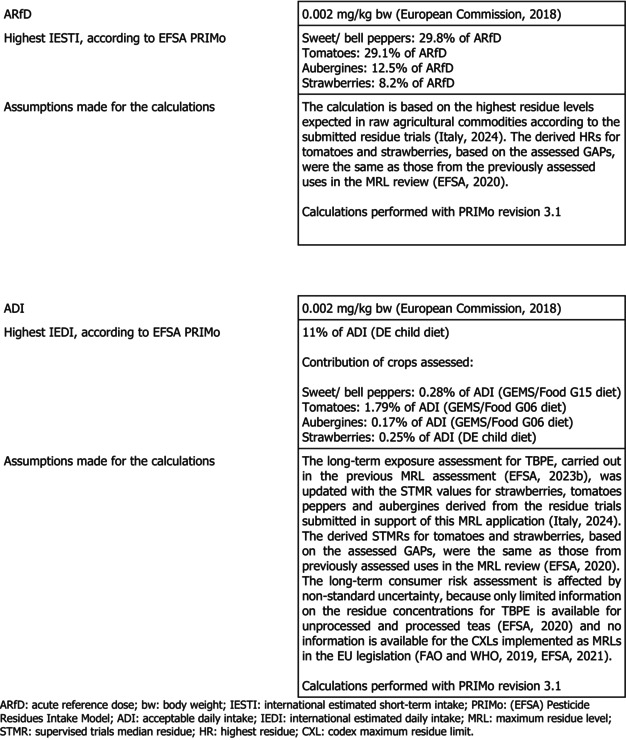 Figure 4
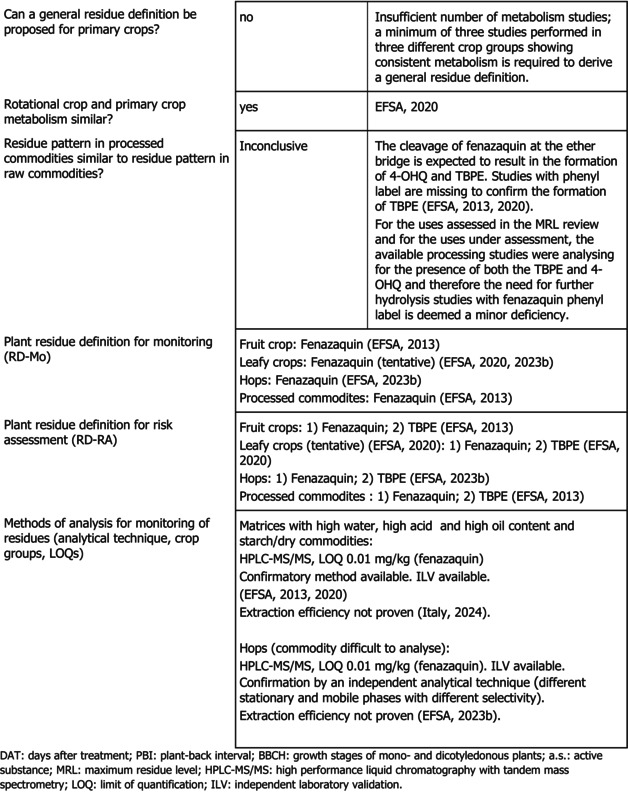 Figure 5
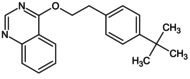 Figure 6
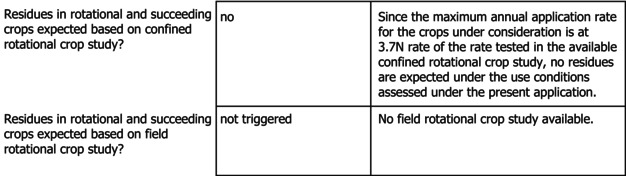 Figure 7
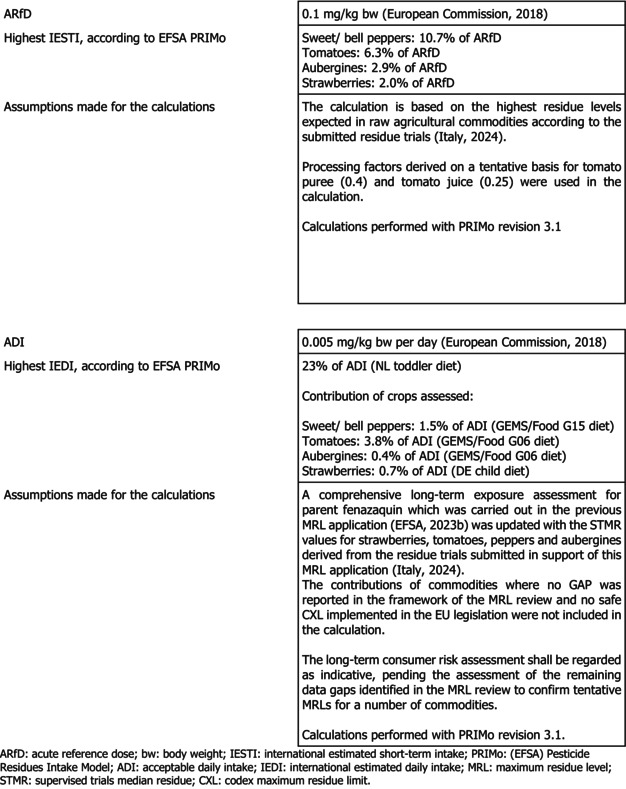 Figure 8
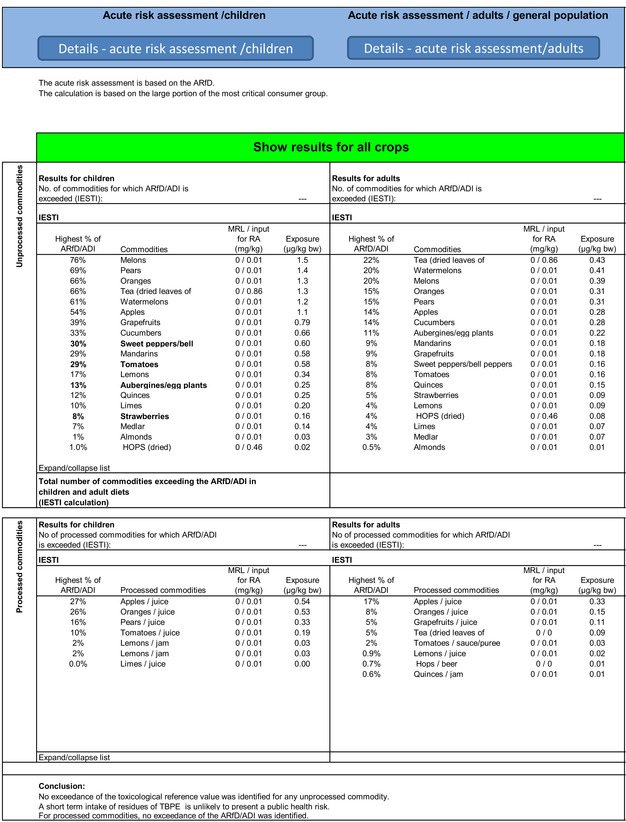 Figure 9
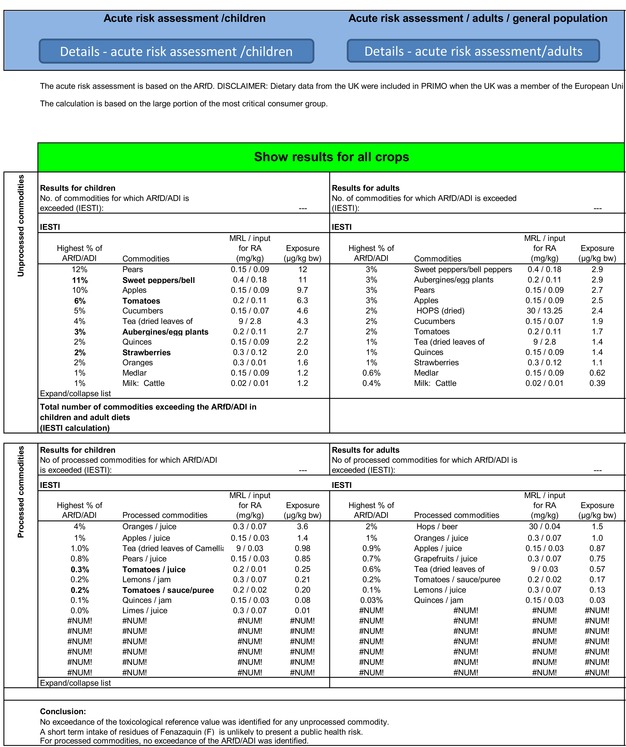 Figure 10
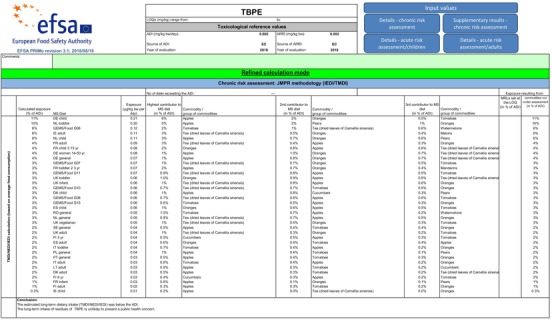 Figure 11
Peer Reviews
No public reviews on file for this paper yet. If you reviewed it on a platform where reviews are public (OpenReview, ICLR, NeurIPS, ICML), you can paste yours below so the community can read it here.
Videos
No videos yet. Explain this paper in a talk, walkthrough, or lecture? Add one.
Taxonomy
TopicsAgricultural safety and regulations · Pesticide Residue Analysis and Safety · Pesticide Exposure and Toxicity
SUMMARY
In accordance with Article 6 of Regulation (EC) No 396/2005, Gowan Crop Protection Limited submitted an application to the competent national authority in Italy (evaluating Member State, EMS) to modify the existing maximum residue levels (MRLs) for the active substance fenazaquin in strawberries, sweet peppers, tomatoes and aubergines.
The application, alongside the dossier containing the supporting data in IUCLID format, was submitted through the European Food Safety Authority (EFSA) Central Submission System on 7 July 2023. The appointed EMS Italy assessed the dossier and declared its admissibility on 11 October 2023. Subsequently, following the implementation of the EFSA's confidentiality decision, the non‐confidential version of the dossier was published by EFSA, and a public consultation launched on the dossier. The consultation aimed to consult stakeholders and the public on the scientific data, studies and other information part of, or supporting, the submitted application, in order to identify whether other relevant scientific data or studies are available. The consultation run from 22 November 2023 to 12 December 2023. No additional data nor comments were submitted in the framework of the consultation.
At the end of the commenting period, the EMS proceeded drafting the evaluation report, in accordance with Article 8 of Regulation (EC) No 396/2005, which was submitted to the European Commission and to EFSA on 18 April 2024. To accommodate for the intended uses of fenazaquin, the EMS proposed to raise the existing MRLs from the limit of quantification (LOQ) to 0.4 mg/kg for sweet peppers/bell peppers and to 0.2 mg/kg for aubergines. In addition to lower the existing MRL from 0.4 to 0.3 mg/kg for strawberries, and to raise the existing MRL for tomatoes from 0.05 to 0.2 mg/kg.
On 15 May 2024 the European Commission sent a mandate to EFSA to assess the application and the evaluation report as required by Article 10 of the MRL regulation. EFSA identified data gaps and requested the EMS to address them. On 16 April 2025, the applicant provided the requested information in an updated IUCLID dossier. The additional information was duly considered by the EMS who submitted a revised evaluation report to EFSA on 28 May 2025 (further revised in July 2025), which replaced the previously submitted evaluation report.
Based on the conclusions derived by EFSA in the framework of (EC) No 1107/2009, the data evaluated under previous MRL assessments and the additional data provided by the EMS in the framework of this application, the following conclusions are derived.
The metabolism of fenazaquin following foliar application was investigated in crops belonging to the groups of fruit crops and leafy crops. Fenazaquin is the major component of the residues in all investigated matrices. In addition, the cleavage of the fenazaquin at the ether bridge was observed, leading to the formation of quinazolin‐4‐ol (4‐OHQ) and 2‐(4‐tert‐butylphenyl) ethanol (TBPE).
Studies investigating the effect of processing on the nature of fenazaquin (hydrolysis studies) demonstrated that the active substance is readily degraded to quinazolin‐4‐ol (4‐OHQ), especially when subject to pasteurisation. In the absence of a study with fenazaquin labelled on phenyl moiety, the MRL review concluded that further standard hydrolysis studies with fenazaquin phenyl label are only desirable since available processing study samples have been analysed for TBPE, confirming the cleavage of the molecule. Processing field studies were submitted for the present assessment and provided information on the magnitude of TBPE in processed products of tomatoes and peppers. Submitted data indicates concentration of TBPE in some of the processed products which is likely occurring due to the moisture loss. No additional data is needed for strawberries, as data from similar processed fruits like oranges and grapes (e.g. juice, jam, canned fruit) are considered relevant. These data showed TBPE levels below the LOQ. Considering that aubergines belong to the same crop group as tomatoes (for which processing data have been submitted), and that aubergine is not listed among processed commodities relevant to dietary exposure, no further processing data are required for this application. In line with previous conclusions, for the present MRL application, the lack of standard hydrolysis studies with phenyl labelled fenazaquin is considered a minor deficiency.
In rotational crops, the major residue identified was the parent compound.
Based on the metabolic pattern identified in fruit crop metabolism study, hydrolysis studies and the toxicological relevance of metabolites, the residue definitions for fruit crops were proposed as fenazaquin for enforcement and two separate residue definitions were derived for the risk assessment: (1) fenazaquin and (2) 2‐(4‐tert‐bu‐tylphenyl) ethanol (TBPE), considering that the metabolite was of higher toxicity than the parent compound. These residue definitions also apply to processed products of fruit crops.
EFSA concluded that, for the crops assessed in this application (all belonging to the fruit crops group), metabolism of fenazaquin in primary and in rotational crops, and the possible degradation in processed products have been sufficiently addressed and that the previously derived residue definitions apply.
Sufficiently validated analytical methods, based on high performance liquid chromatography with tandem mass spectrometry (HPLC–MS/MS), are available to quantify residues in the crops assessed in this application according to the enforcement residue definition. The methods enable quantification of residues at or above 0.01 mg/kg (LOQ). Extraction efficiency of the enforcement method is not proven thus introducing additional uncertainty of the present assessment.
The available residue trials are sufficient to derive MRL proposals of 0.3 mg/kg for strawberries; 0.4 mg/kg for sweet/bell peppers; 0.2 mg/kg for tomatoes and 0.2 mg/kg for aubergines.
In the framework of the present assessment, the applicant submitted two studies investigating the effects of processing on the magnitude of fenazaquin residues in processed commodities of tomatoes and peppers. Samples of tomato puree, wet pomace, paste, juice, canned, cooked, dry tomato and dry pepper were analysed for residues of fenazaquin and TBPE. The derived processing factors (PFs) are considered indicative as, according to the data requirements applicable for the present assessment, at least three studies are required to derive robust processing factors for enforcement purposes.
The occurrence of fenazaquin residues in rotational crops was investigated in the framework of the MRL review. Based on the available information from the studies addressing the nature of residues, it was concluded that significant residue levels are unlikely to occur in rotational crops, provided that the active substance is used according to the proposed Good Agricultural Practice (GAP). As the application rate for crops under consideration is 3.5 times lower than the tested one in the rotational crop metabolism study, no residues are expected in rotated crops if the active substance is used according to intended GAPs.
Residues of fenazaquin in commodities of animal origin were not assessed since the crops under consideration in this MRL application are normally not fed to livestock.
The toxicological profile of fenazaquin was originally assessed in the framework of the EU pesticides peer review under Directive 91/414/EEC and confirmed under the framework of 1107/2009 (amendment of approval conditions). The data were sufficient to derive an acceptable daily intake (ADI) of 0.005 mg/kg body weight (bw) per day and an acute reference dose (ARfD) of 0.1 mg/kg bw. The plant metabolite TBPE, relevant for the risk assessment, is more toxic than the parent compound. Therefore, separate toxicological reference values were derived for this compound: ADI of 0.002 mg/kg bw per day and ARfD of 0.002 mg/kg bw.
The consumer risk assessment was performed separately for parent fenazaquin and its metabolite TBPE with revision 3.1 of the EFSA Pesticide Residues Intake Model (PRIMo). In the framework of the previous MRL application oh hops a comprehensive long‐term exposure assessment for parent fenazaquin was carried out, taking into account the existing uses of fenazaquin at EU level, existing import tolerances, implemented Codex MRLs after MRL review and the assessed use in hops. EFSA now updated this calculation with the supervised trials median residue (STMR) values derived from the residue trials submitted in support of the current assessment for strawberries, peppers, tomatoes and aubergines. The estimated long‐term dietary intake accounted for a maximum of 23% the ADI (NL toddler diet). The short‐term exposure was calculated only for the crops under assessment and did not exceed the ARfD, accounting for a maximum of 11% of the ARfD for peppers.
For TBPE the long‐term consumer exposure, which was performed by the previous MRL application on hops was updated with the risk assessment values as derived from the submitted residue trials on strawberries, peppers, tomatoes and aubergines. Regarding commodities for which Codex MRLs have been implemented in the MRL legislation (e.g. subsequent to the MRL review), no information on TBPE concentrations is available and therefore, potential residues in these commodities were not considered in the exposure calculation for TBPE. The highest chronic exposure accounted for 11% the ADI (DE child diet). The acute exposure for TBPE was calculated only for the residues in the assessed commodities and accounted for a maximum of 30% of the ARfD for peppers.
EFSA concluded that the proposed use of fenazaquin on strawberries, peppers, tomatoes and aubergines will not result in a consumer exposure exceeding the toxicological reference values and therefore is unlikely to pose a risk to consumers’ health. The long‐term consumer risk assessment for fenazaquin and TBPE shall be regarded as indicative pending the assessment of the data gaps identified in the MRL review. The consumer risk assessment for TBPE is also affected by non‐standard uncertainty related to limited information available on the residue concentrations in teas (unprocessed and processed) and no information on residue concentrations in crops for which the CXLs are implemented in the EU legislation.
EFSA proposes to amend the existing MRLs as reported in the summary table below.
Full details of all end points and the consumer risk assessment can be found in Appendices B, C, D.Codea CommodityExisting EU MRL (mg/kg)Proposed EU MRL (mg/kg)Comment/justification Enforcement residue definition: Fenazaquin^(F)^ 0152000Strawberries 0.4b
(ft1) 0.3 The original data gap identified in the MRL review to support import tolerances was not addressed in the present application. However, the submitted data under the present application are sufficient to derive a new MRL proposal based on a greenhouse EU use Risk for consumers unlikely 0231010Tomatoes 0.05b
(ft1) 0.2 The original data gap identified in the MRL review to support import tolerances was not addressed in the present application. However, the submitted data under the present application are sufficient to derive a new MRL proposal based on a greenhouse EU use Risk for consumers unlikely 0231020Sweet peppers/bell peppers0.01* 0.4 The submitted data are sufficient to derive an MRL proposal for the greenhouse use Risk for consumers unlikely 0231030Aubergines/eggplants0.01* 0.2 The submitted data on tomatoes are sufficient and allowed extrapolation to derive an MRL proposal for the greenhouse use in aubergines Risk for consumers unlikely (ft1): Commission Regulation (EU) 2024/1439: The European Food Safety Authority identified some information on residue trials as unavailable. When re‐viewing the MRL, the Commission will take into account the information referred to in the first sentence, if it is submitted by 7 July 2023, or, if that information is not submitted by that date, the lack of it.Abbreviations: (F), fat soluble; MRL, maximum residue level. ^a^ Commodity code number according to Annex I of Regulation (EC) No 396/2005. ^b^ MRL derived in the MRL review on a tentative basis due to the lack of sufficient number of field trials compliant with the assessed import tolerance GAP.*The MRL is set at the limit of analytical quantification (LOQ).
ASSESSMENT
The European Food Safety Authority (EFSA) received an application to modify the existing maximum residue levels (MRLs) for fenazaquin in strawberries, sweet peppers, tomatoes and aubergines. The detailed description of the intended uses of fenazaquin, which are the basis for the current MRL application, are reported in Appendix A.
Fenazaquin is the ISO common name for 4‐tert‐butylphenethyl quinazolin‐4‐yl ether (IUPAC). The chemical structures of the active substance and its main metabolites are reported in Appendix E.
Fenazaquin was evaluated in the framework of Directive 91/414/EEC1 with Greece designated as rapporteur Member State (RMS) for the representative uses as a foliar treatment on grapes, citrus and ornamentals. The draft assessment report (DAR) prepared by the RMS has been peer reviewed by EFSA (2010b). Fenazaquin was approved2 for the use as an acaricide on ornamentals in greenhouses only on 1 June 2011. In 2011, Greece received an application for amendment to the conditions of approval of the active substance fenazaquin in the framework of Regulation (EC) No 1107/2009, in order to lift the restriction and allow uses on grapes and citrus (uses for which RMS previously applied for) as well as uses on pome fruit and stone fruit (additional uses) to be authorised. The addendum to the DAR prepared by the RMS under this framework has been peer reviewed by EFSA (EFSA, 2013). The conditions of approval of the active substance fenazaquin in the EU have been amended allowing the use in greenhouse only by Commission Implementing Regulation (EU) 2018/690. Certain conditions and restrictions were kept (particular attention in protecting aquatic organisms, operators, bees; risk to consumers, in particular, from the residues generated during processing and conditions of use to avoid exposure to residues of fenazaquin with respect to crops for human and animal consumption).
The EU MRLs for fenazaquin are established in Annex II of Regulation (EC) No 396/2005.3 The review of existing MRLs according to Article 12 of Regulation (EC) No 396/2005 (MRL review) has been completed (EFSA, 2020), and the proposed modifications have been implemented in the MRL legislation. After completion of the MRL review, EFSA has issued one reasoned opinion on the modification of MRLs for fenazaquin in hops (EFSA, 2023b). The proposal from this reasoned opinion have been considered in the recent MRL regulation.4 In addition, certain Codex maximum residue limits (CXLs) have been taken over in the EU MRL legislation (EFSA, 2021; FAO and WHO, 2019). It is to be noted that EFSA is not considering CXLs evaluated in EFSA (2023a) in the present assessment, as those CXLs were not implemented in the EU MRL legislation (FAO and WHO, 2023).
In accordance Article 6 of Regulation (EC) No 396/2005 and following the provisions set by the ‘Transparency Regulation’ (EU) 2019/1381,5 the applicant Gowan Crop Protection Limited submitted on 7 July 2023 an application to the competent national authority in Italy, alongside the dossier containing the supporting data using the IUCLID format.
The appointed EMS Italy assessed the dossier and declared its admissibility on 11 October 2023. Subsequently, following the implementation of the EFSA's confidentiality decision, the non‐confidential version of the dossier was published by EFSA, and a public consultation launched on the dossier. The consultation aimed to consult stakeholders and the public on the scientific data, studies and other information part of, or supporting, the submitted application, in order to identify whether other relevant scientific data or studies are available. The consultation run from 22 November 2023 to 12 December 2023. No additional data nor comments were submitted in the framework of the consultation.
At the end of the commenting period, the EMS proceeded drafting the evaluation report, in accordance with Article 8 of Regulation (EC) No 396/2005, which was submitted to the European Commission and to EFSA on 18 April 2024. To accommodate for the intended uses of fenazaquin, the EMS proposed to raise the existing MRLs from the LOQ to 0.4 mg/kg for sweet peppers/bell peppers and to 0.2 mg/kg for aubergines. In addition to lower the existing MRL from 0.4 to 0.3 mg/kg for strawberries, and to raise the existing MRL for tomatoes from 0.05 to 0.2 mg/kg.
On 15 May 2024 the European Commission sent a mandate to EFSA to assess the application and the evaluation report as required by Article 10 of the MRL regulation. EFSA identified data gaps and requested the EMS to address them. On 16 April 2025, the applicant provided the requested information in an updated IUCLID dossier. The additional information was duly considered by the EMS who submitted a revised evaluation report to EFSA on 28 May 2025 (further revised in July 2025), (Italy, 2024), which replaced the previously submitted evaluation report.
EFSA based its assessment on the evaluation report submitted by the EMS (Italy, 2024), the draft assessment report (DAR) and its addenda (Greece, 2006, 2010, 2012, 2013) prepared under Council Directive 91/414/EEC and in the framework of Regulation (EC) No 1107/2009 for the approval and the amendment to the conditions of approval of fenazaquin, the Commission review report on fenazaquin (European Commission, 2018), the conclusion on the peer review of the pesticide risk assessment of the active substance fenazaquin (EFSA, 2010b, 2013), as well as the conclusions from previous EFSA opinions on fenazaquin (EFSA, 2010a, 2018b, 2023b), including the reasoned opinion on the MRL review according to Article 12 of Regulation No 396/2005 (EFSA, 2020) and the assessment of the CXLs implemented in the EU legislation (EFSA, 2021; FAO and WHO, 2019).
For this application, the data requirements established in Regulation (EU) No 544/20116 and the guidance documents applicable at the date of submission of the IUCLID application are applicable (European Commission, 1997a, 1997b, 1997c, 1997d, 1997e, 1997f, 1997g, 2010, 2020, 2021, 2023; OECD, 2008, 2011). The assessment is performed in accordance with the legal provisions of the Uniform Principles for the Evaluation and the Authorisation of Plant Protection Products adopted by Commission Regulation (EU) No 546/2011.7
It is noted that strawberries, aubergines and sweet peppers are melliferous crops and the uses of fenazaquin described in the current application are expected during the flowering period, however, further data were not submitted by the applicant on investigation of residues in honey and is not required, according to the data requirements applicable for the assessment of the submitted application.
A selected list of end points of the studies assessed by EFSA in the framework of this MRL application including the end points of relevant studies assessed previously, is presented in Appendix B.
The evaluation report submitted by the EMS (Italy, 2024) and the exposure calculations using the EFSA Pesticide Residues Intake Model (PRIMo) are made publicly available as background documents to this reasoned opinion.8
RESIDUES IN PLANTS
1
Nature of residues and methods of analysis in plants
1.1
Nature of residues in primary crops
1.1.1
The metabolism of fenazaquin in primary crops, belonging to the group of fruit crops and leafy crops following foliar applications, has been investigated in the framework of the EU pesticides peer review, MRL review and the previous MRL assessments (EFSA, 2010b, 2013, 2023b). In all studies fenazaquin was radiolabelled in the phenyl (P‐label) and quinazoline (Q‐label) ring of the molecule. In grapes, a major proportion of the total residue was present as parent fenazaquin (69% TRR in late treatment; 29% in early treatment). The levels of other individual metabolites or fractions was below 5% of the total radioactive residue (TRR) at harvest of the mature crop (EFSA, 2013). However, the cleavage of the fenazaquin molecule at the ether bridge leads to the formation of quinazolin‐4‐ol (4‐OHQ) and 2‐(4‐tert‐butylphenyl) ethanol (TBPE) which were quantified above 0.01 mg eq./kg. In grape fruits 76 days after the early application 0.041 mg eq./kg of 4‐OHQ was quantified in the Q‐label and 0.023 mg eq./kg of TBPE in the P‐label. 28 days after the late application, 0.157 mg eq./kg of 4‐OHQ was quantified in the Q‐label and 0.049 mg eq./kg of TBPE in the P‐label, respectively. Data on the toxicity of the metabolite 4‐OHQ indicated that it is less toxic than the parent; however, TBPE is of higher toxicity than fenazaquin (EFSA, 2013).
In the metabolism study on lettuce, most of the radioactivity in lettuce (surface wash plus extracts) consisted of parent fenazaquin (89.9% TRR; 9.73 mg/kg) and metabolite TBPE (0.2% TRR; 0.026 mg/kg) in phenyl label. In the quinazoline label main component of the TRR was parent fenazaquin (88.4% TRR; 6.78 mg/kg). In studies with both labels some unknown compounds were detected but at low individual levels (< 1.1% TRR) and were therefore not further characterised. The metabolite 4‐OHQ was not detected in any of the samples. This study is however limited to samplings at seven DAT; in case of future intended uses on leafy crops involving treatment patterns with longer pre‐harvest intervals (PHI), more consideration on study suitability shall be given (EFSA, 2023b).
For the intended uses (fruit crops), the metabolic behaviour in primary crops is sufficiently addressed.
Nature of residues in rotational crops
1.1.2
Fenazaquin is proposed to be used on crops that can be grown in rotation with other crops. According to the soil degradation studies evaluated in the framework of the peer review, the DT90 value of fenazaquin ranged from 42.7 to 160 days (EFSA, 2013). The trigger value of 100 days was exceeded and therefore further studies investigating the nature of residues in rotational crops are required.
The rotational crop metabolism study assessed in the MRL review was carried out with fenazaquin, applied once at a rate of 550 g a.s./ha onto bare soil. Lettuce, radish and wheat were planted at nominal plant‐back intervals (PBI) of 30, 120/149 and 365 days after treatment (DAT). For radish, at 30 DAT, the major compound was fenazaquin, detected in radish roots only (29% TRR; 0.031 mg eq/kg in the Q‐label and 28% TRR; 0.026 mg eq/kg in the P‐label). Up to 42% of the TRR was assigned to the minor extracted components. At 120 DAT, fenazaquin levels in radish root decreased to 15.9% TRR (0.007 mg eq/kg) and 15.5% TRR (0.009 mg eq/kg) in Q‐label and P‐label, respectively. Therefore, 120 DAT residues of fenazaquin are below the LOQ (0.01 mg/kg) in all crop fractions investigated. In lettuce and wheat, fenazaquin and metabolites 2‐oxy‐fenazaquin, TBPE and 4‐OHQ were below the LOQ in all crop fractions and in both labels. Overall, it was concluded that fenazaquin was the major component in all matrices and no specific compound for rotational crops was identified (EFSA, 2020).
For the proposed uses assessed in this application, no further information is required.
Nature of residues in processed commodities
1.1.3
Studies investigating the nature of residues in processed commodities were assessed by the EU pesticides peer review and by the MRL review (EFSA, 2013, 2020). Studies were conducted with radiolabelled fenazaquin on the quinazoline ring only, simulating representative hydrolytic conditions for pasteurisation (20 min at 90°C, pH 4), boiling/brewing/baking (60 min at 100°C, pH 5) and sterilisation (20 min at 120°C, pH 6). The studies demonstrated that fenazaquin is readily degraded especially when subject to pasteurisation. The main degradation product is metabolite 4‐OHQ (60% of the applied radioactivity). No studies with fenazaquin labelled on phenyl moiety (P‐label) are available. The MRL review concluded that, since the cleavage of fenazaquin at the ether bridge results in the formation of 4‐OHQ and TBPE, it is likely that TBPE may be formed under standard hydrolytic conditions. However, there were no studies with the phenyl label to confirm it. For the crop uses assessed by the MRL review, the available processing studies were analysing for the presence of both the TBPE and 4‐OHQ and therefore the MRL review considered the need further hydrolysis studies with fenazaquin phenyl label as a minor deficiency (EFSA, 2020).
The studies on the magnitude of residues in tomatoes and peppers submitted for the present assessment (see Section 1.2.3) provided information on the occurrence of fenazaquin and TBPE metabolite in processed commodities of tomatoes and peppers. These trials indicate metabolite TBPE to remain below the LOQ during the processing of tomatoes and peppers except for some processed commodities where concentration occurred due to the decrease of moisture content during processing. The existing data on the magnitude of residues in processed commodities of oranges and grapes supported the conclusion that TBPE is not expected to be quantified in significant levels in processed commodities of strawberries (OECD, 2008). In line with previous conclusions (EFSA, 2020), for the present MRL application, the lack of standard hydrolysis studies with phenyl labelled fenazaquin is considered a minor deficiency.
Considering the available hydrolysis studies and the quantitative information taken from the additional processing trials on the commodities under assessment, it is concluded that the nature of residues in processed commodities is addressed for the crops under assessment.
Analytical methods for enforcement purposes in plant commodities
1.1.4
During the EU pesticides peer review, an analytical method based on liquid chromatography (LC) coupled to tandem mass spectrometry (MS/MS) was validated in high‐acid content commodities with an LOQ of 0.01 mg/kg (EFSA, 2013). In an addendum to the DAR, a multiresidue method Quick, Easy, Cheap, Effective, Rugged, and Safe (QuEChERS), which allowed the determination of parent fenazaquin in dry commodities, high‐water content, high‐acid content and high‐oil content commodities by LC–MS/MS with a LOQ of 0.01 mg/kg was reported and is supported by an independent laboratory validation (ILV) (EFSA, 2020). The MRL review concluded that residues of fenazaquin can be monitored in all four main plant matrices with an LOQ of 0.01 mg/kg. The methods are sufficiently validated for residues of fenazaquin in the crops under consideration.
EFSA notes that the extraction efficiency of the analytical methods applied for enforcement is not provided as indicated according to the requirements of the extraction efficiency Guidance, SANTE 2017/10632 and the lack of these data introduces additional uncertainty of the present assessment. To satisfy the current criteria of the guidance further investigation on this matter would be required. EFSA would therefore recommend assessing the extraction efficiency in the framework of the peer review for the renewal of approval of the active substance.
In the framework of the previous MRL application, an analytical method using high performance liquid chromatography with tandem mass spectrometry (HPLC–MS/MS) was validated for the determination of fenazaquin residues in hops at the LOQ of 0.01 mg/kg. The extraction efficiency for this method was not validated due to the lack of metabolism study with a crop belonging to the same analytical matrix group as hops (matrix difficult to analyse) (EFSA, 2023b).
Storage stability of residues in plants
1.1.5
Fenazaquin and its metabolites (TBPE, 4‐OHQ) were found to be stable for 12 months under frozen conditions in high‐acid content matrices (orange, grapes) (EFSA, 2013). Storage stability data for high‐oil content matrix (almonds, hops) and for processed commodity (tea) were submitted in previous MRL applications. In almonds, the stability of fenazaquin and its metabolites (TBPE and 4‐OHQ) was demonstrated for 17 and 20 months, respectively (EFSA, 2018b). In tea, the stability of fenazaquin was confirmed for up to 80 days (EFSA, 2010a). In the framework of the MRL review, studies on high‐water content matrices (tomatoes, peaches, cucumbers and melons) demonstrated fenazaquin stability for 13 months (EFSA, 2020). In the previous MRL assessment, stability of fenazaquin, TBPE and 4‐OHQ in hops was demonstrated for at least 13 months (393 days), at least 8.6 months (262 days) and for 23 days respectively (EFSA, 2023b).
Study investigating stability of fenazaquin, TBPE and 4‐OHQ in frozen samples of crops classified as matrices with high‐water content (apple, tomato, peach) was submitted with the current application (Italy, 2024). The investigated storage time points for all the investigated compounds were 0, 3, 6, 12 months. Samples were stored at −18°C. The individual stored TBPE recoveries were under 70% of the initial spiking level for the 0 and 3 month time points in tomato (i.e. 69%, 77%, 63%; mean 70% and 71%, 69%; mean 70%). However, since at the latter time points (6 and 12 months) all the recoveries were above 70% of the spiked level together with the concurrent recoveries, the stability has been considered as demonstrated for 12 months. It is concluded that the freezer storage stability of fenazaquin, TBPE and 4‐OHQ in apple, tomato and peach is demonstrated for at least 12 months when stored at ≤ −18°C.
Since the crops assessed in the framework of this application belong to the high‐water and high‐acid content group, the stability of the relevant residues (fenazaquin and TBPE) during storage is addressed in the context of the current application.
Proposed residue definitions
1.1.6
Based on the available metabolism data in fruit crops (grapes), the hydrolysis studies and the existing toxicological characterisation of the active substance and its metabolites, the residue definitions applicable for the crops assessed under the current MRL application and processed commodities are as follows:
- Residue definition for enforcement: fenazaquin.
- Residue definition for risk assessment: fenazaquin (RD‐RA1) and TBPE (RD‐RA2), considered separately.
Fenazaquin parent compound has been considered a good marker and was concluded for the enforcement residue definition, whereas the need to set a separate residue definition for risk assessment covering TBPE (2‐(4‐tert‐butylphenyl)ethanol) was based on toxicological considerations. Toxicological studies concluded that this metabolite is more toxic than the parent fenazaquin (EFSA, 2013). The residue definition for enforcement set in Regulation (EC) No 396/2005 is identical with the one mentioned above.
EFSA concludes that for the use of fenazaquin on tomatoes, peppers, aubergines and strawberries according to the proposed use pattern, these residue definitions are appropriate and neither modification nor further information is required.
Magnitude of residues in plants
1.2
Magnitude of residues in primary crops
1.2.1
In support of the MRL application, the applicant submitted residue trials conducted in strawberries, tomatoes and peppers. The samples were analysed for the parent compound, TBPE (part of the risk assessment residue definition) and partially (two strawberry trials and all peppers trials) for 4‐OHQ (non‐relevant since not in the residue definition). According to the assessment of the EMS, the methods used were sufficiently validated and fit for purpose. The samples of these residue trials were stored under conditions for which integrity of the samples has been demonstrated (Italy, 2024).
A cross‐validation study aiming to verify the extraction efficiency (EE) of the analytical methods used in the submitted field trials has been provided. The metabolism study that was considered for the cross‐validation study was performed on orange.9 In the orange metabolism study, extraction was made using a sequential combination of solvents. The fruits were first washed with 10% methanol, dichloromethane (DCM) and methanol, followed by residue extraction from fruit using acetonitrile. Different levels of TRR were extracted with each step/solvent over different PHIs. At shorter PHIs (0, 9 days), which are the most representative for the uses under assessment (3 days), more than 80% of the TRR was extracted with methanol and DCM. In the cross‐validation study, only acetonitrile was used to represent the solvent system from the metabolism study. Since significant amounts of residues are extracted with other solvents, particularly at relevant PHIs, the study cannot be accepted as a valid demonstration of the EE of the risk assessment methods. Additionally, as orange is a high‐acid matrix, the cross‐validation is not possible for tomato and pepper which are high‐water matrices. In conclusion, EE of the methods R.22.07 and R A4167, used for the analysis of the field trials samples is not demonstrated. For the other two methods, used in two out of 10 strawberry field trials (12 I FR GW P/A) and in peppers for TBPE and 4‐OHQ analysis (IF‐11/01936149) no attempt was made to prove the EE hence it is not demonstrated as indicated by SANTE 2017/10632. Although not considered as a formal data gap, the lack of these data introduces additional uncertainty of the present assessment.
Strawberries: indoor – 1 × 150 g/ha; BBCH 11–79; PHI: 3 days
In support of the intended use the applicant submitted in total 10 supervised residue trials on strawberries, conducted in 2012 and 2022 in greenhouse. Four field trials were overdosed more than 25% of the intended application rate. As none of the other GAP parameters deviated, the results of these four trials were scaled down with respect to the intended application rate (Italy, 2024). The rest of the six field trials were GAP compliant, with the application rate in line with the intended GAP (150 g/ha) and therefore no scaling was needed. Five residue field trials were designed as decline, with the sampling points at 0, 1, 2–4 and 7–8 PHI (pre‐harvest interval). The highest residue levels were observed at the intended PHI of 3 days and declined at the later tested PHIs. The remaining five non‐decline field trials were sampled in line with the GAP, at 3 days PHI. Residue values of fenazaquin ranged between 0.03 and 0.12 mg/kg and residues of TBPE remained below LOQ (0.01 mg/kg) at all timepoints. The metabolite 4‐OHQ was also analysed for information purpose (as not in the RD) and resulted below LOQ (0.01 mg/kg). The data are considered sufficient to derive an MRL proposal of 0.3 mg/kg for fenazaquin in strawberries.
Tomatoes, aubergines: indoor – 1 × 150 g/ha; BBCH 11–79; PHI: 3 days.
In support of the intended use the applicant submitted in total 8 GAP compliant supervised residue trials on tomatoes, conducted in 2022 in greenhouse (Italy, 2024). As per SANTE/2019/12752, for residue trials reflecting indoor uses, it is acceptable that they are conducted in 1 year/season only (European Commission, 2023). Four residue field trials were designed as decline, with the sampling points at 0, 1, 3–4 and 7–8 days PHI. In two out of the four decline trials, the highest residue levels were observed at the intended PHI of 3 days, with a decline noted at the next and final tested PHI of 7 days. In the other two decline field trials, fenazaquin residues increased at the latest PHI of 7–8 days. To ensure that no higher residues would occur beyond this point, further evidence on residue decline has been requested by EFSA. After this additional data requirement, a new set of field trials conducted outside EU (Morrocco) and under outdoor conditions were provided. Apart from being conducted in field (outdoor) and outside EU, trials were compliant with the other GAP parameters (application rate, BBCH, PHI). In these trials samples were analysed at 0, 2–3, 7, 9–10 and 14–15 PHIs. The highest fenazaquin levels were observed at the PHI of 3 days, always followed by a decline. Regarding the TBPE metabolite, it remained below LOQ in all field trials at any timepoints. These outdoor trials are considered as a supporting evidence to confirm the decline of residues at longer PHI. Only the available GAP‐compliant indoor trials were used to derive MRL and risk assessment values. In addition, from the decline field trials on tomato and cucumber assessed in the MRL review, the highest residues were either at the PHI of 3 days or 7 days (i.e. cucumbers were analysed for an additional PHI after 7 days (14)). Overall, considering all the presented evidence, the indoor decline field trials in tomatoes are deemed sufficient to demonstrate residue decline over time and to ensure the potentially highest residue levels are considered for the risk assessment.
Residue values of fenazaquin in the eight provided trials ranged between 0.03 mg/kg and 0.11 mg/kg while residues of TBPE remained below LOQ (0.01 mg/kg). The data are considered sufficient to derive an MRL proposal of 0.2 mg/kg for fenazaquin in tomatoes and aubergines as extrapolation from tomato to aubergine is foreseen by the EU Guidance on extrapolation (European Commission, 2023).
Peppers: indoor – 1 × 150 g/ha; BBCH 11–79; PHI: 3 days
In support of the intended use the applicant submitted in total 8 GAP compliant supervised residue trials on peppers, conducted in 2011 in greenhouse (Italy, 2024). As per SANTE/2019/12752, for residue trials reflecting indoor uses, it is acceptable that they are conducted in 1 year/season only (European Commission, 2023). Four residue field trials were designed as decline, with the sampling points at 0, 1, 3–4 and 7 days PHI. In two decline field trials the highest residue levels were at the GAP intended PHI of 3 days and for one trial residue concentrations remained stable after the PHI of 3 days (i.e. same residue levels at 3 and 7 PHIs). In the fourth decline trial an increase of residues at the latest PHI of 7 days was observed. As for tomato, decline field trials assessed in the MRL review on tomato and cucumber (fruiting vegetables as peppers) served as a supportive evidence that higher residues after PHI of 7 days are not expected. Additionally, an information on four non‐EU decline field trials conducted in pepper under outdoor conditions has been provided by the applicant upon EFSA's request for additional data and suggested residue decline after 3–7 PHIs. This body of evidence was considered sufficient to lift the concerns on the residue decline after longer PHIs.
Residue values of fenazaquin ranged between 0.08 and 0.18 mg/kg; residues of TBPE were always below LOQ (0.01 mg/kg). The metabolite 4‐OHQ was also analysed in 8 trials for information purpose only (as not in the RD). It ranged between 0.01 mg/kg (LOQ) and 0.03 mg/kg. The data are considered sufficient to derive an MRL proposal of 0.4 mg/kg for fenazaquin in peppers.
Magnitude of residues in rotational crops
1.2.2
Since the maximum annual application rate for the crops under consideration (i.e. 150 g a.s./ha) is lower (3.7 N rate) than the application rate tested in the rotational crop metabolism study, it is concluded that no residues are expected, provided that the active substance is applied according to the proposed GAP.
Magnitude of residues in processed commodities
1.2.3
Considering the residues occurrence in raw commodities (≥ 0.1 mg/kg) and, to address the question on the potential occurrence of the toxicologically relevant metabolite TBPE, studies on the magnitude of residues in processed commodities have been requested by EFSA for strawberries, tomatoes, aubergines and peppers.
Two processing trials in tomato and two in peppers have been submitted (Italy, 2024). According to the EMS the method of analysis used to analyse the residue trial samples was sufficiently validated, in line with the validation parameters as per SANTE/2020/12830 for all the analysed raw and processed commodities (Italy, 2024). Extraction efficiency of the analytical methods applied for residue trials is not proven as indicated according to the requirements of the extraction efficiency Guidance, SANTE 2017/10632 (European Commission, 2023) and the lack of these data introduces additional uncertainty of the present assessment. The samples of these residue trials (raw and processed commodities) were stored under conditions for which integrity of the samples has been demonstrated.
Processing studies with tomato
Applied GAP in processing studies: 1 × 760 g/ha; PHI 3 days
Intended GAP in tomatoes: 1 × 150 g/ha; PHI: 3 days
Two field trials conducted in USA were submitted. According to the EMS weather conditions of the US region corresponded to the southern EU zone (Italy, 2024). In addition, since the purpose of the processing trials is to determine the residue ratio between raw and processed commodities rather than to assess quantitative aspects, the US trials were considered acceptable. Samples of raw tomato and its processed products (puree, wet pomace, paste, juice, canned, cooked and dry tomato) were analysed for fenazaquin and TBPE. Processing studies demonstrated that cooking, canning, juice, puree and paste preparation lead to a reduction of fenazaquin residues in the processed product with the processing factors (PFs) of 0.2, 0.2, 0.3, 0.4, 0.9, respectively. A concentration of fenazaquin residues in wet pomace and dry fruit was observed (PFs: 32 and 8, respectively).
TBPE residues were not detected in raw commodities and in some processed products (juice, canned and cooked tomato). A slight concentration of TBPE is observed in wet pomace, paste and dry tomato with the highest level of 0.016 mg/kg, which can be attributed to a concentration due to the moisture loss. For these commodities, PFs for TBPE were derived on a tentative basis because residues were below the LOQ in the RAC. For the rest of the commodities where no residues in processed and RAC were quantified, no robust processing factors were derived for TBPE. Since the provided processing trials were 5× overdosed in respect to the intended use under assessment and since TBPE did not occur above the LOQ in the GAP‐compliant field trials in primary crop, no further data is required under the current assessment.
Processing studies with peppers
Applied GAP in processing studies: 1 × 740g/ha; PHI 3 days
Intended GAP in peppers: 1 × 150 g/ha; PHI: 3 days
Two field trials conducted in USA were submitted and accepted (see also tomatoes above). The two trials were independent considering the temporal distance of > 30 days between the treatment dates and 5× overdosed with respect to the intended GAP in peppers. Samples of raw pepper and its processed product (dry pepper) were analysed for fenazaquin and TBPE. Processing studies demonstrated fenazaquin residues concentration (PF: 14), which can be attributed to the moisture loss. Residues of TBPE were not quantified in raw peppers but residues occurred up to 0.05 mg/kg in dried pepper. Given the TBPE residues were not detected in the raw commodities, no robust processing factor could be derived for TBPE. For this reason, a tentative PF was derived and should be considered on a tentative basis only. Since the provided processing trials were 5× overdosed in respect to the intended use under assessment and since TBPE did not occur above the LOQ in the GAP‐compliant field trials in primary crop, no further data is required under the current assessment.
Specific processing studies for strawberries are not available. Nevertheless, studies assessed in the peer review and in the MRL review on grapes and oranges indicate a dilution of fenazaquin residues in potential processed commodities of strawberries (juice, jam, canned fruit); regarding the TBPE metabolite, it was found to remain below LOQ in these matrices (EFSA, 2013, 2020). These data is considered relevant as extrapolation between these commodities is indicated in the OECD 508 guideline. For aubergines, no studies were provided too, however, considering the existing data in tomato and pepper that belong to the same crop group, and taking into account that aubergine is not reported in the compilation of possible processed commodities important for the calculation of the dietary exposure of humans, no further data is required for this application.
The derived PFs for tomato and pepper are reported in Appendix B.1.2.3. Tentative PFs are derived based on a limited data set (two trials instead of three) noting that for the current assessment the data requirement according to Commission Regulation (EU) No 544/2011 apply. According to the new data requirements however two processing studies with less than 50% divergence would be considered as sufficient.
Proposed MRLs
1.2.4
The available data are considered sufficient to derive MRL proposals as well as risk assessment values for the commodities under evaluation (see Appendix B.3).
It is noted that the proposed MRL for strawberries is lower than the existing one. The existing MRL was tentatively derived in the MRL review on the basis of an import tolerance use; the data gap identified in the MRL review was not addressed under present application. However, the submitted data under the present application are sufficient to derive a new MRL proposal based on a greenhouse EU use.
In Section 3 EFSA assessed whether residues on these crops resulting from the intended uses are likely to pose a consumer health risk.
RESIDUES IN LIVESTOCK
2
Not relevant as strawberries, tomato, aubergine and peppers are not used for feed purposes.
CONSUMER RISK ASSESSMENT
3
EFSA performed a dietary risk assessment using revision 3.1 of the EFSA PRIMo (EFSA, 2018a, 2019). This exposure assessment model contains food consumption data for different sub‐groups of the EU population and allows the acute and chronic exposure assessment to be performed in accordance with the internationally agreed methodology for pesticide residues (FAO, 2016).
The toxicological reference values for fenazaquin (RD‐RA1) used in the risk assessment (i.e. ADI of 0.005 mg/kg bw per day and ARfD value of 0.1 mg/kg bw) were derived in the framework of the EU pesticides peer review (European Commission, 2018). The plant metabolite TBPE, relevant for the risk assessment (RD‐RA2), is more toxic than the parent compound and therefore separate toxicological reference values were derived for this compound: ADI of 0.002 mg/kg bw per day and ARfD of 0.002 mg/kg bw (European Commission, 2018). A separate risk assessment was performed for TBPE.
Fenazaquin
3.1
Short‐term (acute) dietary risk assessment
The short‐term exposure assessment was carried out in accordance with the internationally agreed methodology and focused on the commodities assessed in this application (FAO, 2016). The calculations were based on the HRs derived from supervised field trials and the complete list of input values can be found in Appendix D.1.
Processing factors derived in the framework of this application on a tentative basis for tomato puree (0.4) and tomato juice (0.25) were used in the calculation.
The short‐term exposure did not exceed the ARfD for any of the crops assessed in this application. It accounted for 11%, 6%, 3% and 2% of the ARfD for sweet/bell peppers, tomatoes, aubergines and strawberries, respectively.
Long‐term (chronic) dietary risk assessment
In the framework of the previous MRL application on hops a comprehensive long‐term exposure assessment for parent fenazaquin was carried out, taking into account the existing uses of fenazaquin at EU level and existing import tolerances assessed in the MRL review (EFSA, 2020). Codex MRLs which were implemented in the Regulation (EU)2022/134212 after the MRL review for tree nuts and various commodities of animal origin were also considered. EFSA now updated this calculation with the relevant STMR values derived from the residue trials submitted in support of the current assessment for strawberries, peppers, tomatoes and aubergines. The most recent CXLs, derived in FAO and WHO (2023) and considered in EFSA (2023a) are not taken into account for the exposure calculation as not implemented due to the EU reservation expressed for all commodities. The input values used in the exposure calculations are summarised in Appendix D.1.
The estimated long‐term dietary intake accounted for a maximum of 23% the ADI (NL toddler diet). The contribution of residues expected in the commodities assessed in this application to the overall long‐term exposure is presented in detail in Appendix B.2.
EFSA concluded that the long‐term intake of residues of fenazaquin resulting from the existing and the intended uses is unlikely to present a risk to consumer health.
The long‐term consumer risk assessment shall be regarded as indicative pending the assessment of the remaining data gaps identified in the MRL review to confirm tentative MRLs for a number of commodities.
TBPE
3.2
Short‐term (acute) dietary risk assessment
The short‐term exposure assessment was carried out for commodities assessed in this application, in accordance with the internationally agreed methodology. The calculations were based on the HRs derived from supervised field trials and the complete list of input values can be found in Appendix D.1.
The short‐term exposure did not exceed the ARfD for any of the crops assessed in this application. It accounted for 30%, 29%, 13% and 8% of the ARfD for sweet/ bell peppers, tomatoes, aubergines and strawberries, respectively. Processing factors for tomato puree and tomato juice are not available for the calculation as residues in raw and processed commodities from the available processing studies were below the LOQ.
Long‐term (chronic) dietary risk assessment
In the framework of the previous MRL application the long‐term consumer exposure to TBPE residues was carried out considering the available residue data from the MRL review on citrus fruits, pome fruits, almonds, strawberries, tomatoes, cucumbers, melons, watermelons and tea together with the assessed data on hops (EFSA, 2020, 2023b). EFSA updated this calculation with the risk assessment values derived from the submitted residue trials on strawberries, peppers, tomatoes and aubergines. Regarding commodities for which Codex MRLs have been implemented in the EU MRL legislation, no information on TBPE concentrations is available and therefore the contribution of residues in these commodities was not considered in the exposure calculation for TBPE. For tea, the input values are indicative, pending the confirmation of TBPE levels present in tea (EFSA, 2020).
The estimated long‐term dietary intake accounted for a maximum of 11% the ADI (DE child diet). The contribution of residues expected in the commodities assessed in this application to the overall long‐term exposure is presented in detail in Appendix B.2.
EFSA concluded that the long‐term intake of TBPE residues resulting from the existing and the intended uses is unlikely to present a risk to consumer health. The long‐term consumer risk assessment is affected by non‐standard uncertainty, because only limited information on the residue concentrations for TBPE is available for teas (EFSA, 2020) and no information is available for the potential TBPE residues associated to existing CXLs for fenazaquin implemented as EU MRLs in the EU legislation.
For further details on the exposure calculations, a screenshot of the Report sheets of the PRIMo are presented in Appendix C.
CONCLUSION AND RECOMMENDATIONS
4
The data submitted in support of this MRL application were found to be sufficient to derive an MRL proposal for strawberries, tomatoes, aubergines and peppers. It should be noted that the confirmatory data required in the MRL review for tentatively derived MRLs in tomato and strawberry is out of the scope of the present application. However, the submitted data under the present application are sufficient to derive a new MRL proposal based on a greenhouse EU use on tomato and strawberry. It is noted that the proposed MRL for strawberries is lower than the existing one. The existing MRL was tentatively derived in the MRL review on the basis of an import tolerance use; the data gap identified in the MRL review was not addressed under present application.
EFSA concluded that the proposed uses of fenazaquin on the crops under the present application will not result in a consumer exposure exceeding the toxicological reference values and therefore is unlikely to pose a risk to consumers’ health.
The long‐term consumer risk assessment for fenazaquin shall be regarded as indicative pending the assessment of the data gaps identified in the MRL review for crops other than the assessed ones here. The consumer risk assessment for TBPE is affected by non‐standard uncertainty related to limited information available on the residue concentrations in teas (unprocessed and processed) and no information on residue concentrations in crops for which the CXLs are implemented in the EU legislation.
The MRL recommendations are summarised in Appendix B.3.ABBREVIATIONSADIacceptable daily intakeARfDacute reference doseBBCHgrowth stages of mono‐ and dicotyledonous plantsbwbody weightCASChemical Abstract ServiceCFconversion factor for enforcement to risk assessment residue definitionCXLCodex maximum residue limitDALAdays after last applicationDARdraft assessment reportDATdays after treatmentDMdry matterDT_90_ period required for 90% dissipation (define method of estimation)EMSevaluating Member StateEURLEU Reference Laboratory (former Community Reference Laboratory (CRL))FAOFood and Agriculture Organization of the United NationsGAPGood Agricultural PracticeGLPGood Laboratory PracticeGSgrowth stageHPLC‐MS/MShigh performance liquid chromatography with tandem mass spectrometryHPLC‐UVDhigh performance liquid chromatography with ultra‐violet detectorHRhighest residueIEDIinternational estimated daily intakeIESTIinternational estimated short‐term intakeILVindependent laboratory validationISOInternational Organisation for StandardisationIUPACInternational Union of Pure and Applied ChemistryJMPRJoint FAO/WHO Meeting on Pesticide ResiduesLOQlimit of quantificationMRLmaximum residue levelMS/MStandem mass spectrometry detectorMWmolecular weightOECDOrganisation for Economic Co‐operation and DevelopmentPBIplant‐back intervalPFprocessing factorPHIpre‐harvest intervalP_ow_ partition coefficient between n‐octanol and waterPRIMo(EFSA) Pesticide Residues Intake ModelQuEChERSQuick, Easy, Cheap, Effective, Rugged, and Safe (analytical method)RArisk assessmentRACraw agricultural commodityRDresidue definitionRMSrapporteur Member StateRPFrelative potency factorSANCODirectorate‐General for Health and ConsumersSCsuspension concentrateSCPAFFStanding Committee on Plants, Animals, Food and Feed (formerly: Standing Committee on the Food Chain and Animal Health; SCFCAH)STMRsupervised trials median residueTBPE(4‐tert‐butylphenyl)ethanolTRRtotal radioactive residueUVultra‐violet (detector)WGwater‐dispersible granuleWHOWorld Health Organization
REQUESTOR
European Commission
QUESTION NUMBER
EFSA‐Q‐2023‐00669
COPYRIGHT FOR NON‐EFSA CONTENT
EFSA may include images or other content for which it does not hold copyright. In such cases, EFSA indicates the copyright holder and users should seek permission to reproduce the content from the original source.
The reference list from the paper itself. Each links out to its DOI / PubMed record.
- 1EFSA (European Food Safety Authority) . (2010 a). Reasoned opinion on the modification of the existing MRL for fenazaquin in tea (dried or fermented leaves and stalks of Camellia sinensis). EFSA Journal, 8(5), 1581. 10.2903/j.efsa.2010.1581 · doi ↗
- 2EFSA (European Food Safety Authority) . (2010 b). Conclusion on the peer review of the pesticide risk assessment of the active substance fenazaquin. EFSA Journal, 8(11), 1892. 10.2903/j.efsa.2010.1892 · doi ↗
- 3EFSA (European Food Safety Authority) . (2013). Conclusion on the peer review of the pesticide risk assessment of the active substance fenazaquin. EFSA Journal, 11(4), 3166. 10.2903/j.efsa.2013.3166 · doi ↗
- 4EFSA (European Food Safety Authority) , Brancato, A. , Brocca, D. , Ferreira, L. , Greco, L. , Jarrah, S. , Leuschner, R. , Medina, P. , Miron, I. , Nougadere, A. , Pedersen, R. , Reich, H. , Santos, M. , Stanek, A. , Tarazona, J. , Theobald, A. , & Villamar‐Bouza, L. (2018 a). Guidance on use of EFSA Pesticide Residue Intake Model (EFSA PRI Mo revision 3). EFSA Journal, 16(1), 5147. 10.2903/j.efsa.2018.5147 PMC 700936132625691 · doi ↗ · pubmed ↗
- 5EFSA (European Food Safety Authority) , Brancato, A. , Brocca, D. , Carrasco Cabrera, L. , De Lentdecker, C. , Erdos, Z. , Ferreira, L. , Greco, L. , Jarrah, S. , Kardassi, D. , Leuschner, R. , Lythgo, C. , Medina, P. , Miron, I. , Molnar, T. , Pedersen, R. , Reich, H. , Riemenschneider, C. , Sacchi, A. , … Villamar‐Bouza, L. (2018 b). Reasoned opinion on the setting of an import tolerance for fenazaquin in almonds. EFSA Journal, 16(7), 5330. 10.2903/j.efsa.2018.5330 PMC 700952 · doi ↗ · pubmed ↗
- 6EFSA (European Food Safety Authority) , Anastassiadou, M. , Brancato, A. , Carrasco Cabrera, L. , Ferreira, L. , Greco, L. , Jarrah, S. , Kazocina, A. , Leuschner, R. , Magrans, J. O. , Miron, I. , Pedersen, R. , Raczyk, M. , Reich, H. , Ruocco, S. , Sacchi, A. , Santos, M. , Stanek, A. , Tarazona, J. , … Verani, A. (2019). Pesticide Residue Intake Model‐ EFSA PRI Mo revision 3.1 (update of EFSA PRI Mo revision 3). EFSA supporting publication 2019:EN‐1605. 15 pp. 10.2903/sp.efs · doi ↗
- 7EFSA (European Food Safety Authority) , Anastassiadou, M. , Bernasconi, G. , Brancato, A. , Carrasco Cabrera, L. , Greco, L. , Jarrah, S. , Kazocina, A. , Leuschner, R. , Magrans, J. O. , Miron, I. , Nave, S. , Pedersen, R. , Reich, H. , Rojas, A. , Sacchi, A. , Santos, M. , Stanek, A. , Theobald, A. , … Verani, A. (2020). Reasoned Opinion on the review of the existing maximum residue levels for fenazaquin according to Article 12 of Regulation (EC) No 396/2005. EFSA Journal, · doi ↗ · pubmed ↗
- 8EFSA (European Food Safety Authority) . (2021). Scientific support for preparing an EU position for the 52nd Session of the Codex Committee on Pesticide Residues (CCPR). EFSA Journal, 19(8), 6766. 10.2903/j.efsa.2021.6766 PMC 837013934429776 · doi ↗ · pubmed ↗