A novel method using an ultra-thin cholangioscope and through the cholangioscope snare to remove an embedded internally migrated pancreatic stent from a previously normal pancreatic duct
Daniyal Baig, Javaid Iqbal, Venkata Lekharaju, Mohamed Korani, Sajjad Mahmood

Abstract
Genes, proteins, chemicals, diseases, species, mutations and cell lines named across the full text — each resolved to its canonical identifier and authoritative record.
Click any figure to enlarge with its caption.
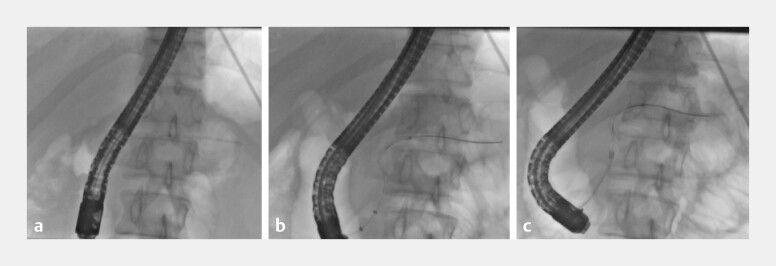 Fig. 1
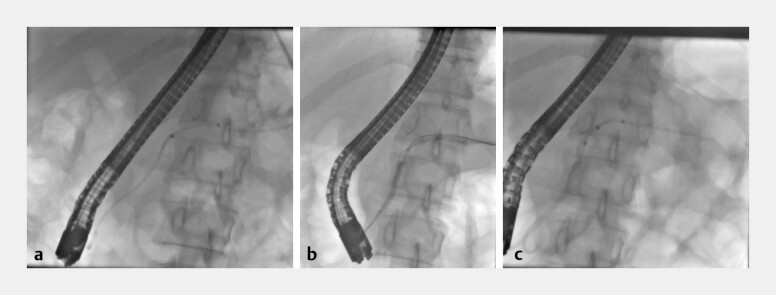 Fig. 2
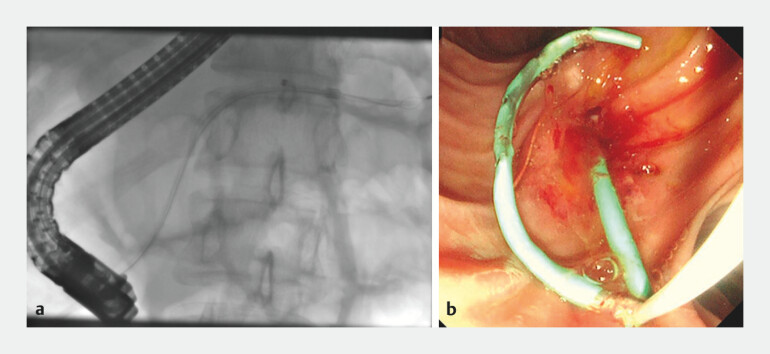 Fig. 3
- —Aquilant GI Interventional
Peer Reviews
No public reviews on file for this paper yet. If you reviewed it on a platform where reviews are public (OpenReview, ICLR, NeurIPS, ICML), you can paste yours below so the community can read it here.
Videos
No videos yet. Explain this paper in a talk, walkthrough, or lecture? Add one.
Taxonomy
TopicsGallbladder and Bile Duct Disorders · Pancreatic and Hepatic Oncology Research · Pediatric Hepatobiliary Diseases and Treatments
The use of pancreatic stents is integral for hepatopancreatobiliary and pancreaticobiliary endoscopy, primarily for post-ERCP pancreatitis prophylaxis and management of pancreatic strictures 1 . While their application is crucial for patient outcomes, stent migration [occurring in up to 5.2% of cases], poses significant challenges 2 3 . Failure to retrieve proximally migrated stents endoscopically can lead to serious complications, with 10–17% of cases requiring surgical intervention 3 . Advanced endoscopic solutions are crucial to mitigate these risks.
We report a novel case of successful retrieval of a proximally migrated pancreatic stent using an ultra-thin Leinzett cholangioscope (2.6 mm) and SpySnare – the first documented use of this method for PD stent removal in the UK.
A 29-year-old man presented with cholangitis secondary to common bile duct stones. During ERCP, a pancreatic stent was placed following an inadvertent wire passage into the pancreatic duct. The entire stent subsequently migrated proximally deep into pancreas, requiring advanced endoscopic retrieval. Initial pancreatoscopy confirmed the migration ( Video 1 , Fig. 1 ). A 0.025-mm visiglide guidewire facilitated entry into the pancreatic duct with the SpyGlass cholangioscope (Boston Scientific). However, the stent was embedded around the genu causing a short inflammatory stricture preventing further advancement. An 8 cm (5 mm diameter) pancreatic stent was then deployed to dilate the duct.
Endoscopic retrieval of a proximally migrated, embedded pancreatic stent using an ultra-thin Leinzett cholangioscope and SpySnare. The video demonstrates the stepwise approach, including initial cholangioscopy, guidewire-assisted ductal access, dilation with a Hurricane balloon, and successful stent extraction using SpySnare.Video 1
Fluoroscopic images during the initial endoscopic assessment. a Initial embedded pancreatic stent. b Guidewire placed into the pancreatic duct. c SpyGlass cholangioscope advancing towards the pancreatic duct unable to pass due to stricture.
On the second attempt, the Hurricane balloon dilator enabled improved access; yet, the retrieval remained unsuccessful because of the embedded position of the stent. A Boston 5 Fr × 7 cm stent was then used to remodel the duct ( Fig. 2 ). During a third attempt, an ultra-thin Leinzett Lan-EP-3516 cholangioscope and SpySnare were used ( Fig. 3 a ). The SpySnare engaged the proximal portion of the stent allowing precise manipulation for successful extraction ( Fig. 3 b ).
Fluoroscopic images demonstrating the second retrieval attempt. a Two pancreatic stents (migrated stent and stent placed on the previous scope to help remodel stricture). b Balloon dilation with a Hurricane dilator. c Remodeling of the PD with a Boston 5 Fr × 7 cm stent.
a Fluoroscopic image showing SpySnare engagement of the proximally migrated pancreatic stent. b Endoscopic view of the successfully retrieved stent.
This case reports the utility of ultra-thin cholangioscopy and SpySnare in overcoming challenges associated with internally migrated embedded pancreatic stents. This case presents the potential of these methods to reduce the need for surgical interventions and improve outcomes in tertiary centres.
Endoscopy_UCTN_Code_CPL_1AK_2AD
The reference list from the paper itself. Each links out to its DOI / PubMed record.
- 1Mangiavillano B Pagano N Baron TH Outcome of stenting in biliary and pancreatic benign and malignant diseases: A comprehensive review World J Gastroenterol 2015219038905410.3748/wjg.v 21.i 30.903826290631 PMC 4533036 · doi ↗ · pubmed ↗
- 2Gong B Sun B Hao LX Usefulness of an algorithm for endoscopic retrieval of proximally migrated 5 Fr and 7 Fr pancreatic stents Hepatobiliary Pancreat Dis Int 20111019620010.1016/S 1499-3872(11)60031-321459728 · doi ↗ · pubmed ↗
- 3Lahoti S Catalano MF Geenen JE Endoscopic retrieval of proximally migrated biliary and pancreatic stents: experience of a large referral center Gastrointest Endosc 19984748649110.1016/s 0016-5107(98)70249-49647373 · doi ↗ · pubmed ↗