Geographical distribution of potential mechanical vectors implicated in Surra transmission in Spain: an entomological perspective
Adrián Melián-Henríquez, María Teresa Tejedor-Junco, Daniel Bravo-Barriga, Mikel Alexander González, Pedro María Alarcón-Elbal, Carlos Barceló, Ignacio Ruiz-Arrondo, Massimo Paone, Giuliano Cecchi, Juan Alberto Corbera

TL;DR
This study maps potential mechanical vectors of Surra in Spain to help prevent disease spread.
Contribution
The study provides a national-level assessment of potential mechanical vectors of Surra in Spain using systematic review methods.
Findings
Three Hippoboscidae, two Muscidae, and ten Tabanidae genera were identified as potential vectors.
Distribution maps were generated for each identified vector group.
The study highlights the need for further research on vector ecology and behavior.
Abstract
Haematophagous Diptera can transmit a wide range of diseases to both humans and animals. Some species of the Trypanosoma genus rely on these vectors for transmission, either cyclically or mechanically. Trypanosoma evansi, the causative agent of Surra, is the only African-origin trypanosome species detected in Spain to date, which is mechanically transmitted. To assess the occurrence and distribution of potential mechanical vectors at the national level, a systematic review was conducted on the Hippoboscidae, Muscidae and Tabanidae families. The review followed the methodology established by the Food and Agriculture Organization of the United Nations (FAO) and adhered to PRISMA guidelines. Data were compiled from 43 peer-reviewed scientific publications and four citizen science digital databases. The review identified three genera belonging to the Hippoboscidae, two of the Muscidae and…
Genes, proteins, chemicals, diseases, species, mutations and cell lines named across the full text — each resolved to its canonical identifier and authoritative record.
Click any figure to enlarge with its caption.
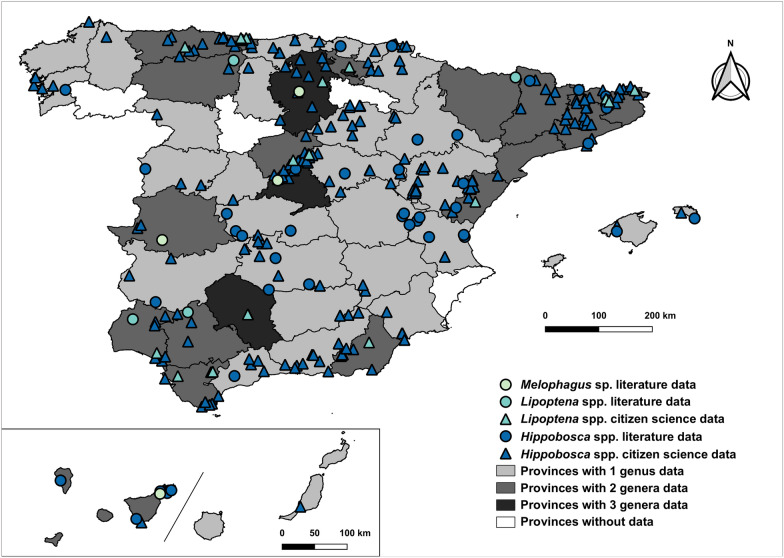 Figure 1
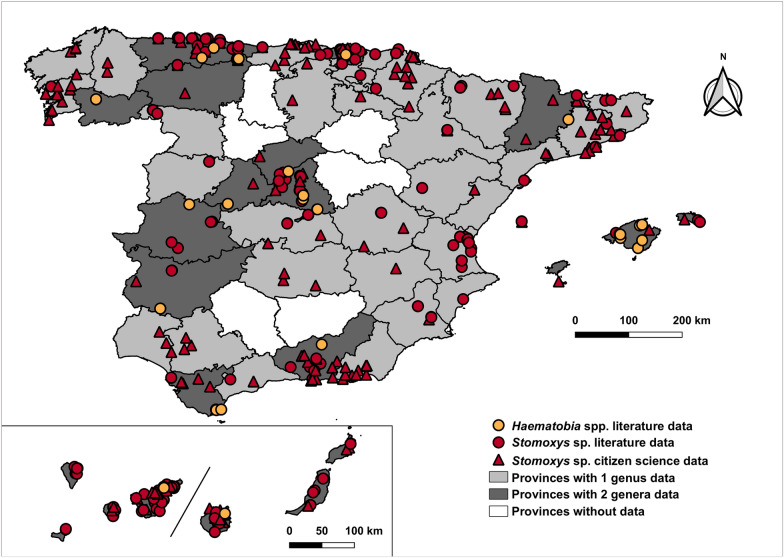 Figure 2
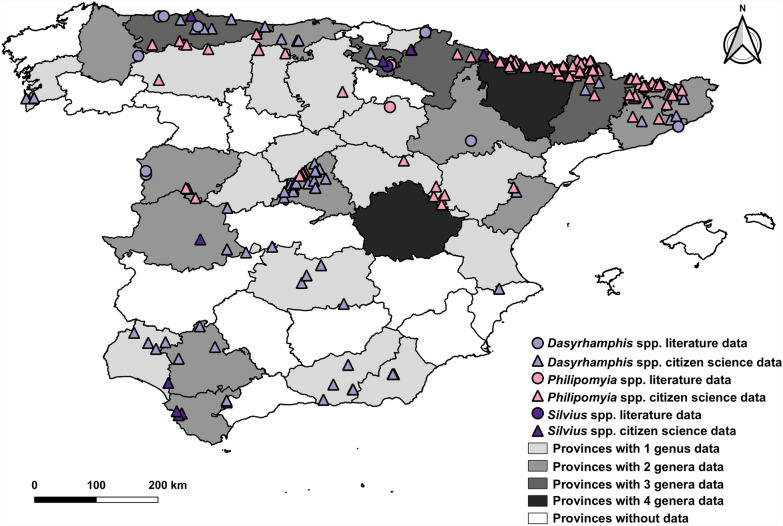 Figure 3
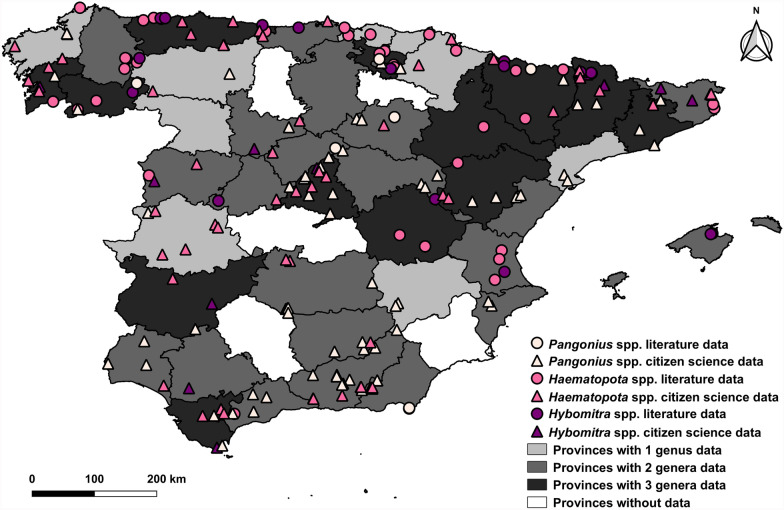 Figure 4
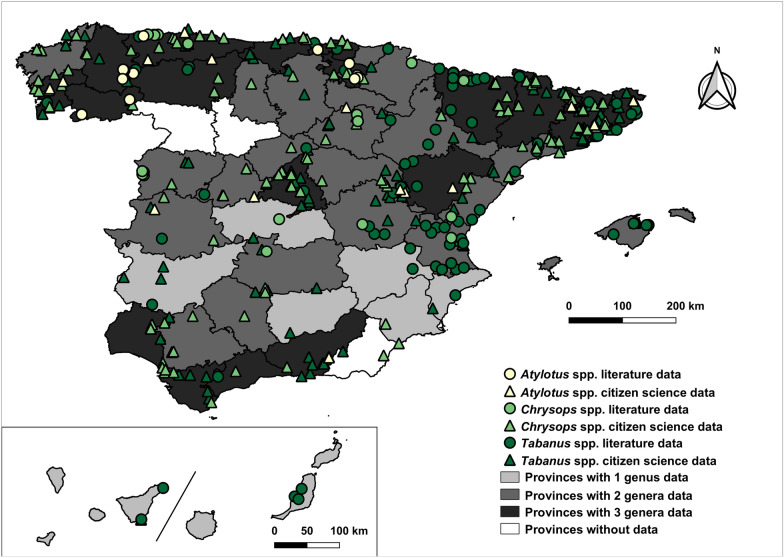 Figure 5
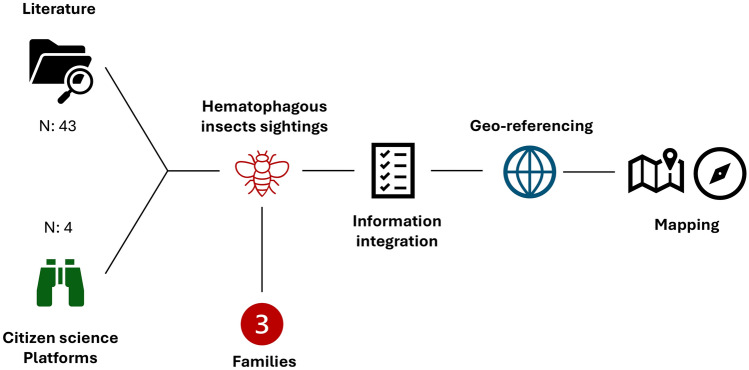 Figure 6
- —European Union’s Horizon 2020
- —Formation Program of Research personnel of the Canary Islands Government: “Agencia Canaria de Investigación, Innovación y Sociedad de la Información de la Consejería de Universidades, Ciencia e Innova
Peer Reviews
No public reviews on file for this paper yet. If you reviewed it on a platform where reviews are public (OpenReview, ICLR, NeurIPS, ICML), you can paste yours below so the community can read it here.
Videos
No videos yet. Explain this paper in a talk, walkthrough, or lecture? Add one.
Taxonomy
TopicsInsect behavior and control techniques · Forensic Entomology and Diptera Studies · Trypanosoma species research and implications
Background
Haematophagous arthropods play a critical role in both human and animal health [69]. Their blood-feeding behaviour can cause direct harm, including irritation, immune reactions and localised trauma. Indirectly, they act as vectors for a wide range of infectious agents, facilitating both mechanical and biological (i.e. cyclical) transmission [87]. Among these pathogens, protozoans of the genus Trypanosoma (Gruby, 1843; Kinetoplastida: Trypanosomatidae) are of particular concern owing to their impact on veterinary and human medicine.
Animal trypanosomosis, transmitted by vectors and manifesting as either Nagana and Surra, poses a significant barrier to livestock production across many African regions. Nagana is caused by Trypanosoma brucei (Plimmer & Bradford, 1899), Trypanosoma vivax (Ziemann, 1905) and Trypanosoma congolense (Broden, 1904), while Trypanosoma evansi (Chauvrat, 1896) causes Surra [17]. Unlike other trypanosomes, T. evansi does not need a biological vector and is instead transmitted mechanically by haematophagous insects [18, 72]. However, the parasite’s limited survival time within the insect’s mouthparts constrains transmission efficiency.
Haematophagous dipterans are the most relevant vectors of T. evansi, owing to their high mobility and frequent feeding patterns [18, 67, 87]. Several studies highlighted the role of different insect taxa in the transmission of Surra to mammals, including biting flies of the tribe Stomoxyini (Diptera: Muscidae) (Stomoxys spp. and Haematobia spp.), tabanids (Diptera: Tabanidae) (Tabanus spp., Atylotus spp. and Chrysops spp., among others) and louse flies (Diptera: Hippoboscidae) (Hippobosca spp., Lipoptena spp. and Melophagus spp.) [20].
Surra is mainly found in North Africa, Northeast Africa, Latin America, the Middle East and Asia. However, outbreaks have also been reported in Europe, including France (Aveyron Department) and Spain. In the latter country, cases were recorded in the province of Alicante (mainland Spain), linked to the movement of infected animals from the Canary Islands [15, 82]. The first confirmed case of Surra in Spain occurred in 1997 on the Island of Gran Canaria [46], which led to subsequent studies to assess the parasite’s prevalence in dromedaries and other livestock, as well as the potential role of rodents and haematophagous insects in disease maintenance [60, 73–75].
Although no new seropositive cases of Surra have been reported in the Canary Islands since 2022 [57, 83], ongoing surveillance and research into disease dynamics remain essential to prevent future outbreaks. This is particularly relevant, as Spain may act as an entry point for the disease into mainland Europe. In this context, the current study aims to compile a comprehensive atlas of the distribution of potential T. evansi vectors across Spain, within the framework of the COMBAT project (COntrolling and progressively Minimizing the Burden of Animal Trypanosomosis) [8]. This work complements the recently published national atlas of Surra in the country [57].
Methods
Search protocol and selection criteria
A systematic review was carried out in accordance with the Preferred Reporting Items for Systematic reviews and Meta-Analyses (PRISMA) guidelines [59], and following the methodology established by the Food and Agriculture Organization of the United Nations (FAO) for continental and national atlases of Glossina spp. and African trypanosomes [1, 11–14, 21, 42, 65, 71, 80]. In addition, scientific repositories and search engines, including PubMed^®^, Scopus, Google Scholar and ResearchGate were used, without date restrictions. The collection and analysis period of the data from these platforms extended from February to December 2024.
The review focused on insect taxa identified as potential mechanical vectors of T. evansi, with particular attention on the families Muscidae, Hippoboscidae and Tabanidae [15, 17–19, 56, 75, 82]. Genera within each family were selected on the basis of prior literature*,* including Stomoxys and Haematobia for Muscidae [17, 18], and mammophilic genera for Hippoboscidae (Hippobosca, Lipoptena, and Melophagus) [84]. For the Tabanidae, the classification followed the nomenclature proposed by Portillo (2002) for horsefly in Spain, encompassing Atylotus, Chrysops, Dasyrhamphis, Haematopota, Hybomitra, Nemorius, Pangonius, Philipomyia, Silvius, and Tabanus.
Keyword searches were conducted in Spanish, French and English, using terms such as ‘Diptera’, ‘Spain’, ‘Canary Islands’, ‘Balearic Islands’, ‘mainland Spain’, ‘Haematophagous’, ‘Muscidae’, ‘Hippoboscidae’, ‘Tabanidae’, ‘Stomoxyini’, ‘Stomoxys’, ‘Haematobia’, ‘Lipoptena’, ‘Hippobosca’, ‘Melophagus’, ‘Tabanus’, ‘Haematopota’, ‘Dasyrhamphis”, ‘Atylotus”, ‘Pangonius’, ‘Silvius’, ‘Chrysops’, ‘Hybomitra’, ‘Nemorius’, ‘Philipomyia’, ‘Trypanosoma evansi’ and ‘Surra’. Approximately less than 10% of the studies identified were excluded owing to access restrictions, often related to publication age or paywalls. However, some were retained indirectly through citations in other included sources.
Citizen science platforms
Data from citizen science platforms were obtained from four sources: iNaturalist (Nugent, 2018), GBIF.org, Biodiversidad Virtual (https://www.biodiversidadvirtual.org) and the Biodiversity Data Bank of the Canary Islands (BDBC) (https://www.biodiversidadcanarias.es/biota). Searches were conducted using insect genera or species keywords, and results were filtered by country (last accessed: 11 March 2025). These platforms primarily provide presence-only records, often accompanied by precise geographical coordinates, occurrence dates and photographic evidence.
Only records validated by experts were retained. When expert validation was unavailable, all submitted images were manually reviewed. Duplicate entries across platforms were cross-checked and excluded.
Digital repository and database
The literature retrieved through the systematic review was compiled in a digital repository, and the following information were extracted regarding the occurrence of target insect taxa:
- Sources: Full reference details of each document, including authors, title, date and journal.
- Site geographical data (Geo_Data_Site): Sampling locations reported in the documents, georeferenced using Google Earth or Spanish National Geographic System when not explicitly stated. Location accuracy varied, from specific coordinates to approximate central points of municipalities. For broad designations (e.g., nature reserves), the centroid of the defined area was used.
- Site entomological data (Entomo_Data_Site): Descriptions of insect findings at each site, including collection date, taxonomic identification (family, genus, species, subspecies), number of individuals, trap types and survey duration.
- Trap geographical data (Geo_Data_Trap): Exact coordinates of sampling sites when such detail was available in the source publications.
- Trap entomological data (Entomo_Data_Trap): Entomological data associated with specific trap sites, mirroring the structure of Entomo_Data_Site but with finer spatial resolution.
Mapping
Genus-level occurrence maps for each insect family were generated using QGIS Geographic Information System (version 3.34.11, QGIS Association). The data presented on these maps were separated into two categories: literature-based records and citizen science records. To harmonise spatial reporting, particularly for entries derived from broader administrative units, the number of genera recorded per province was also indicated on the maps.
Results
This study analysed 105 species across 15 genera and three families, on the basis of a total of 2709 data records published between 1951 and 2024 throughout Spain. From the literature, 43 sources were consulted (40 scientific publications, two books and one doctoral thesis) (see Additional file 1: text S1 for more information), yielding 1088 presence records. From citizen science platforms, 1621 presence records were included. Although GBIF.org aggregates records from iNaturalist and Biodiversidad Virtual, 65% originated from Biodiversidad Virtual, 20% from iNaturalist and 15% from GBIF. Biodiversity Data Bank of the Canary Islands (BDBC) records were limited to the Canary Islands and lacked specific coordinates.
A total of 323 locations were georeferenced from the literature: 23 at the trap level or exact capture site, and 300 at broader spatial resolutions. In contrast, 90% of citizen science records were georeferenced with precise coordinates.
Some literature sources included quantitative trapping data. The total number of captured or observed insects during the study period was 20,076 individuals. Of the 1088 literature-based records, 18,455 insects were quantified: 86.5% belonged to the Muscidae family, 13.3% to the Tabanidae family and 0.2% to the Hippoboscidae. Each citizen science record was assumed to represent a single observed individual, totalling 1621 insects, of which 64.8% were Tabanidae, 19.2% Muscidae and 16% Hippoboscidae.
Table 1 summarises the families and genera included in the study, indicating the number of species per genus, number of provinces in which each genus was recorded, host species and trapping methods cited in the literature. Species-level details can be found in Additional file 2: Table S1. Table 1. Summary of the blood-feeding dipteran families analysed in Spain (from 1951 to 2024). N: number; ND: not describedFamilyGenusSpecies (N)Provinces (N)Cited hostsCited capture methodsHippoboscidaeHippobosca Linnaeus, 1758244Equids, bovids, canids, felids, humanTrap (Sticky), sweepLipoptena Nitzsch, 1818316Cervids, humanTrap (Suction)Melophagus Latreille, 180216Ovis aries, cervidsNDMuscidaeStomoxys Geoffroy, 1762144Equids, ruminants, camelids, humanTrap (Sticky, suction, BG-sentinel, Nzi), sweepHaematobia Lepeletier & Serville, 1828214Bovids, humanTrap (Sticky, suction, CDC-Miniature light trap)TabanidaeAtylotus Osten-Sacken, 1876920Equids, bovidsTrap (Canopy, Malaise), sweepChrysops Meigen, 1803740Equids, bovids, cervidsTrap (Canopy, Malaise), sweepDasyrhamphis Enderlein, 1922325EquidsSweepHaematopota Meigen, 18031238Equids, bovidsTrap (Canopy, Malaise), sweepHybomitra Enderlein, 19221223Equids, bovidsTrap (Malaise, H-trap), sweepNemorius Rondani, 185613Equids, bovidsNDPangonius Latreille, 18021430Equids, humanSweepPhilipomyia Olsufjev, 1964221Equids, bovidsTrap (Canopy, Malaise), sweepSilvius Meigen, 182038Equids, bovidsTrap (Malaise)Tabanus Linnaeus, 17583344Equids, bovids, humanTrap (Canopy, Malaise, Sticky, H-trap), sweep
Hippoboscidae family
Three mammophilic genera were reviewed within the Hippoboscidae family (Fig. 1). The Hippobosca genus showed the highest number of observations, primarily in northern, north-eastern, central and central-eastern and southern mainland Spain, with additional sightings in both Canary Islands provinces, and in the Balearic Islands.Fig. 1. Geographic distribution of Hippoboscidae family in Spain (1951–2024). The map includes mainland Spain (centre), the Balearic Islands (right) and the Canary Islands (bottom left)
The Lipoptena genus was mostly observed in the northern, north-eastern and south-western mainland Spain, with no records from the Canary or the Balearic islands.
Finally, the Melophagus genus was represented by a few isolated in northern, central and central-western mainland Spain, as well as the western Canary Islands.
Muscidae family
Two genera were reviewed within the Muscidae family (Fig. 2). Sightings of the Stomoxys genus were distributed across most of Spain, especially in the northern, southern and central regions of mainland regions. In addition, all islands of the Balearic and Canary archipelagos reported sightings. Observations of the genus Haematobia were concentrated in the northern, central and southern mainland, as well as the Balearic Islands, with a smaller number of reports from the Canary Islands.Fig. 2. Geographic distribution of Muscidae family in Spain (1951–2024). The map shows mainland Spain (centre), the Balearic Islands (right) and the Canary Islands (bottom left)
Tabanidae family
A total of ten genera within the Tabanidae family were studied. Figure 3 shows the occurrence for four of the genera: Dasyrhamphis, Philipomyia, Silvius and Nemorius. The Dasyrhamphis genus was found mainly in central, southern and north-western mainland Spain, whereas the Philipomyia genus was predominantly observed in north-eastern mainland Spain. The Silvius genus was limited to a few sightings in northern and southern mainland Spain. Finally, no specific coordinates were available for Nemorius genus; however, its presence was reported in central and northern mainland Spain.Fig. 3. Geographic distribution of the genera Dasyrhamphis, Philipomyia, Silvius and Nemorius in Spain (1951–2024). The map includes mainland Spain (centre) and the Balearic Islands (right)
The sightings of the Pangonius, Haematopota and Hybomitra genera are shown in Fig. 4. For Pangonius, sightings are distributed in the central, southern and north-eastern regions of mainland Spain. For Haematopota and Hybomitra, sightings were recorded both in mainland Spain (especially in the north and centre) and in the Balearic Islands.Fig. 4. Geographic distribution of the genera Pangonius, Haematopota and Hybomitra in Spain (1951–2024). The map includes mainland Spain (centre) and the Balearic Islands (right)
Finally, Fig. 5 shows records for the Atylotus, Chrysops and Tabanus genera. The genus Atylotus was mostly observed in northern mainland Spain, though unspecified records exist for the Balearic Islands. The genus Chrysops was mostly restricted to central and northern mainland Spain. The genus Tabanus was reported throughout Spain, including the Canary and Balearic Islands, with notable concentrations in the north-east and central mainland.Fig. 5. Geographic distribution of the genera Atylotus, Chrysops and Tabanus in Spain (1951–2024). The map includes mainland Spain (centre), the Balearic Islands (right) and the Canary Islands (bottom left)
Discussion
This study, developed within the framework of the COMBAT project [8], represents the first comprehensive compilation of information on the potential vectors of Surra in Spain. Previous national atlases on trypanosome control and its vectors in African countries typically included both a tsetse component and an animal infection component [1, 21, 42, 65, 71]; however, this study focused exclusively on the entomological component, specifically on the three different dipteran families that can potentially transmit Surra in Spain. The Surra atlas for Spain has already been published [57], and to date, no vectors belonging to the Glossina genus have been reported in the country.
A notable gap in the literature relating vector presence to Surra in Spain became evident during the compilation of information sources. The present data reveal a high diversity of horsefly genera in the country, particularly in mainland Spain. Among these, the Tabanus genus stands out for its species richness and high abundance, and is the only genus found across mainland Spain, the Balearic Islands and the Canary Islands. Likewise, the Hippobosca genus (especially Hippobosca equina Linnaeus, 1758), Melophagus genus (Melophagus ovinus (Linnaeus, 1758)) and Stomoxys genus (Stomoxys calcitrans (Linnaeus, 1758)) are generally distributed throughout Spain. Among these, S. calcitrans is particularly abundant and found in diverse biotopes and environmental conditions. However, while the literature describes the distribution of M. ovinus as widespread, there is a notable lack of georeferenced sightings. It is also worth noting that only one record exists for the genus Haematobia (Haematobia titilans (Bezzi, 1907)) in the Canary Islands, with no subsequent observations to date.
Given the wide distribution of all the genera recorded in this study, potential re-emergent Surra outbreaks in Spain would likely encounter an abundance of competent mechanical vectors, as seen in past episodes in the Canary Islands and Alicante [82, 83]. In such scenarios, Surra could not only spread across Spain, but also pose a threat to continental Europe, as demonstrated by the 2008 outbreak in Aveyron (France), linked to the transport of infected dromedaries from the Canary Islands [15].
In addition to their potential role Surra transmission, bites from certain haematophagous flies pose an occupational hazard and a considerable nuisance in rural areas of Europe [47, 54]. The study of these brachycerans flies in Spain has been far less extensive than that of nematoceran vectors, such as mosquitoes, sandflies and biting midges [9, 29] owing to their limited public health impact in urban settings and the lack of standardised trapping methods [77]. Another key factor is that these brachycerans rely on less refined capture methods than nematocerans do [48, 78, 85]. This methodology gap warrants further exploration to enhance our understanding of these vectors [2, 58]. For example, it would be necessary to standardise and optimise trapping methods for each of the families, especially in the case of louse flies, which generally require direct host contact for capture. In this context, carbon dioxide traps have recently proven effective for monitoring Lipoptena species in Spain [44]. For tabanids, comparative studies are underway to evaluate existing trap types and explore modifications for enhanced performance [48], also serving as mechanical control strategies. In North America, horseflies are often sampled using large open-style traps equipped with shiny black spherical targets, such as Malaise, Canopy, Box, Greenhead, Manitoba and Epps traps [7]. In Spain, tabanids were successfully collected using custom-made Canopy traps, sweep nets and Malaise traps [43].
Notably, the genera included in this atlas do not reflect the full diversity of haematophagous flies in Spain. Furthermore, the absence of data from certain regions does not necessarily imply species absence. For example, within other blood-feeding Hippoboscidae within the Ornithomyinae subfamily, primarily parasitised birds, are not included here owing to their limited relevance for Surra transmission.
This review highlights that some genera could act as potential vectors not only for Surra, but for a broad range of other diseases. For instance, the Stomoxys genus, and other muscids have been implicated in the transmission of salmonellosis, shigellosis, bacillary dysentery and even aspergillosis [5]. Stomoxys species are considered potential vectors of anthrax, a role they share with horseflies such as Chrysops spp. and Tabanus spp., both of which have been associated with tularemia transmission [6, 86]. Other studies highlight the role of the Stomoxys in the mechanical transmission of viruses (e.g., equine infectious anaemia virus, African swine fever virus, West Nile virus or Rift Valley virus), protozoa (Besnoitia besnoiti; Besnoit and Robin, 1912) and helminths (Habronema microstoma; Schneider, 1866) [5], facilitated by their frequent and persistent feeding behaviour [22]. Similarly, Hippoboscidae (Hippobosca, Melophagus and Lipoptena), have been linked to viruses (e.g., border disease virus or bluetongue virus) and bacteria (Rickettsia spp., Borrelia spp., Bartonella spp. or Corynebacterium pseudotuberculosis) [23].
The distribution maps presented in this study are subject to several limitations. They are based on local studies and citizen science data, with heterogeneous sampling efforts and methodologies. This reliance introduces potential biases and may not reflect current distributions or ecological dynamics. In addition, while citizen science data are valuable, they are not always consistent in terms of quality and geographic coverage. These issues underscore the urgent need for standardised, large-scale field surveys to produce more robust and updated distribution data. New surveys at the meso- and microscales could provide crucial insights into species ecology and interactions with potential hosts. Citizen science platforms offer significant potential for this purpose, especially those with strong expert participation and photographic validation, as demonstrated by apps already implemented in Spain [45, 62]. Advances in artificial intelligence for insects recognition also offer exciting prospects for integrating automated data processing, whether by scientists or citizens [26, 50, 70]. Ultimately, cooperation between researchers, citizens, public health authorities and stakeholders could foster a more holistic and integrated vector surveillance and control programs in Spain and beyond.
Conclusions
This work represents a valuable contribution to the understanding of the epidemiology of T. evansi in Spain, as it is the first to consolidate and integrate information on the presence of its potential dipteran vectors across the country. Documenting the occurrence of these vector enables health authorities to implement more effective control and prevention strategies, as well as to respond promptly in the event of new outbreaks. Despite the findings presented, additional studies are needed to further characterise the distribution of these vectors throughout the territory. In addition, the integration of citizen science platforms as a complementary tool for scientific research, significantly enhancing our understanding and surveillance of vector populations in Spain.
Supplementary Information
Additional file 1.Additional file 2.
The reference list from the paper itself. Each links out to its DOI / PubMed record.
- 1Boulangé A, Lejon V, Berthier D, Thévenon S, Gimonneau G, Desquesnes M, et al. The COMBAT project: controlling and progressively minimizing the burden of vector-borne animal trypanosomosis in Africa. Open Res Eur. 2022;2:67. https://scholar.google.com/scholar?hl=en&as_sdt=0%2C 5&q=The+COMBAT+project%3A+controlling+and+progressively+minimizing+the+burden+of+vector-borne+animal+trypanosomosis+in+Africa&btn G=.10.12688/openreseurope.14759.2PMC 1044583137645305 · doi ↗ · pubmed ↗
- 2Cecchi G, Paone M, de Gier J, Zhao W. The continental atlas of the distribution of tsetse flies in Africa. PAAT Technical and Scientific Series, No. 12. Rome: FAO. 2024. 10.4060/cd 2022 en. https://scholar.google.com/scholar?hl=en&as_sdt=0%2C 5&q=The+continental+atlas+of+the+distribution+of+tsetse+flies+in+Africa&btn G=
- 3Desquesnes M, Gonzatti M, Sazmand A, Thévenon S, Bossard G, Boulangé A, et al. A review on the diagnosis of animal trypanosomoses. Parasit Vectors. 2022;15:64.10.1186/s 13071-022-05190-1PMC 885847935183235 · doi ↗ · pubmed ↗
- 4Desquesnes M, Sazmand A, Gonzatti M, Boulangé A, Bossard G, Thévenon S, et al. Diagnosis of animal trypanosomoses: proper use of current tools and future prospects. Parasit Vectors. 2022;15:235.10.1186/s 13071-022-05352-1PMC 923816735761373 · doi ↗ · pubmed ↗
- 5Diarra B, Diarra M, Diall O, Bass B, Sanogo Y, Coulibaly E, et al. A national atlas of tsetse and African animal trypanosomosis in Mali. Parasit Vectors. 2019;12:466. https://scholar.google.com/scholar?hl=en&as_sdt=0%2C 5&q=A+national+atlas+of+tsetse+and+African+animal+trypanosomosis+in+Mali&btn G=.10.1186/s 13071-019-3721-3PMC 678433631597558 · doi ↗ · pubmed ↗
- 6Espinoza MA, Em D, Shahi-Barogh B, Berer D, Duscher G, Vloedt L, et al. Molecular pathogen screening of louse flies (Diptera: Hippoboscidae) from domestic and wild ruminants in Austria. Parasit Vectors. 2023;16:179.10.1186/s 13071-023-05810-4PMC 1023683837269018 · doi ↗ · pubmed ↗
- 7Fraga J, Fernández-Calienes A, Montalvo AM, Maes I, Deborggraeve S, Büscher P, et al. Phylogenetic analysis of the Trypanosoma genus based on the heat-shock protein 70 gene. Infect Genet Evol. 2016;43:165–72.10.1016/j.meegid.2016.05.01627180897 · doi ↗ · pubmed ↗
- 8Garcia HA, Blanco PA, Rodrigues AC, Rodrigues CMF, Takata CSA, Campaner M, et al. Pan-American Trypanosoma (Megatrypanum) trinaperronein. sp. in the white-tailed deer Odocoileus virginianus Zimmermann and its deer ked Lipoptena mazamae Rondani, 187: morphological, developmental and phylogeographical characterisation. Parasit Vectors. 2020;13:308.10.1186/s 13071-020-04169-0PMC 729148732532317 · doi ↗ · pubmed ↗