Protein phosphorylation networks in Baylisascaris procyonis revealed by phosphoproteomic analysis
Qin Meng, Zhikang Li, Qiguan Qiu, Shuyu Chen, Haiyan Gong, Xiaoruo Tan, Xiaoheng Liu, Zhaoguo Chen, Wei Liu

TL;DR
This study identifies 450 phosphorylated proteins in the raccoon roundworm, revealing key processes like cytoskeleton control and host interaction that could help develop new treatments.
Contribution
First phosphoproteomic analysis of B. procyonis, revealing phosphorylation sites and their roles in critical biological processes.
Findings
854 unique phosphorylation sites were identified across 450 proteins in B. procyonis.
Phosphoproteins were linked to cytoskeletal remodeling, developmental regulation, and host interaction pathways.
Enriched pathways included insulin signaling, endocytosis, and glycolysis, with the Src homology 3 domain being significantly enriched.
Abstract
Baylisascaris procyonis is an intestinal ascarid worm that parasitizes in raccoons and causes fatal neural, visceral, and ocular larva migrans in humans. Phosphorylated proteins and protein kinases have been studied as vaccine and drug target candidates against parasitic infections. However, no data are available on protein phosphorylation in the raccoon roundworm. In this study, the entire proteome of adult B. procyonis was enzymatically digested. Then, phosphopeptides were enriched using immobilized metal affinity chromatography (IMAC) and analyzed by liquid chromatography-mass spectrometry (LC-MS/MS). Our phosphoproteome analysis displayed 854 unique phosphorylation sites mapped to 450 proteins in B. procyonis (3308 phosphopeptides total). The annotated phosphoproteins were associated with various biological processes, including cytoskeletal remodeling, supramolecular complex…
Genes, proteins, chemicals, diseases, species, mutations and cell lines named across the full text — each resolved to its canonical identifier and authoritative record.
Click any figure to enlarge with its caption.
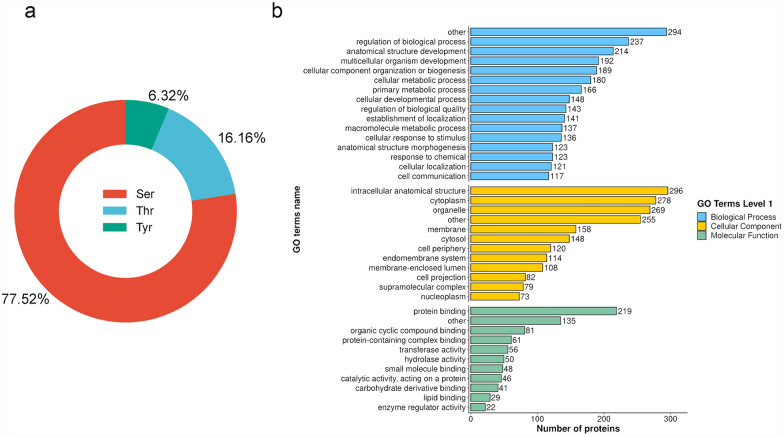 Figure 1
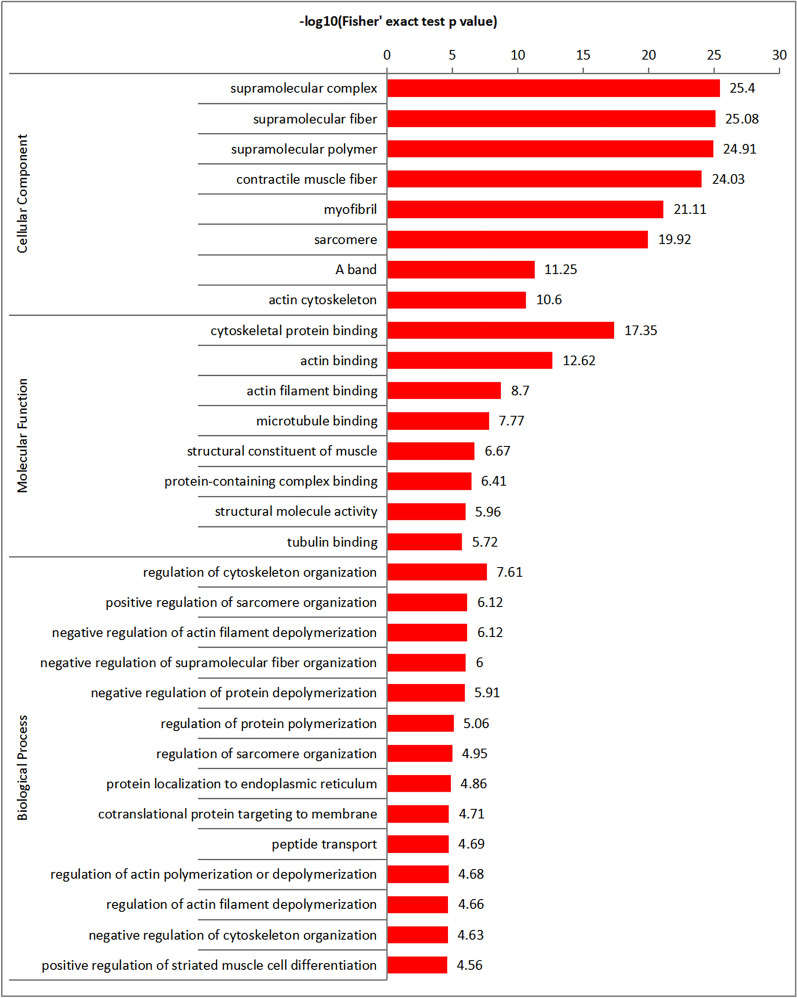 Figure 2
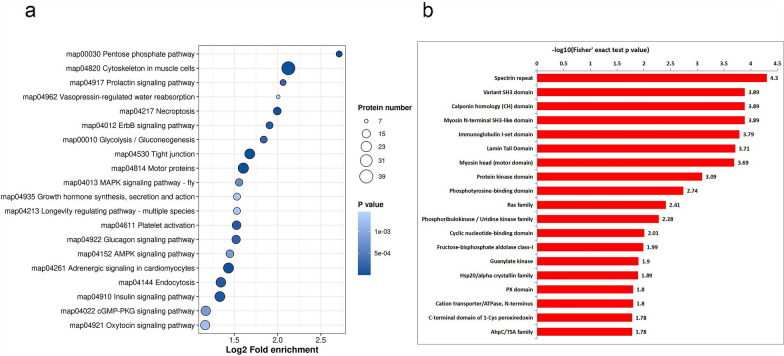 Figure 3
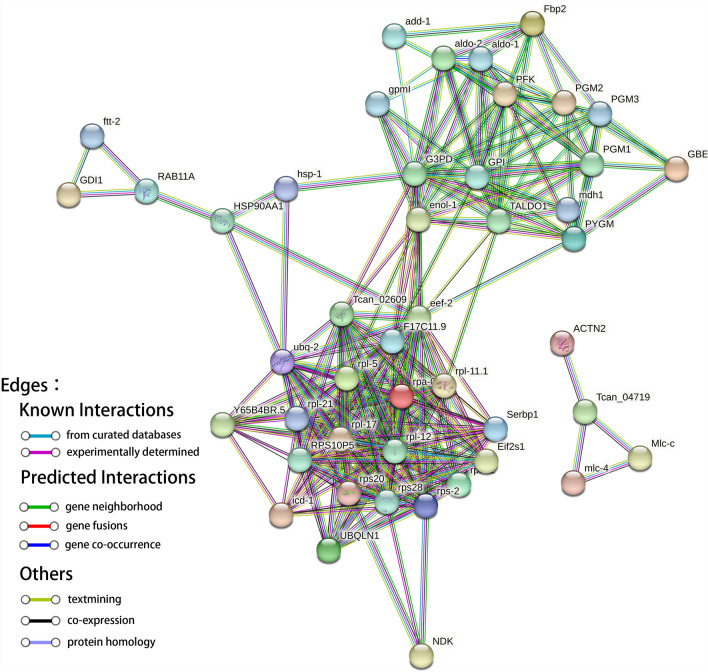 Figure 4
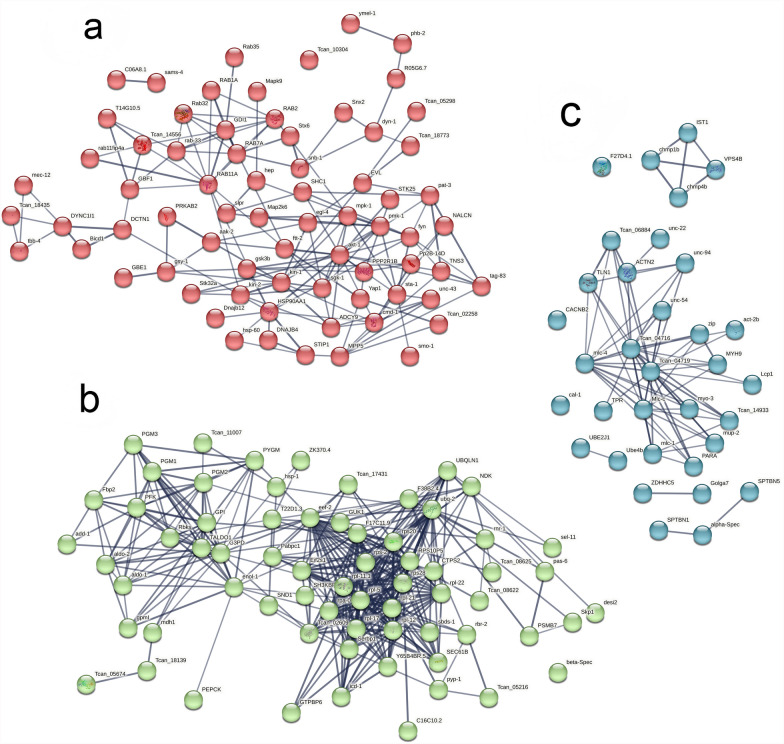 Figure 5
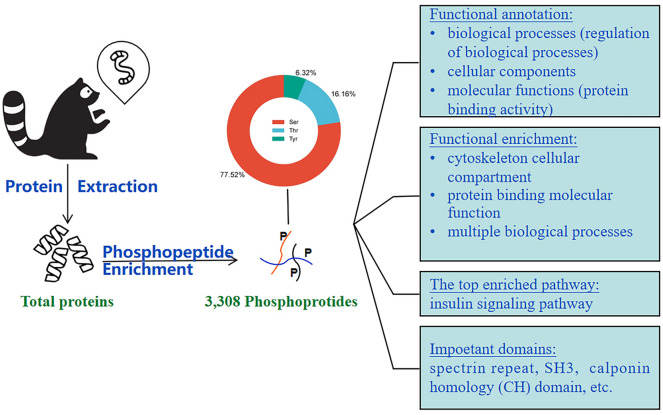 Figure 6
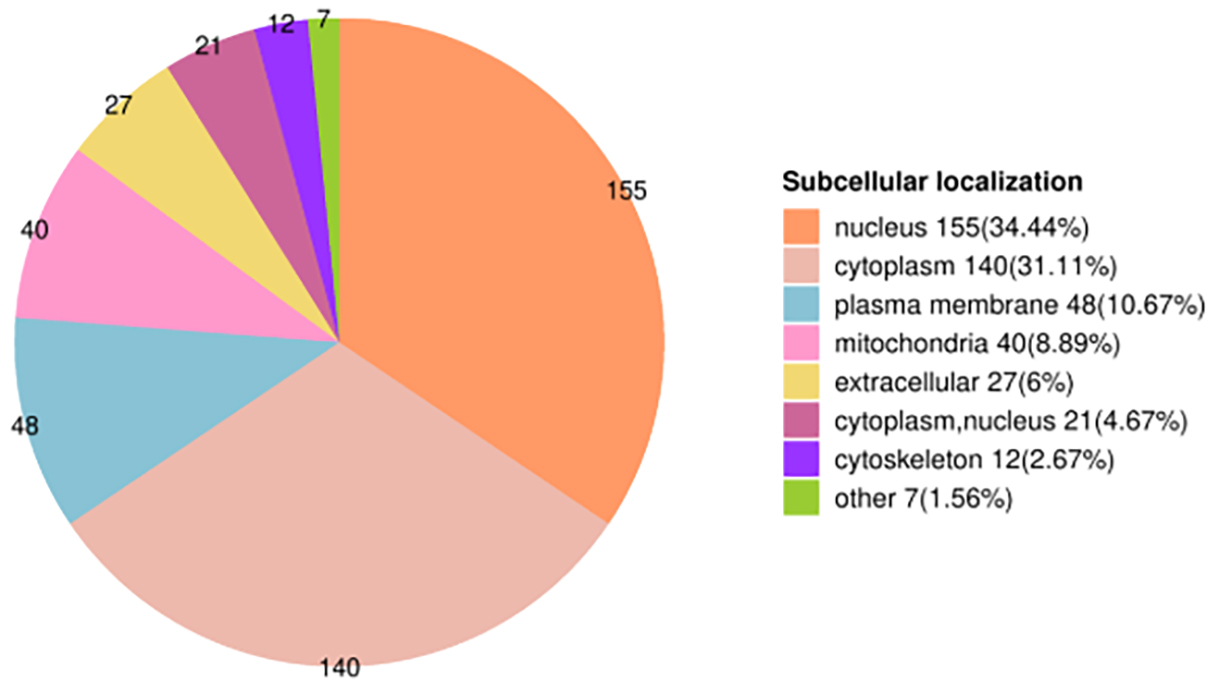 Figure 7
Peer Reviews
No public reviews on file for this paper yet. If you reviewed it on a platform where reviews are public (OpenReview, ICLR, NeurIPS, ICML), you can paste yours below so the community can read it here.
Videos
No videos yet. Explain this paper in a talk, walkthrough, or lecture? Add one.
Taxonomy
TopicsVitamin K Research Studies · Parasites and Host Interactions · Biotin and Related Studies