Development of long-acting riluzole transdermal patch against amyotrophic lateral sclerosis: Mechanistic insights into polyglyceryl-3 dioleate-enhanced drug release and skin permeation
Yanan Liu, Guixue Chen, Maojian Li, Man Li, Daoxuan Xie, Zheng Luo

TL;DR
A long-acting transdermal patch for ALS treatment was developed, using polyglyceryl-3 dioleate to improve drug release and skin absorption.
Contribution
The study introduces a novel transdermal patch formulation with polyglyceryl-3 dioleate to enhance riluzole delivery for ALS patients.
Findings
The optimized patch formulation achieved a riluzole penetration rate of 2.96 μg/(h·cm²).
Polyglyceryl-3 dioleate improved drug release and transdermal absorption by increasing skin lipid fluidity.
The patch showed prolonged pharmacokinetic performance with no significant skin irritation.
Abstract
Patients with amyotrophic lateral sclerosis (ALS) often experience difficulty swallowing, making oral administration unsuitable for effective treatment. A transdermal drug delivery system (TDDS) offers a long-acting, non-invasive alternative for ALS therapy. In this study, a riluzole transdermal patch capable of sustained release over 72 h was developed. In vitro skin permeation and pharmacokinetic experiments were conducted to evaluate the impact of various factors—including drug loading, type and concentration of chemical penetration enhancers (CPEs), and type of pressure-sensitive adhesive—on riluzole absorption through the skin. The optimized patch formulation contained 17 % (w/w) riluzole and 10 % (w/w) polyglyceryl-3 dioleate (PGD), with an adhesive layer thickness of 111 μm. The final prescription penetration rate of riluzole was found to be 2.96 μg/(h·cm2). Optimized formulation…
Genes, proteins, chemicals, diseases, species, mutations and cell lines named across the full text — each resolved to its canonical identifier and authoritative record.
Click any figure to enlarge with its caption.
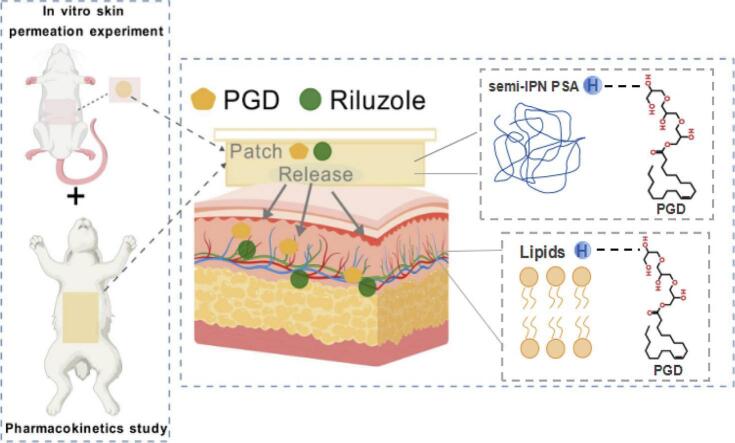 Figure 1
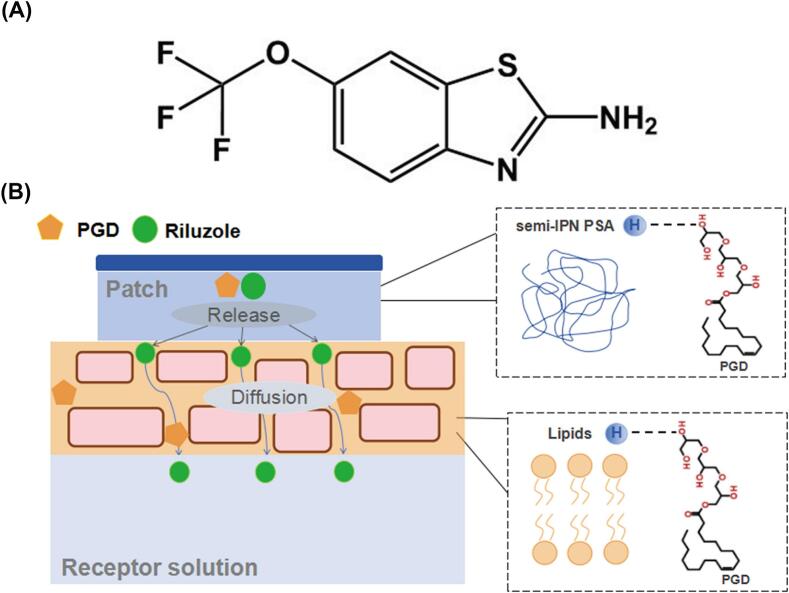 Figure 2
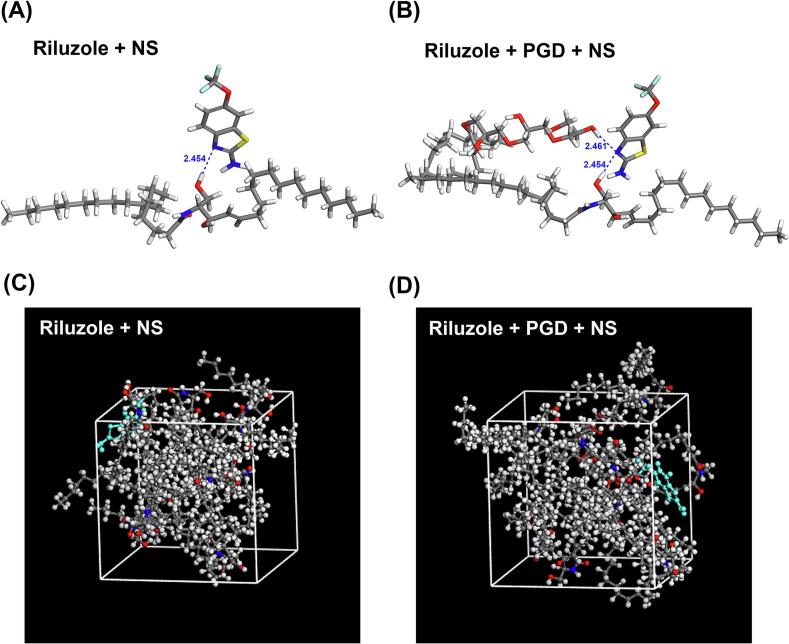 Figure 3
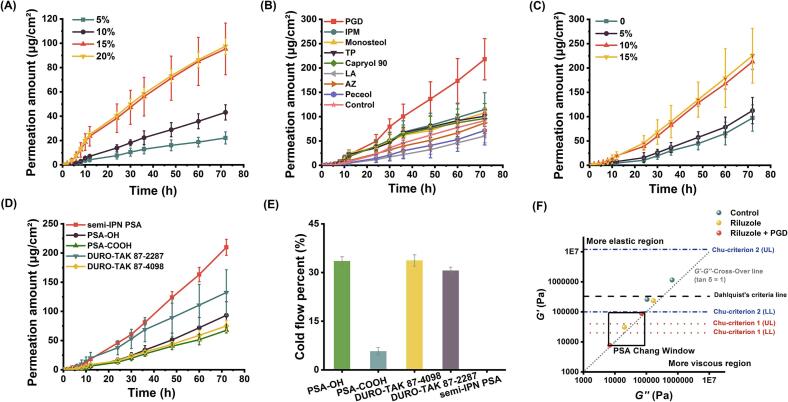 Figure 4
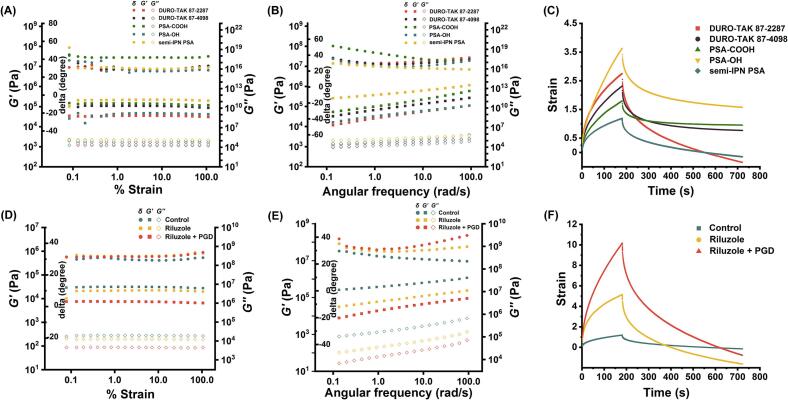 Figure 5
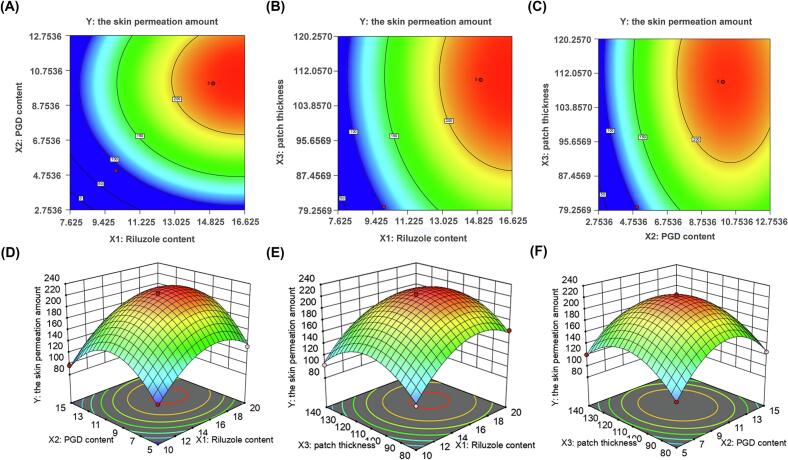 Figure 6
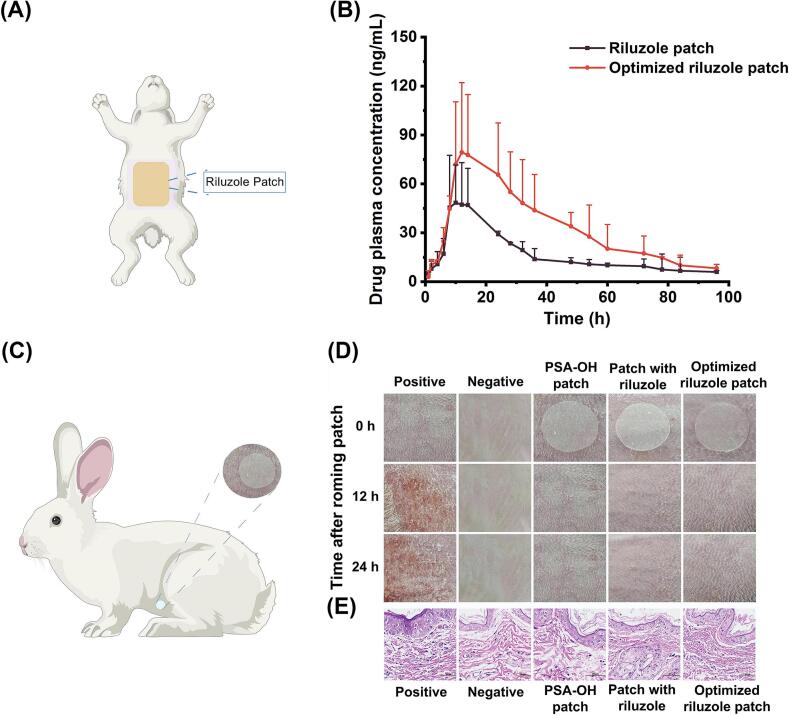 Figure 7
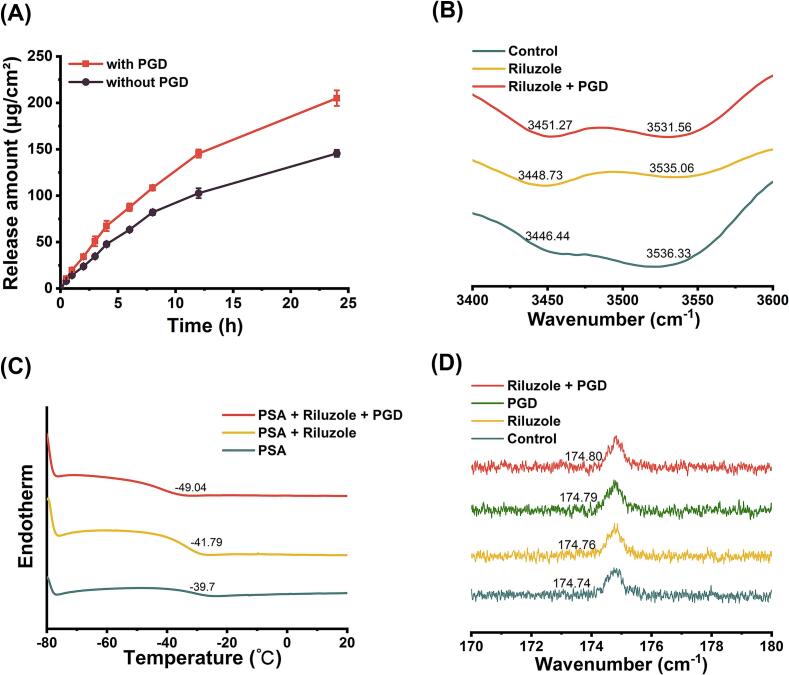 Figure 8
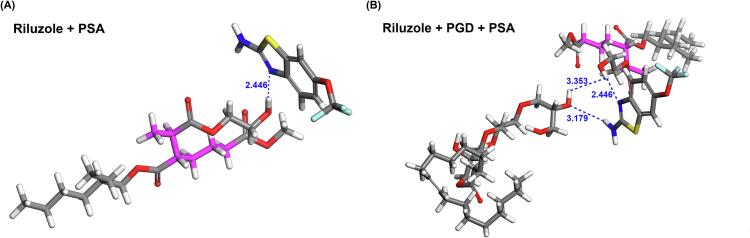 Figure 9
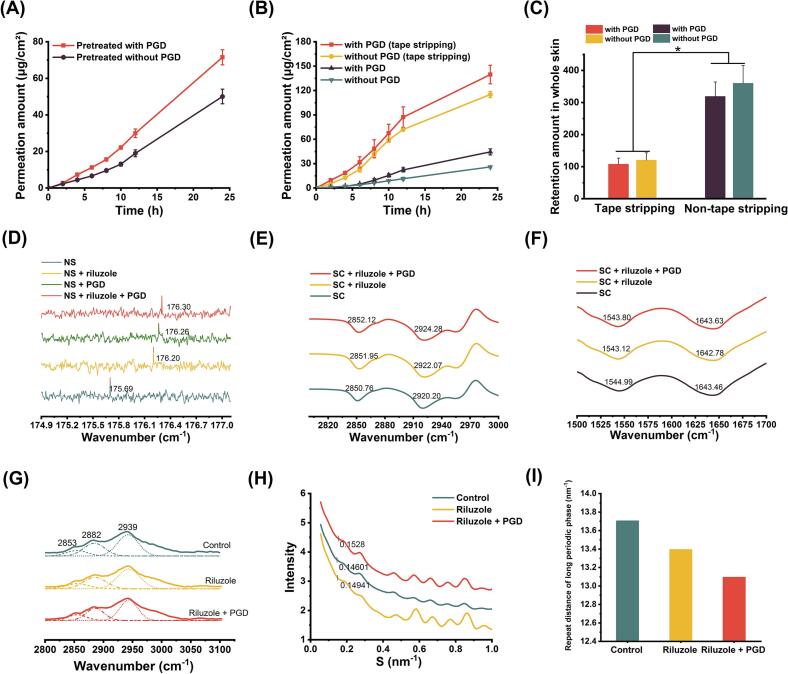 Figure 10
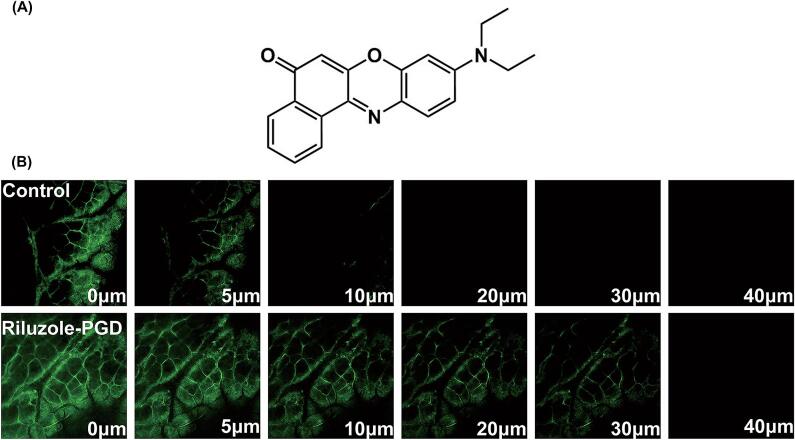 Figure 11
Peer Reviews
No public reviews on file for this paper yet. If you reviewed it on a platform where reviews are public (OpenReview, ICLR, NeurIPS, ICML), you can paste yours below so the community can read it here.
Videos
No videos yet. Explain this paper in a talk, walkthrough, or lecture? Add one.
Taxonomy
Topicsbiodegradable polymer synthesis and properties · Parkinson's Disease Mechanisms and Treatments · Advanced Polymer Synthesis and Characterization