Modulation of Estrogen Receptor Activity by the Phytoalexin Tuberosin Produced from Elicited Kudzu (Pueraria lobata)
Jorge A. Belgodere, Jack R. Elliott, Megan C. Benz, G. Wills Kpeli, Steven Elliott, Isaac J. Ponder, Geoffroy E. R. Sanga Pema, Peng Ma, Sophie R. Dietrich, Thomas Cheng, Khoa Nguyen, Syreeta L. Tilghman, Binghao Zou, Muralidharan Anbalagan, Brian G. Rowan, Robert H. Newman

TL;DR
This study explores how a compound from kudzu, called tuberosin, affects estrogen receptors in different cell types, suggesting potential use in breast cancer treatment.
Contribution
The study reveals cell-type-specific modulation of estrogen receptor activity by tuberosin, a phytoalexin from kudzu.
Findings
Tuberosin acts as an antagonist or competitive inhibitor in ER-positive breast cancer cells.
Tuberosin shows dose-dependent agonist activity in HEK293 cells expressing ERα and ERβ.
Tuberosin alters ER-mediated gene expression and suppresses vascular network assembly in endothelial cells.
Abstract
Kudzu’s invasive nature has contributed to its classification as a weed, as it frequently outcompetes native plant species, leading to extensive overgrowth. Efforts to control kudzu have proven challenging, with moderate success using physical or biological agents. In this study, we evaluated the effects of two such control agents, ultraviolet C radiation and Myrothecium verrucaria, to significantly increase the production of tuberosin, a phytoalexin isoflavone. Our findings demonstrate that estrogenic activity of tuberosin is cell-type-dependent, displaying antagonist or competitive inhibition when combined with 17-β-estradiol in the estrogen receptor (ER) positive cell lines MCF-7 and T-47D, while showing dose-dependent agonist activity in HEK293 cells transfected to express both ER receptors (α and β). Tuberosin was shown to modulate ER pathways, alter ER-mediated gene expression,…
Genes, proteins, chemicals, diseases, species, mutations and cell lines named across the full text — each resolved to its canonical identifier and authoritative record.
Click any figure to enlarge with its caption.
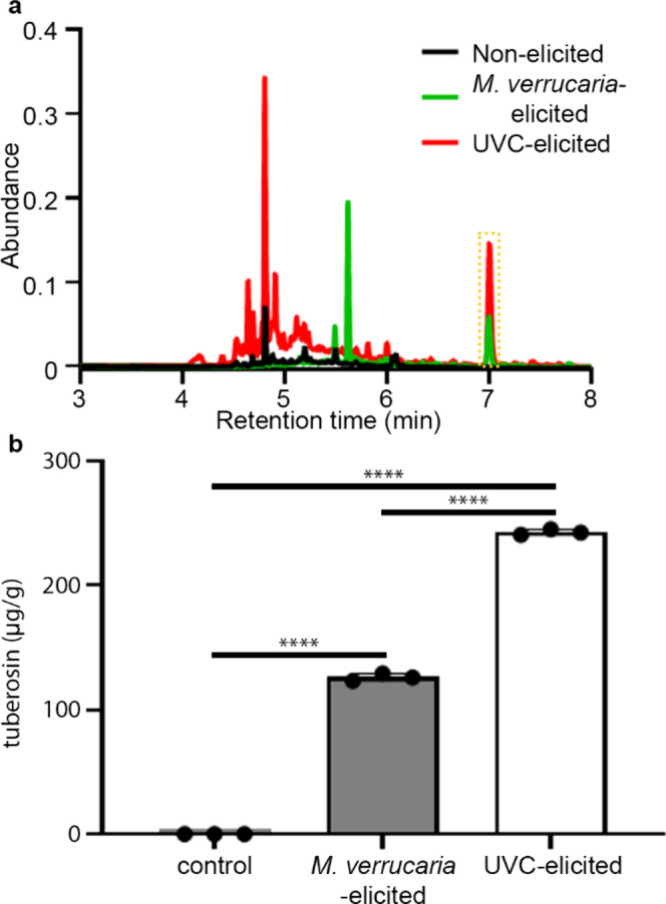 Figure 1
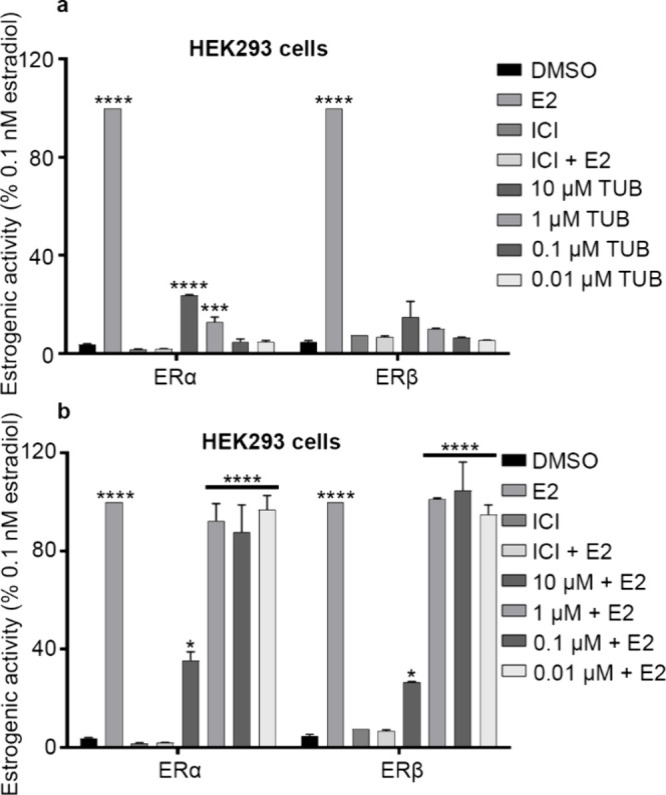 Figure 2
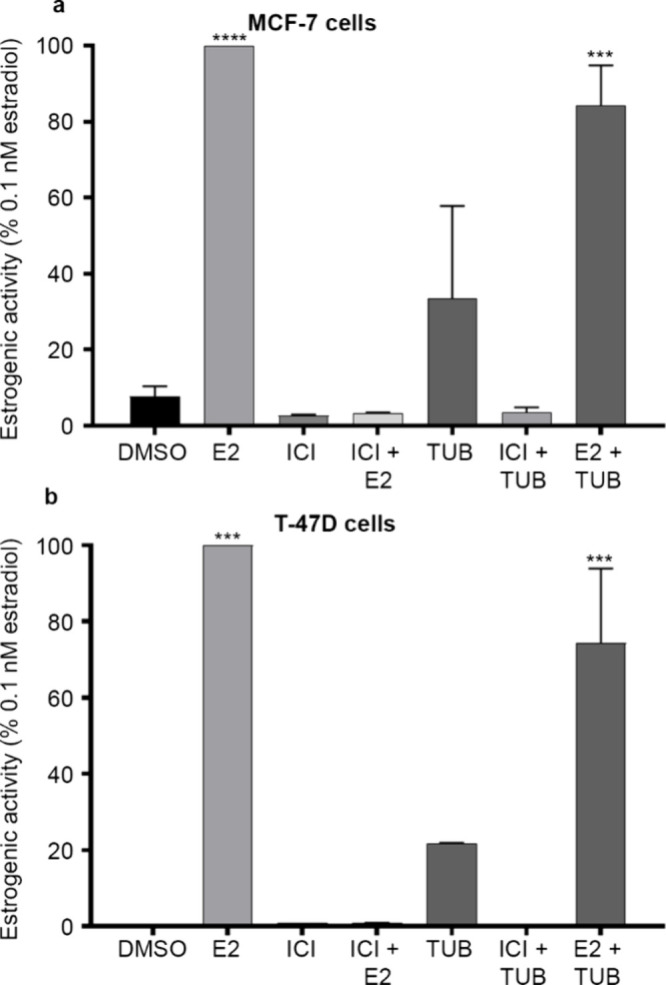 Figure 3
 Figure 4
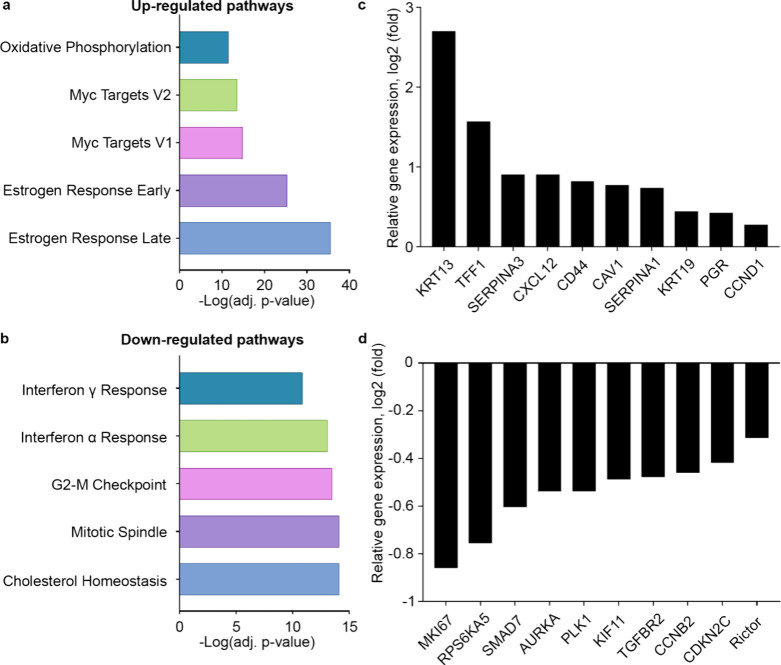 Figure 5
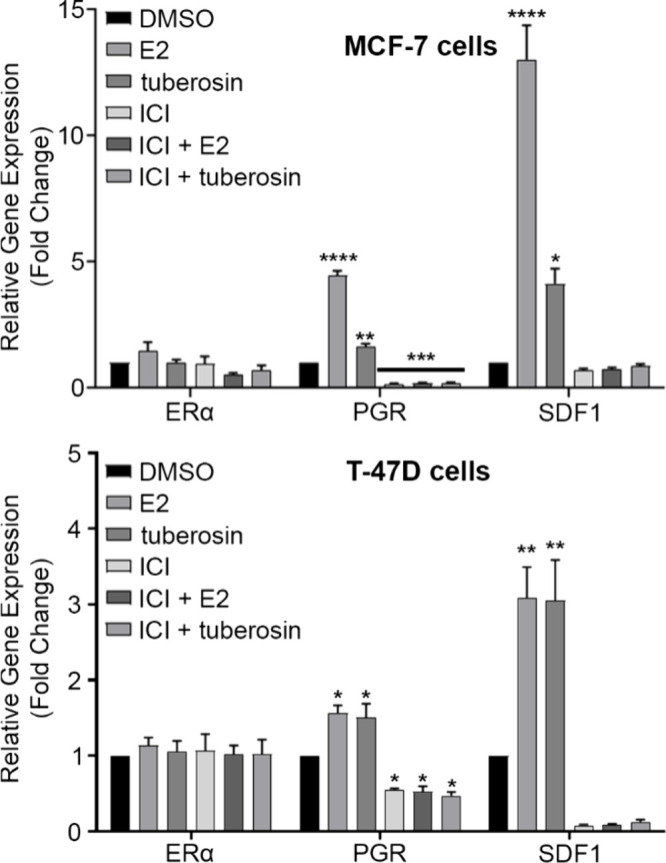 Figure 6
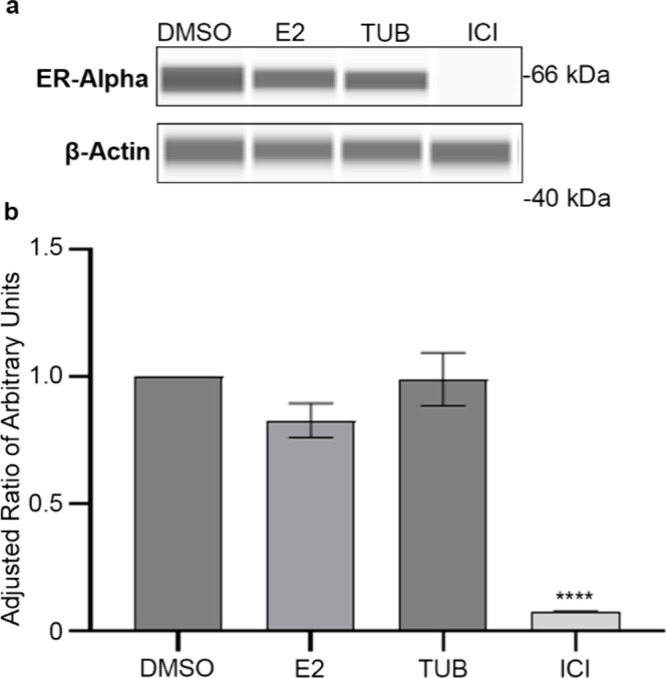 Figure 7
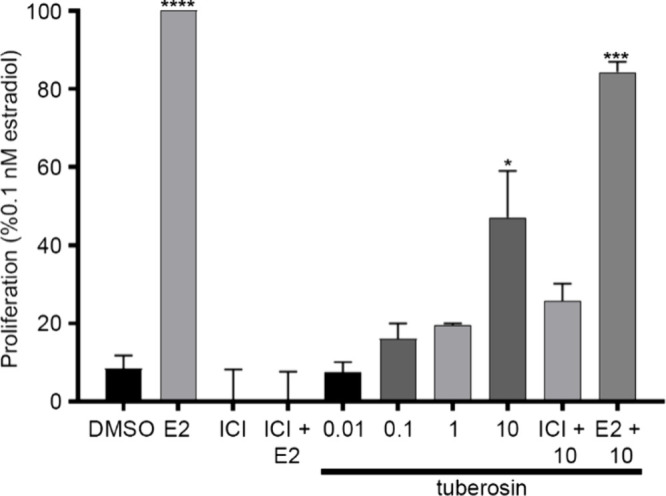 Figure 8
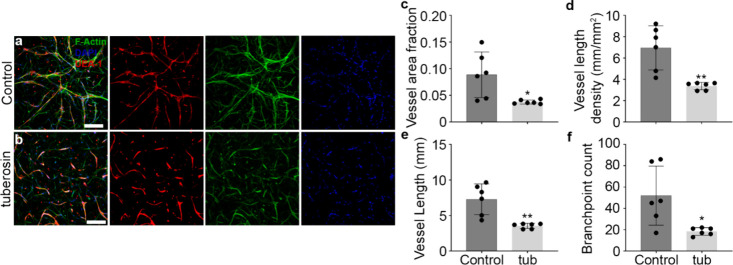 Figure 9
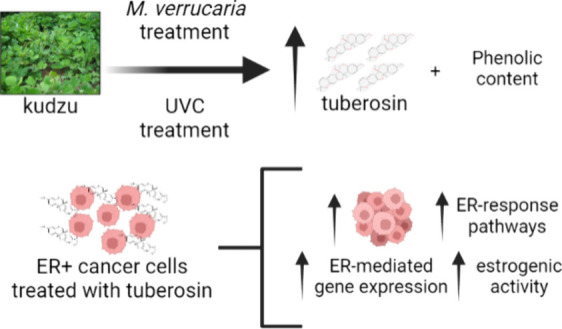 Figure 10
 Figure 11
Peer Reviews
No public reviews on file for this paper yet. If you reviewed it on a platform where reviews are public (OpenReview, ICLR, NeurIPS, ICML), you can paste yours below so the community can read it here.
Videos
No videos yet. Explain this paper in a talk, walkthrough, or lecture? Add one.
Taxonomy
TopicsPhytoestrogen effects and research · Estrogen and related hormone effects · Phytochemicals and Antioxidant Activities