Computational Studies of Chiral Epoxide Radicals
Kathleen M. Morgan, Lauren A. Brown, Camryn C. Cole, Giavonna K. Cooper, Alajah Nealy, DiJon Seltzer

TL;DR
This study uses computational methods to explore how substituents affect the reactivity of chiral epoxide radicals in gas and solvent environments.
Contribution
The novel contribution is the computational analysis of substituent effects on epoxide radical reactivity and ring-opening barriers.
Findings
Substituents strongly influence the inversion barrier of radicals on the epoxide ring.
Polyfluorinated epoxide radicals show elevated reaction barriers for ring-opening.
Solvent effects have minimal impact on calculated reaction barriers.
Abstract
Epoxides are strained heterocycles that are common commodity chemicals and synthetic intermediates. The goal of this study is to understand and compare the reactivity of simple epoxides and their radicals in the gas phase using G4 and W1BD calculations. The epoxides include the parent oxirane and monosubstituted analogs having −CH3, –NH2, −OH, –F, and –Cl substituents. The C–H bond dissociation energies to form carbon radicals from the various epoxides are reported. Radicals generated on the epoxide ring are nonplanar, and a substituent on the radical carbon has a strong influence on the barrier to invert the radical carbon. Epoxide radicals undergo a competitive ring-opening reaction to form vinoxy radicals, and this process is also influenced by substituents. Calculations on polyfluorinated epoxide radicals were completed, and the barriers to both reactions are elevated in the…
Genes, proteins, chemicals, diseases, species, mutations and cell lines named across the full text — each resolved to its canonical identifier and authoritative record.
Click any figure to enlarge with its caption.
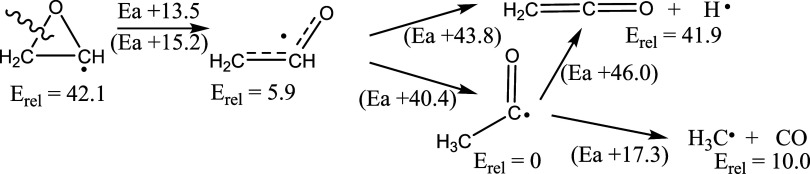 Figure 1
 Figure 2
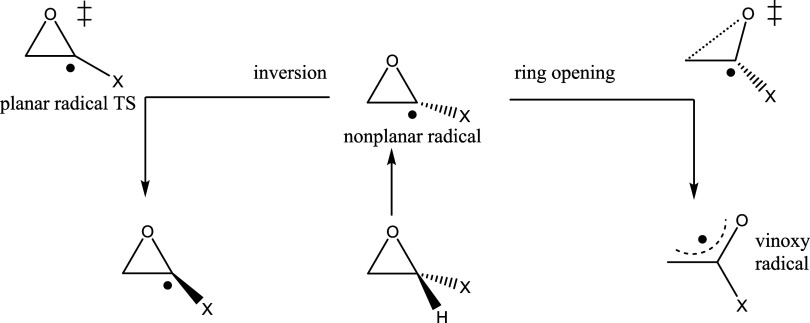 Figure 3
 Figure 4
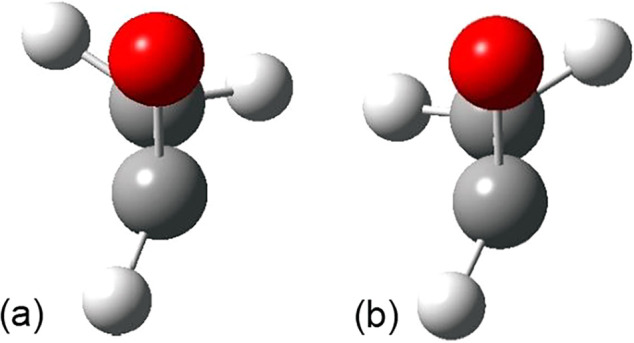 Figure 5
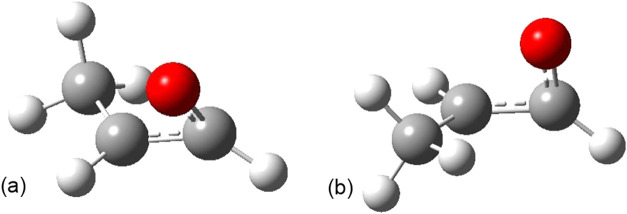 Figure 6
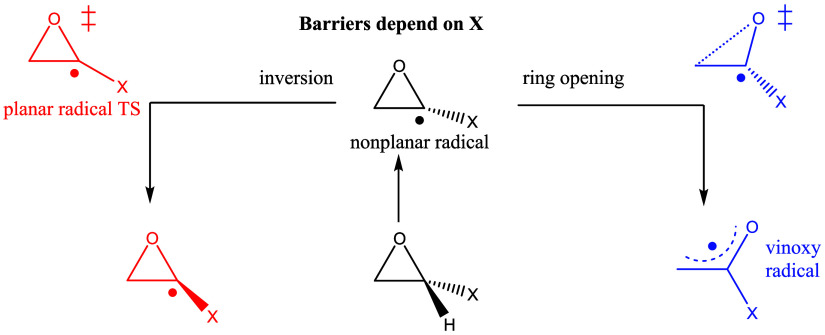 Figure 7
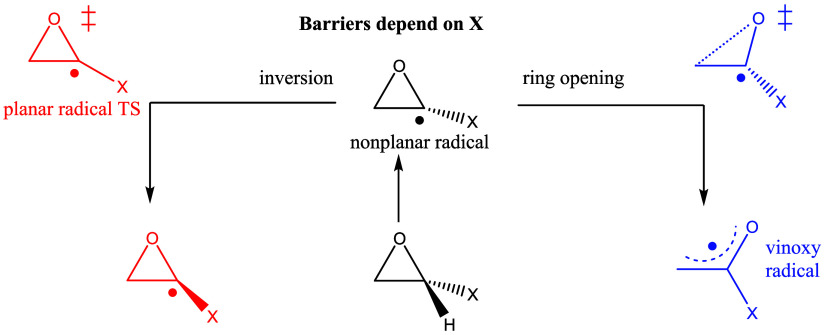 Figure 8
Peer Reviews
No public reviews on file for this paper yet. If you reviewed it on a platform where reviews are public (OpenReview, ICLR, NeurIPS, ICML), you can paste yours below so the community can read it here.
Videos
No videos yet. Explain this paper in a talk, walkthrough, or lecture? Add one.
Taxonomy
TopicsFree Radicals and Antioxidants · Analytical Chemistry and Chromatography · Molecular spectroscopy and chirality