Patients’ daily reporting of symptoms via mobile application reveals a significant difference between patients’ perceptions and doctors’ interpretations
Cvetka Grašič Kuhar, Nina Privšek, Marjetka Sraka, Ema Grašič, Timotej Kovač, Matjaž Kukar

TL;DR
A mobile app for tracking symptoms showed that patients report more and more intense symptoms than doctors record, highlighting a gap in understanding patient experiences during cancer treatment.
Contribution
This study demonstrates that patient-reported symptoms via a mobile app reveal significant discrepancies compared to doctor assessments during chemotherapy.
Findings
Patients reported nearly twice as many symptoms as doctors recorded in electronic health records.
Patients rated most symptoms as mild, but doctors underreported insomnia and dry mouth despite high patient prevalence.
Patients and doctors both rated the mobile app highly for usability and satisfaction.
Abstract
Electronic patient-reported outcomes (ePROs) are gaining importance. The aim of this study was to investigate the difference in the reporting of symptoms between patients via mobile application (m-app) and doctor assessments. Additionally, usability and satisfaction with the use of the m-app were assessed. In this single-center prospective cohort study, we analyzed ePROs in 46 patients receiving (neo)adjuvant chemotherapy for early breast cancer. Patients recorded the occurrence and intensity of symptoms via the Android-based m-app daily. Three-monthly, patients completed validated quality of life questionnaires (EORTC C30 and BR23). For the 10 most common symptoms reported by patients, we compared the frequencies and grades between patients and doctors. Additionally, we compared daily symptom reports with questionnaire results. Finally, the usefulness of and level of satisfaction with…
Genes, proteins, chemicals, diseases, species, mutations and cell lines named across the full text — each resolved to its canonical identifier and authoritative record.
Click any figure to enlarge with its caption.
 Figure 1
 Figure 2
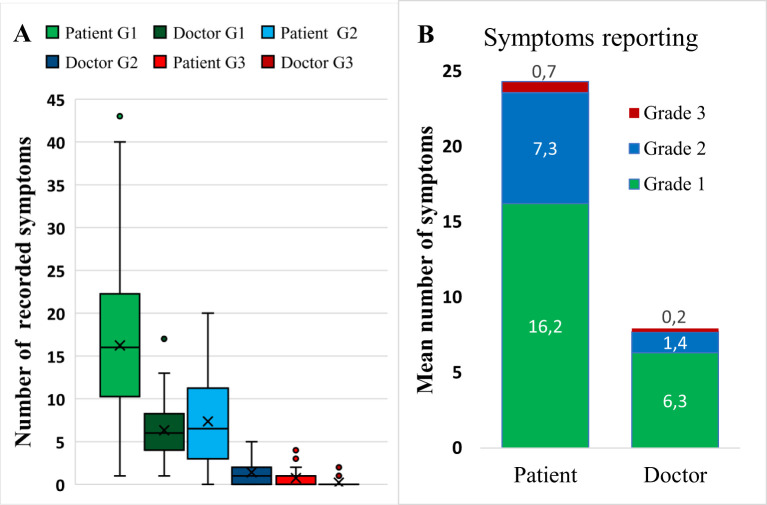 Figure 3
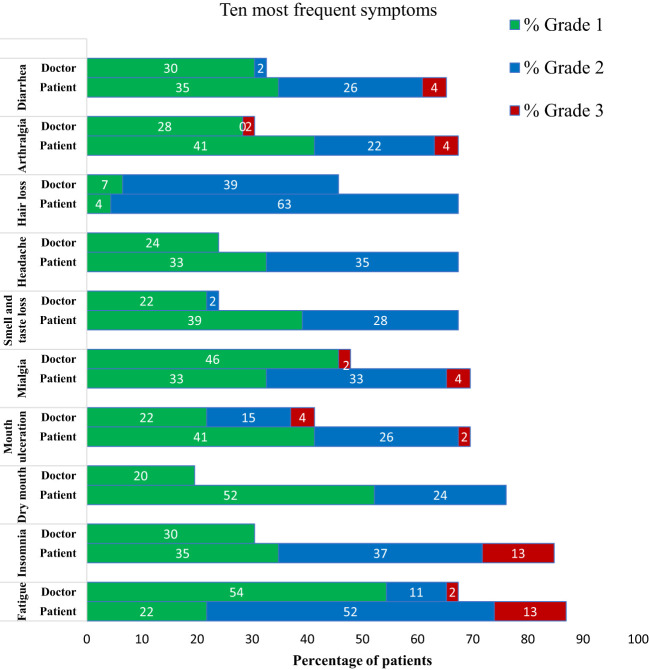 Figure 4
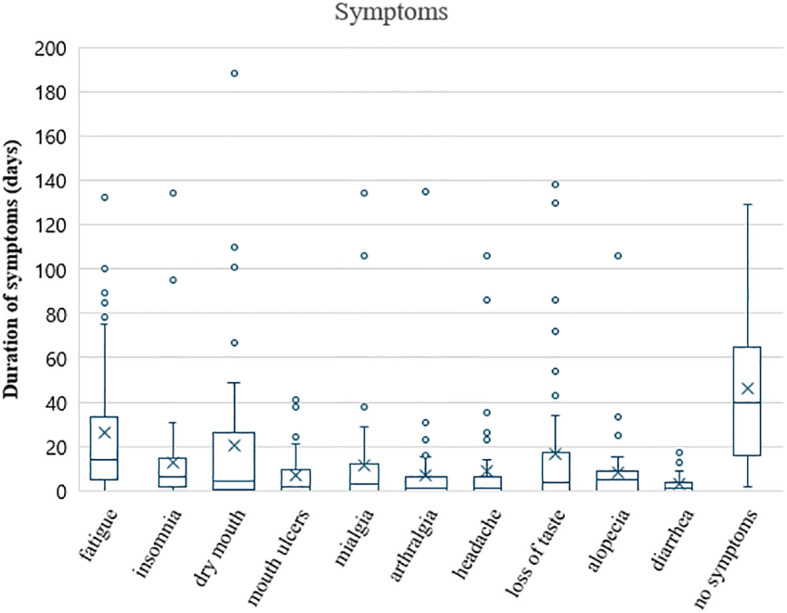 Figure 5
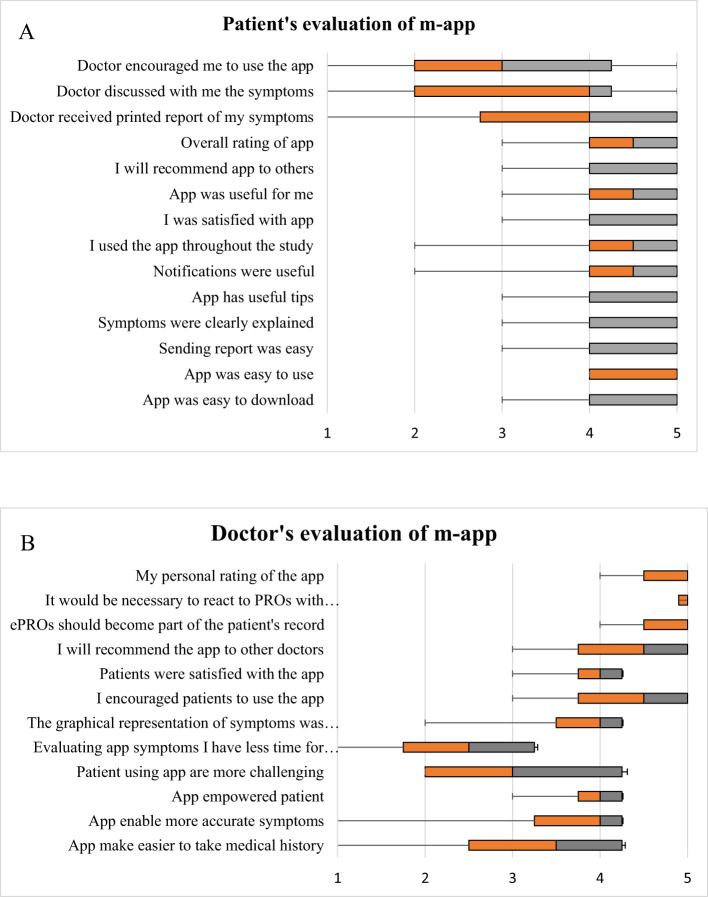 Figure 6
Peer Reviews
No public reviews on file for this paper yet. If you reviewed it on a platform where reviews are public (OpenReview, ICLR, NeurIPS, ICML), you can paste yours below so the community can read it here.
Videos
No videos yet. Explain this paper in a talk, walkthrough, or lecture? Add one.
Taxonomy
TopicsCancer survivorship and care · Patient-Provider Communication in Healthcare · Social Media in Health Education