Protocol for synthesizing, implanting, and using polydimethylsiloxane as skull replacement in mice for imaging, electrophysiology, and optogenetics
Kengo Takahashi, Gerjan Huis in ‘t Veld, Davide Benedetti, Jun-Ying Wang, Samuel Pontes Quero, Rafael Yuste, Cyriel M.A. Pennartz, Umberto Olcese

TL;DR
This paper provides a detailed protocol for using PDMS as a skull replacement in mice to enable long-term brain imaging and optogenetics.
Contribution
A novel protocol for PDMS skull replacement that supports chronic optical and electrophysiological studies in mice.
Findings
PDMS windows allow chronic wide-field and two-photon calcium imaging in mice.
The protocol includes steps for viral injections and silicon probe implantation for optogenetics.
PDMS provides both optical and mechanical access to the brain for extended studies.
Abstract
Many techniques to record and manipulate neuronal activity across large portions of the vertebrate brain are now available. However, few effective approaches enable both optical and mechanical access to the brain. Here, we present a protocol for synthesizing, implanting, and using polydimethylsiloxane (PDMS) windows as skull replacements for chronic wide-field and two-photon calcium imaging in mice. We also describe steps for performing viral injections and multi-site silicon probe implantation. •Guidance on synthesis of PDMS windows for skull replacement•Instructions for implantation of PDMS windows as skull replacement•Steps for optogenetic viral injection and Neuropixels probe insertion•Assessment of cortical activity via wide-field and two-photon calcium imaging Guidance on synthesis of PDMS windows for skull replacement Instructions for implantation of PDMS windows as skull…
Genes, proteins, chemicals, diseases, species, mutations and cell lines named across the full text — each resolved to its canonical identifier and authoritative record.
Click any figure to enlarge with its caption.
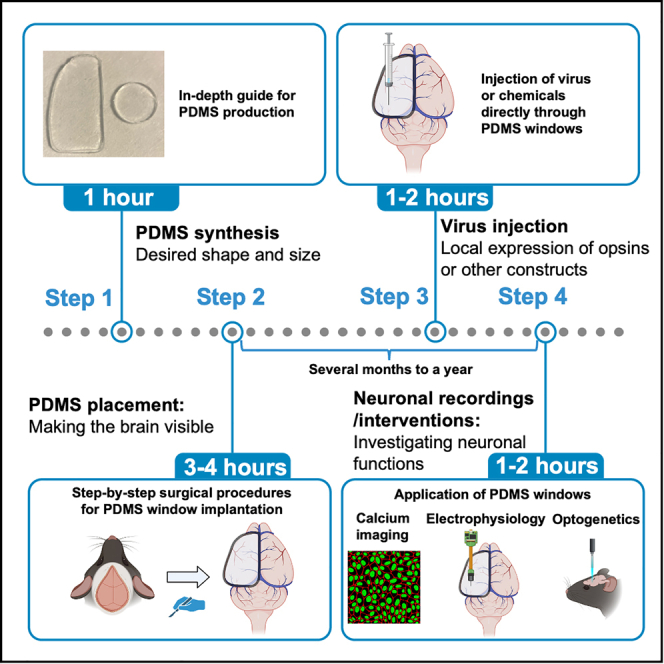 Figure 1
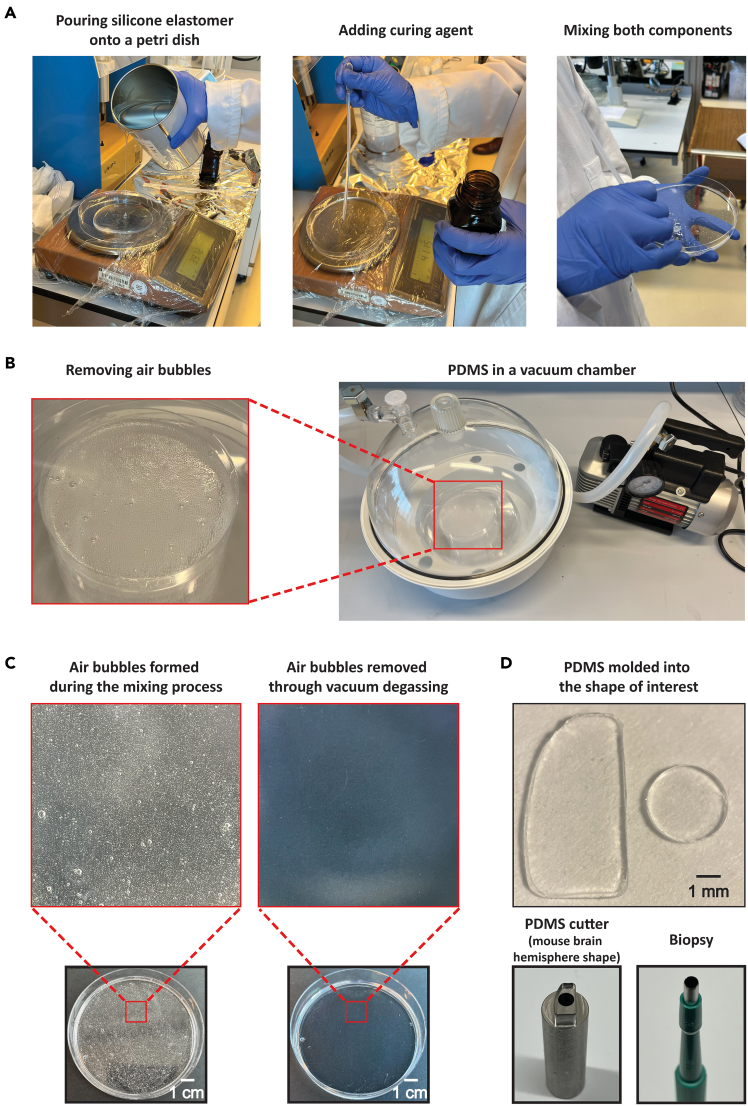 Figure 2
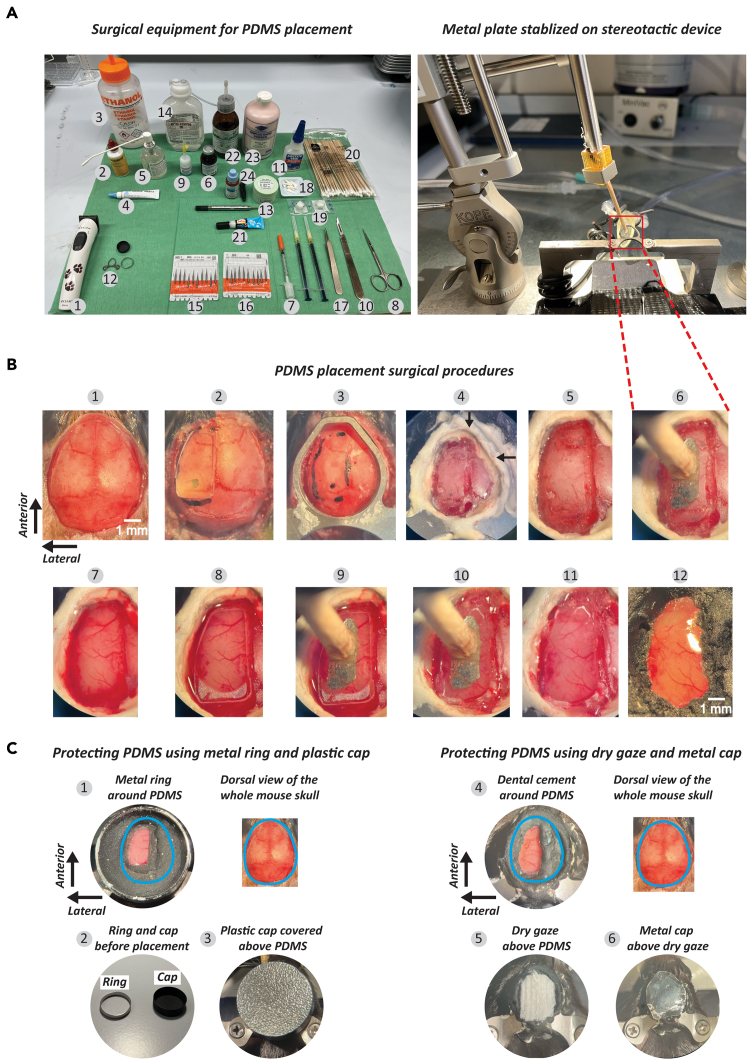 Figure 3
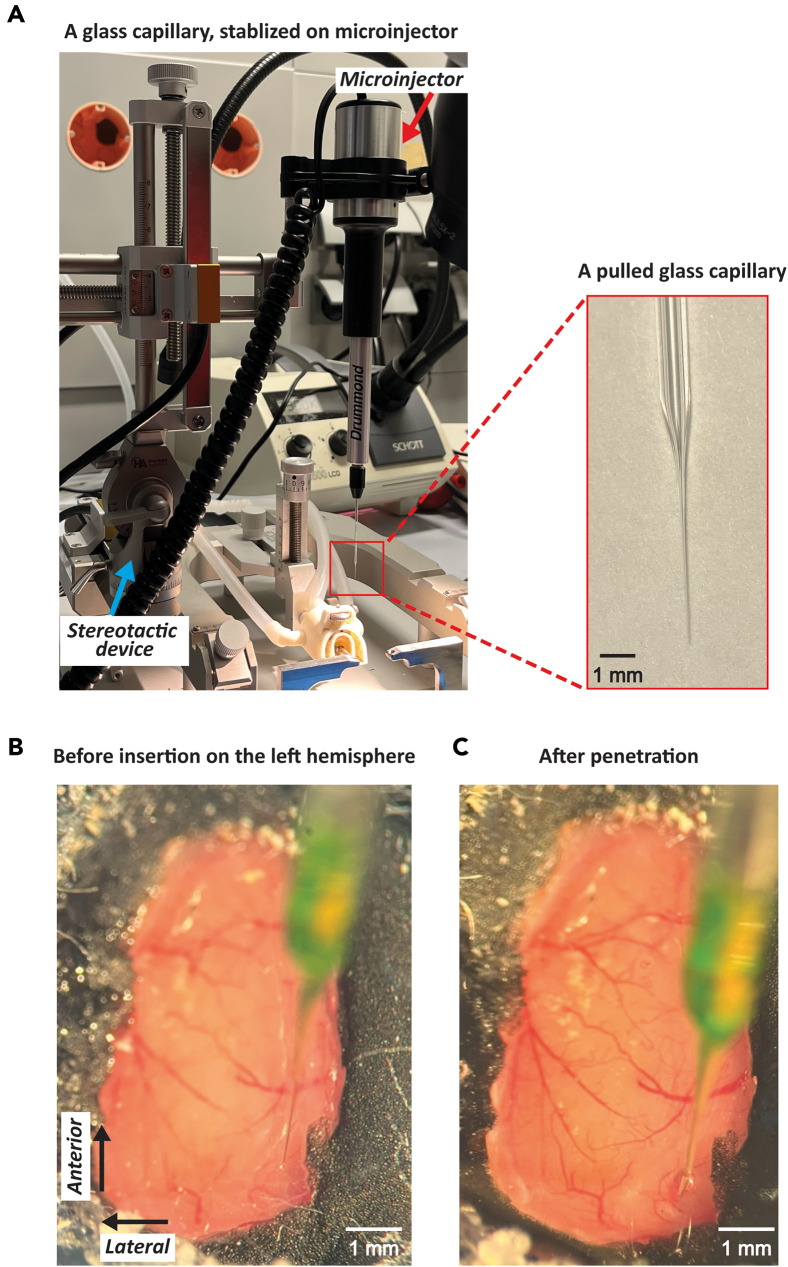 Figure 4
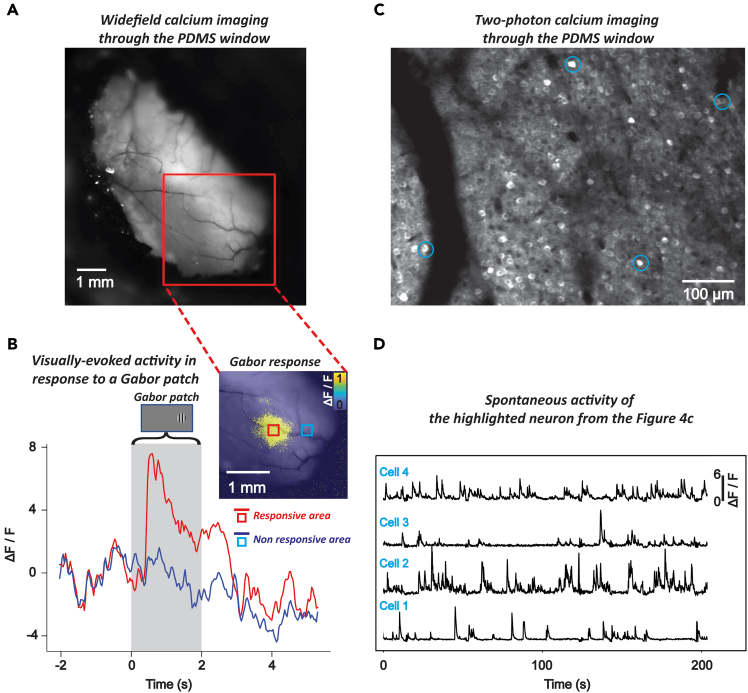 Figure 5
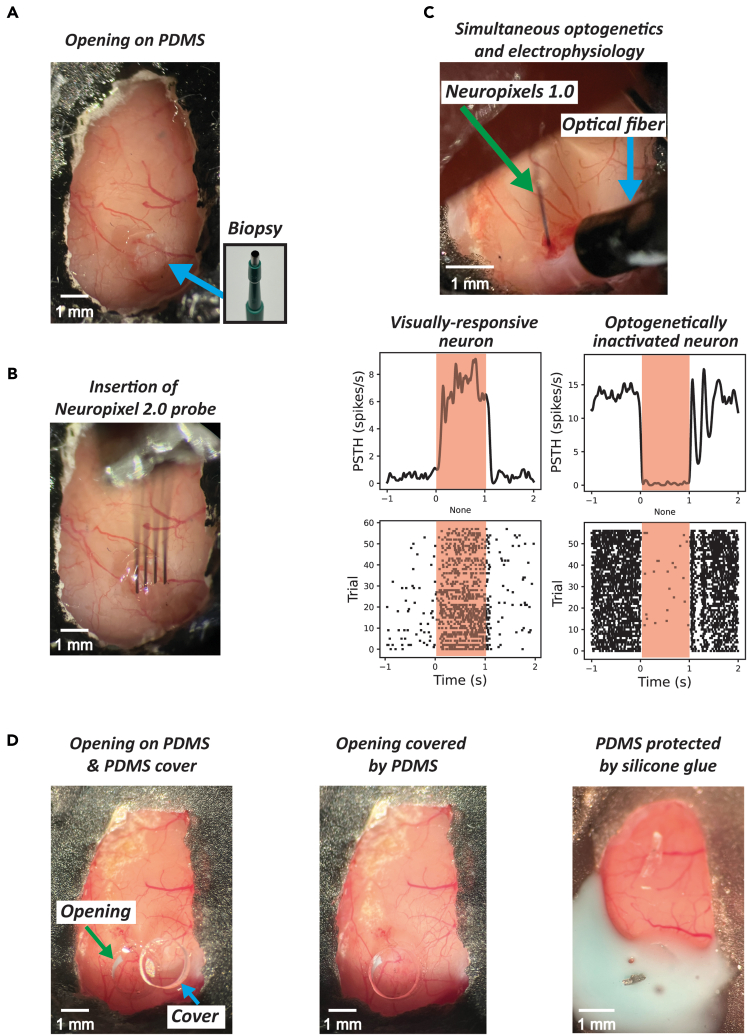 Figure 6
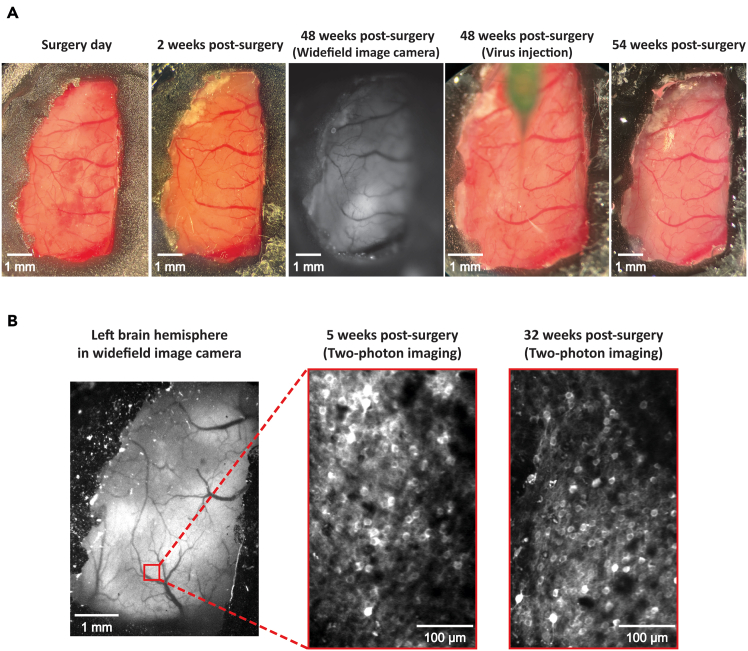 Figure 7
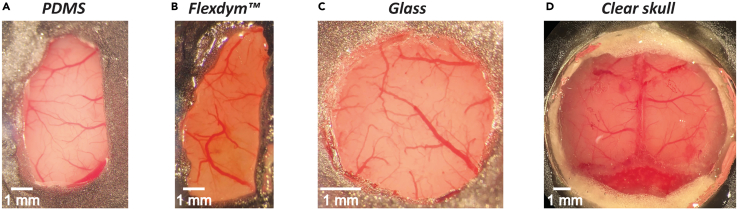 Figure 8
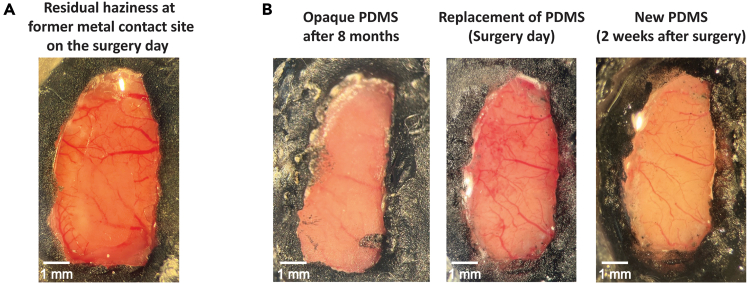 Figure 9
Peer Reviews
No public reviews on file for this paper yet. If you reviewed it on a platform where reviews are public (OpenReview, ICLR, NeurIPS, ICML), you can paste yours below so the community can read it here.
Videos
No videos yet. Explain this paper in a talk, walkthrough, or lecture? Add one.
Taxonomy
TopicsPhotoreceptor and optogenetics research · Molecular Sensors and Ion Detection · Neuroscience and Neuropharmacology Research