Identification of Ti(salen) Complexes for Efficient Catalysis in Single‐Electron Steps by Cyclic Voltammetry
Niklas Schmickler, Sergei Gerber, Lennart Hanz, Stefan Grimme, Zheng‐Wang Qu, Inke Siewert, Andreas Gansäuer

TL;DR
Researchers identified a highly active Ti(salen) catalyst for a chemical reaction using electrochemical methods and calculations, without performing actual reactions.
Contribution
A new Ti(salen) catalyst was identified using cyclic voltammetry and DFT, avoiding direct catalytic testing.
Findings
The most active catalyst has a tetrasubstituted ligand backbone that prevents chloride binding.
The catalyst works efficiently in ethyl acetate with base metals or electrochemical activation.
The Ti(salen) catalyst outperforms titanocene in sustainability and substrate scope.
Abstract
We describe the identification of an active Ti(salen) catalyst for the radical arylation of epoxides by a cyclic voltammetry study of mechanism‐based predictors, such as the redox potentials of the complexes and their EqCr‐equilibria, for the success of catalysis. Surprisingly, by far the most active catalyst features an uncommon tetrasubstituted ligand backbone, which renders chloride binding to the active Ti(III) species less favorable, thereby increasing catalyst activity due to improved substrate binding. Catalysis is most efficient in the “green” solvent ethyl acetate and can be initiated using base metals as well as electrochemical methods for the reduction of the Ti(salen)‐precatalyst. Compared to the commonly employed titanocene catalysis, the use of the newly developed Ti(salen) catalyst allows for the use of milder and more sustainable reactions conditions, a broader substrate…
Genes, proteins, chemicals, diseases, species, mutations and cell lines named across the full text — each resolved to its canonical identifier and authoritative record.
Click any figure to enlarge with its caption.
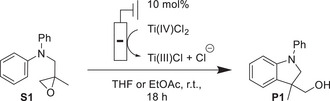 Figure 1
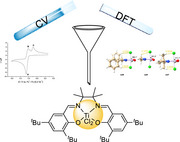 Figure 2
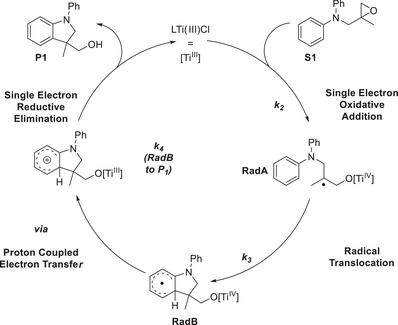 Figure 3
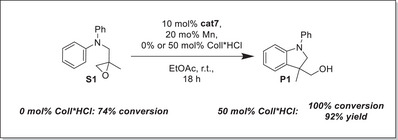 Figure 4
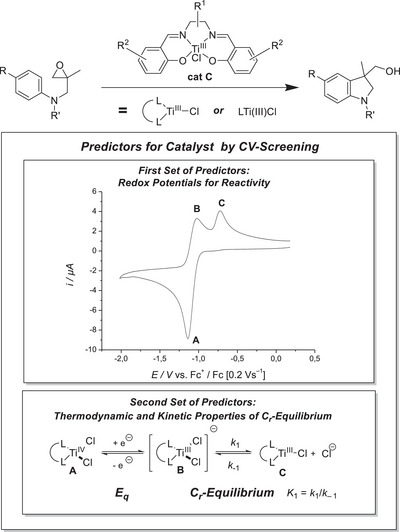 Figure 5
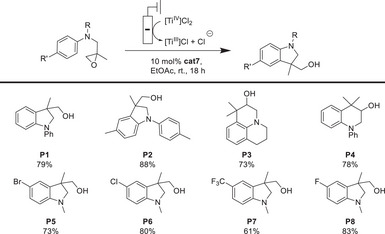 Figure 6
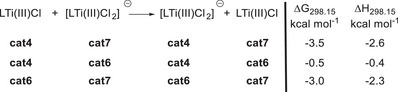 Figure 7
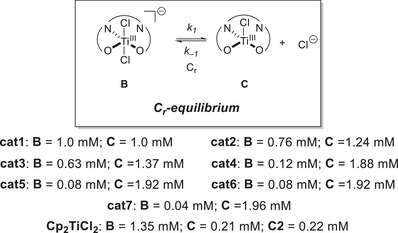 Figure 8
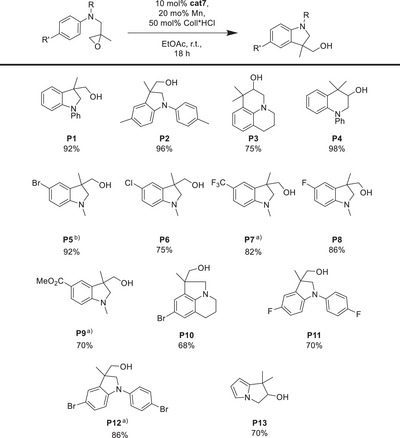 Figure 9
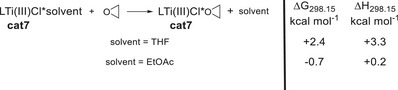 Figure 10
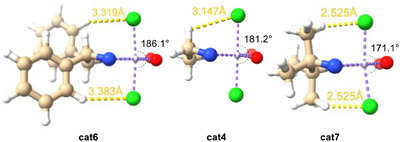 Figure 11
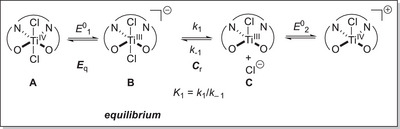 Figure 12
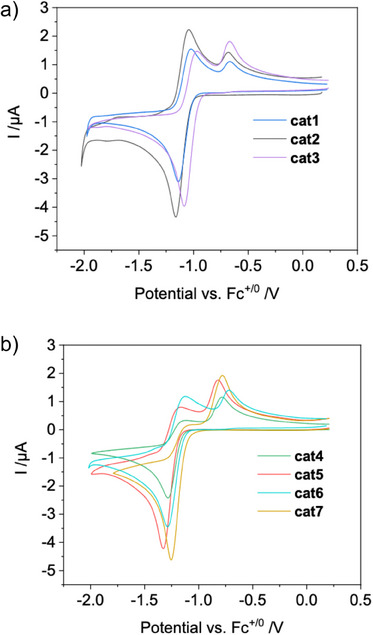 Figure 13
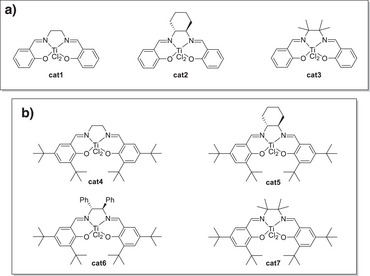 Figure 14
Peer Reviews
No public reviews on file for this paper yet. If you reviewed it on a platform where reviews are public (OpenReview, ICLR, NeurIPS, ICML), you can paste yours below so the community can read it here.
Videos
No videos yet. Explain this paper in a talk, walkthrough, or lecture? Add one.
Taxonomy
TopicsRadical Photochemical Reactions · Catalytic C–H Functionalization Methods · Sulfur-Based Synthesis Techniques