How many sites are enough? a novel, site-based power analysis method for real-world registry studies of anti-amyloid monoclonal antibodies
Kenichiro Sato, Yoshiki Niimi, Ryoko Ihara, Atsushi Iwata, Takeshi Iwatsubo

TL;DR
A new simulation method improves site planning for real-world studies of anti-amyloid antibodies by accounting for site variability.
Contribution
A novel simulation-based power analysis method that incorporates inter-site variability for registry study design.
Findings
The new method requires about 320 sites for random sampling to achieve desired precision in ARIA incidence estimates.
Strategic volume-weighted sampling can reduce the required site count to as few as 110.
Conventional methods underestimated site requirements compared to the new simulation approach.
Abstract
Real-world registries ALZ-NET (US) and AD-DMT (Japan) support safety surveillance of anti-amyloid antibodies. Conventional power calculations—dividing required patients by mean per-site caseload—can underestimate the number of centers needed because of patient counts variability. To develop and evaluate a simulation-based method for site-level sample size planning that incorporates inter-site variability. We developed a simulation using a zero-truncated negative binomial model to reflect caseload heterogeneity. We estimated the required sites (k) to achieve a target precision (95 % confidence interval [CI] width) for ARIA incidence under random and volume-weighted sampling, based on data from published trials. The required number of sites was determined as the point where the CI width met a prespecified precision target (< 0.1). Simulated ALZ-NET and AD-DMT registry settings using…
Genes, proteins, chemicals, diseases, species, mutations and cell lines named across the full text — each resolved to its canonical identifier and authoritative record.
Click any figure to enlarge with its caption.
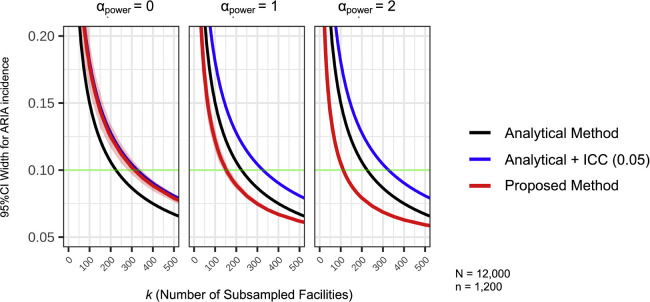 Figure 1
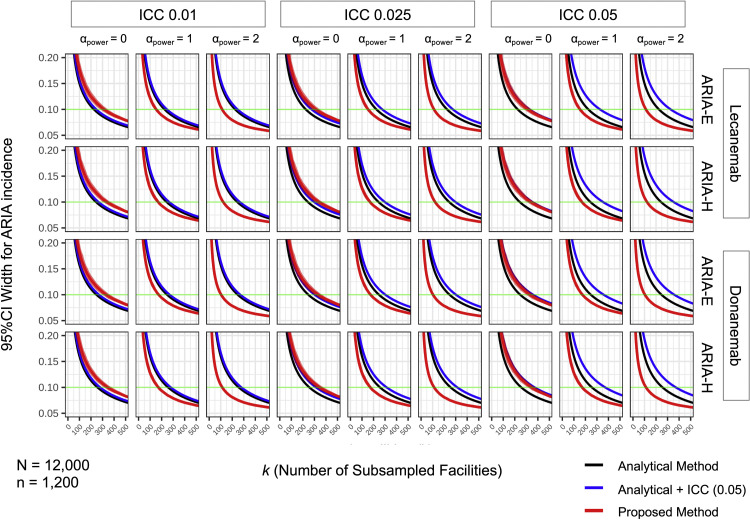 Figure 2
Peer Reviews
No public reviews on file for this paper yet. If you reviewed it on a platform where reviews are public (OpenReview, ICLR, NeurIPS, ICML), you can paste yours below so the community can read it here.
Videos
No videos yet. Explain this paper in a talk, walkthrough, or lecture? Add one.
Taxonomy
TopicsAlzheimer's disease research and treatments · Computational Drug Discovery Methods · Gene expression and cancer classification