Prevalence of mutations associated with tolerance to chlorhexidine and other cationic biocides among Proteus mirabilis clinical isolates
Vicky Bennett, Ocean E. Clarke, Maryam Y. Ravari, James D. Winslow, Matthew E. Wand, Andrew Preston, Emma L. Denham, J. Mark Sutton, Brian V. Jones

TL;DR
This study investigates how mutations in specific genes affect Proteus mirabilis's tolerance to chlorhexidine and other biocides, revealing common mechanisms of resistance.
Contribution
The study identifies the prevalence of smvR mutations and their impact on biocide tolerance in clinical isolates of Proteus mirabilis.
Findings
Deleterious mutations in smvR are commonly associated with reduced susceptibility to chlorhexidine and other cationic biocides.
Mutations in rppA and smvA are linked to increased susceptibility to biocides.
LPS core biosynthesis gene waaG mutations contribute to biocide tolerance through LPS truncation.
Abstract
Proteus mirabilis is a frequent cause of catheter-associated urinary tract infection and often exhibits high tolerance to chlorhexidine (CHD), a biocide used widely in healthcare settings. We previously demonstrated that inactivation of the smvR repressor (leading to overexpression of the smvA efflux system), truncation of the MltA-interacting protein MipA and aspects of lipopolysaccharide (LPS) structure modulate CHD susceptibility in this organism. However, the prevalence of these mechanisms among P. mirabilis clinical isolates, the conditions under which they can be acquired and their impact on susceptibility to other cationic biocides require further study. Through phenotypic and genomic analysis of a panel of 78 P. mirabilis clinical isolates, we have confirmed that deleterious mutations in smvR commonly arise in P. mirabilis and are significantly associated with reduced…
Genes, proteins, chemicals, diseases, species, mutations and cell lines named across the full text — each resolved to its canonical identifier and authoritative record.
Click any figure to enlarge with its caption.
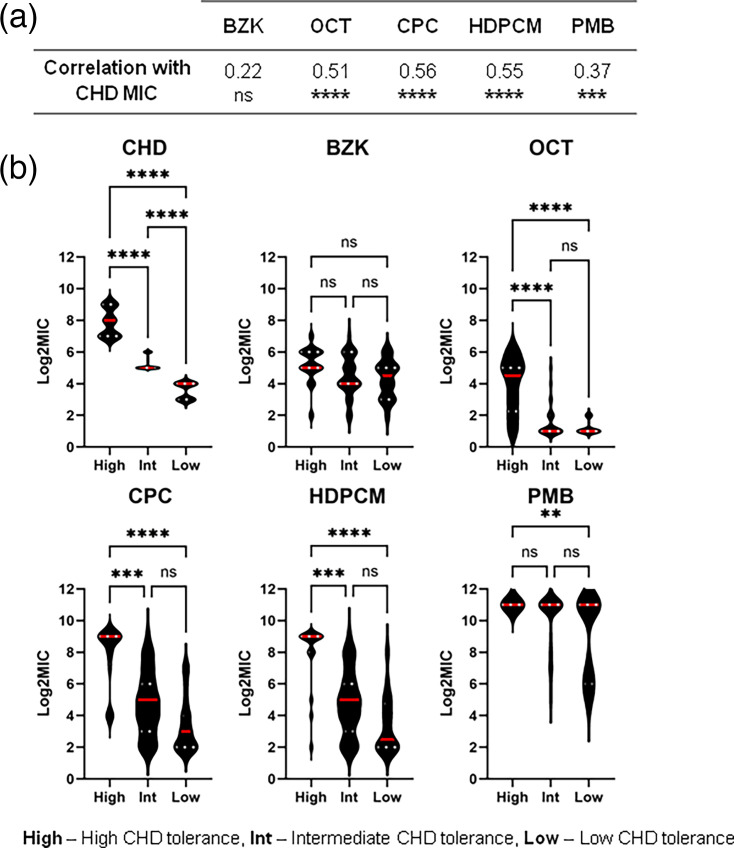 Figure 1
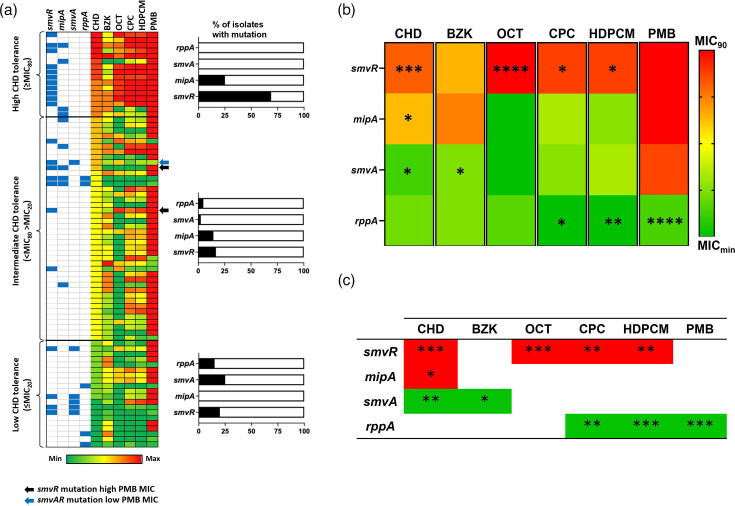 Figure 2
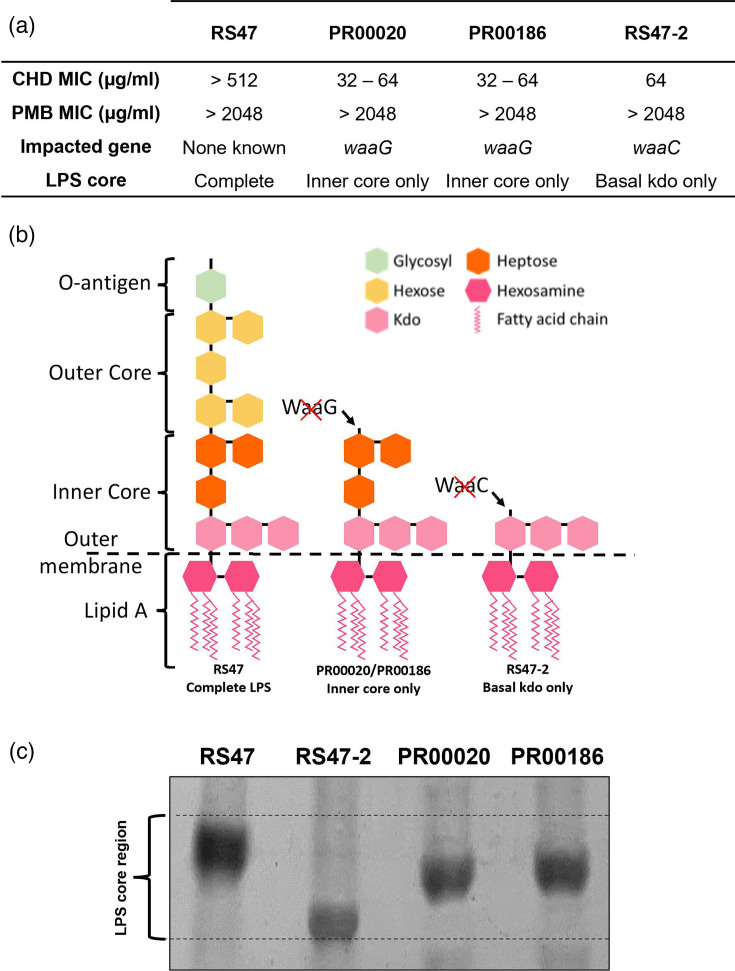 Figure 3
Peer Reviews
No public reviews on file for this paper yet. If you reviewed it on a platform where reviews are public (OpenReview, ICLR, NeurIPS, ICML), you can paste yours below so the community can read it here.
Videos
No videos yet. Explain this paper in a talk, walkthrough, or lecture? Add one.
Taxonomy
TopicsAntimicrobial agents and applications · Antimicrobial Resistance in Staphylococcus · Bacterial biofilms and quorum sensing