Feasibility and Preliminary Efficacy of an Online Cardiovascular Disease Prevention Randomised Controlled Trial Targeting Addictive and Compulsive Overeating Among Australian Young Adults
Mark A. Leary, Janelle A. Skinner, Melinda J. Hutchesson, Megan Teychenne, Megan C. Whatnall, Phillipa J. Hay, Tracy L. Burrows

TL;DR
A pilot study tested an online program to reduce cardiovascular disease risks in young adults with addictive eating behaviors, finding it feasible and showing some dietary improvements.
Contribution
This study demonstrates the feasibility of a telehealth intervention targeting addictive eating to improve cardiovascular risk factors in young adults.
Findings
The TRACE program successfully recruited and engaged young adults with addictive eating behaviors.
The intervention group showed significant improvements in dietary intake compared to the control group.
Website engagement was high in the intervention group but low in the control group.
Abstract
Cardiovascular disease (CVD) is a major cause of mortality and morbidity. The number of young adults with at least one CVD risk factor has increased over the past two decades. Evidence suggests that addictive eating behaviours cluster with other CVD risk behaviours, including poor diet, lack of physical activity and poor sleep quality. The primary aim of this pilot study is to determine the feasibility (adherence to the programme), acceptability and engagement of an innovative intervention comprising of five telehealth sessions ranging from 20 to 45 min with an Accredited Practising Dietitian over 8 weeks aimed at improving CVD risk factors in young Australian adults aged 18–35 years with addictive eating behaviours. A total of 53 young adults with ≥ 3 symptoms of addictive eating assessed via the Yale Food Addiction Scale 2.0 and a body mass index > 18.5 kg/m2 were recruited.…
Genes, proteins, chemicals, diseases, species, mutations and cell lines named across the full text — each resolved to its canonical identifier and authoritative record.
Click any figure to enlarge with its caption.
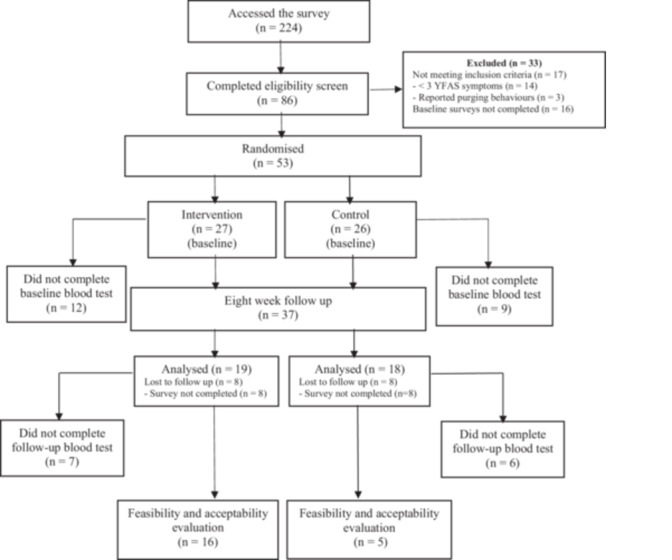 Figure 1
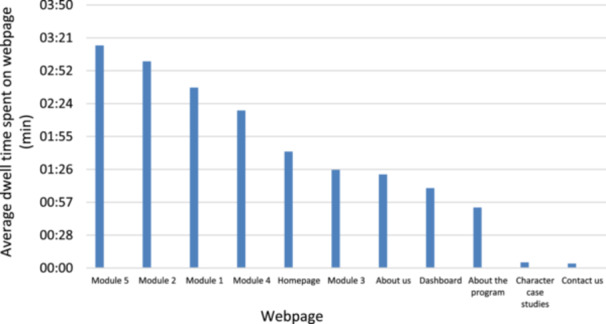 Figure 2
Peer Reviews
No public reviews on file for this paper yet. If you reviewed it on a platform where reviews are public (OpenReview, ICLR, NeurIPS, ICML), you can paste yours below so the community can read it here.
Videos
No videos yet. Explain this paper in a talk, walkthrough, or lecture? Add one.
Taxonomy
TopicsEating Disorders and Behaviors · Cardiac Health and Mental Health · Impact of Technology on Adolescents