Expression and clinical significance of S100A8/9 in adults with secondary phagocytic lymphohistiocytosis
Ziwei Fang, Xin Gao, Limin Duan, Jujuan Wang, Tian Tian, Ji Xu, Yongqian Shu, Guangli Yin, Hongxia Qiu

TL;DR
This study shows that S100A8/9 levels in blood can help diagnose and predict outcomes in patients with a rare inflammatory disease called secondary phagocytic lymphohistiocytosis.
Contribution
The study identifies S100A8/9 as a potential biomarker for diagnosing and predicting prognosis in sHLHa patients.
Findings
Serum S100A8/9 levels were higher in sHLHa patients compared to healthy controls.
High S100A8/9 levels and low ANC were independent risk factors for poor prognosis in sHLHa patients.
S100A8/9 levels showed a nonlinear correlation with survival and a threshold effect at 2.44 µg/mL.
Abstract
The study aimed to investigate the diagnostic and prognostic value of serum S100A8/9 levels with sHLHa, a high-mortality multiorgan inflammatory syndrome with no reliable clinical biomarkers, where calreticulin’s role is unclear. This was a study of 67 newly diagnosed sHLHa patients. 48 patients met criteria and were analyzed. ELISA detected S100A8/9 levels in patients and controls. The optimal classification threshold for S100A8/9 was determined to be 2.44 µg/mL by restricted cubic spline (RCS) curve analysis. Patients were categorized. Correlations, diagnostic efficacy, survival differences, and prognosis impacts were analyzed. Serum S100A8/9 levels in sHLHa patients were greater than in healthy controls. Various analyses showed its diagnostic and prognostic value. ANC<1.0 × 10⁹/L and high S100A8/9 expression group were independent risk factors for poor prognosis in patients with…
Genes, proteins, chemicals, diseases, species, mutations and cell lines named across the full text — each resolved to its canonical identifier and authoritative record.
Click any figure to enlarge with its caption.
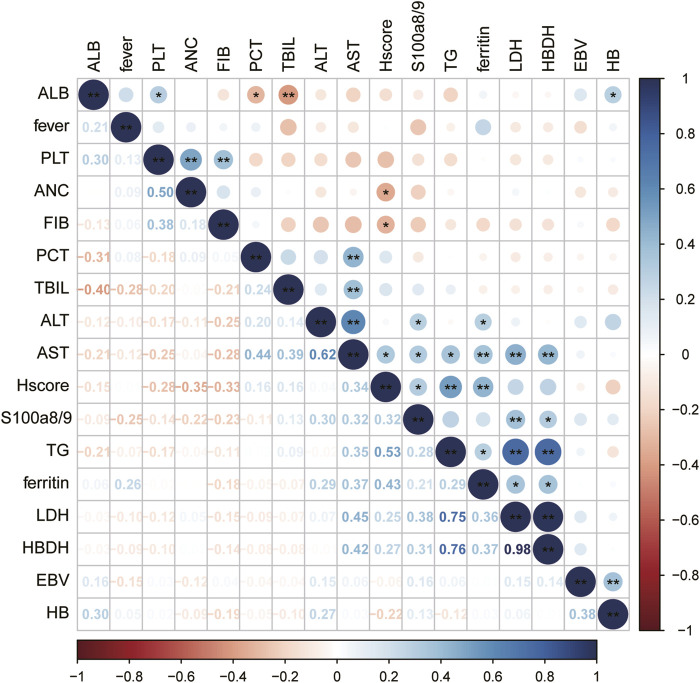 Figure 1
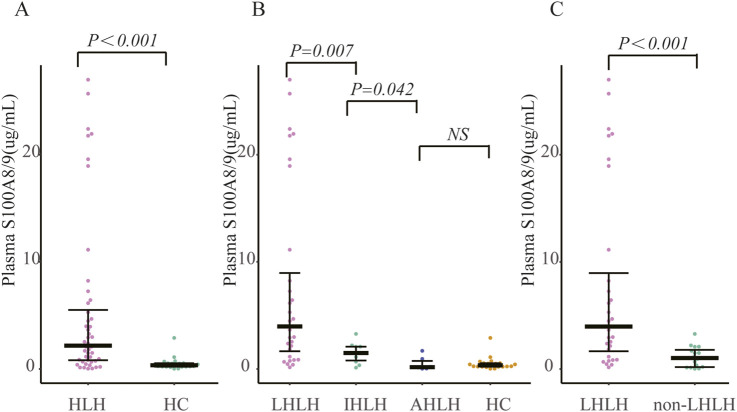 Figure 2
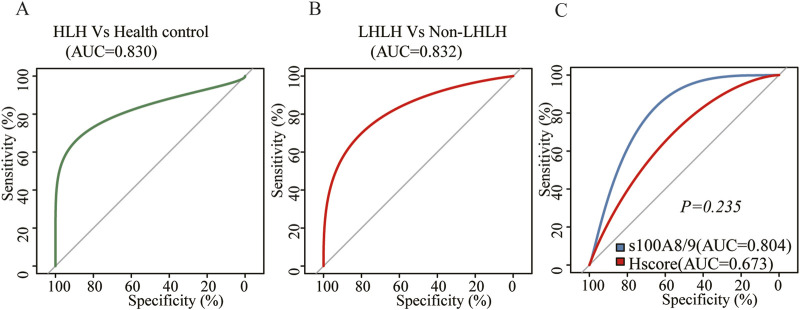 Figure 3
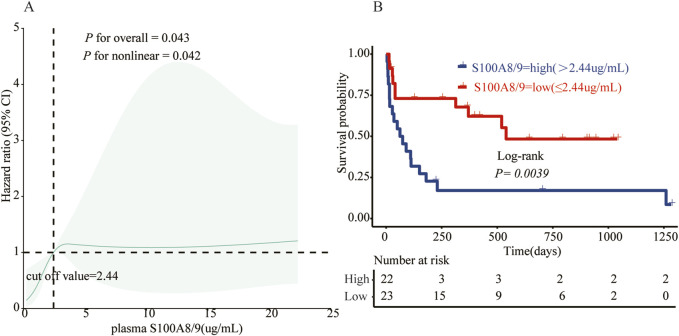 Figure 4
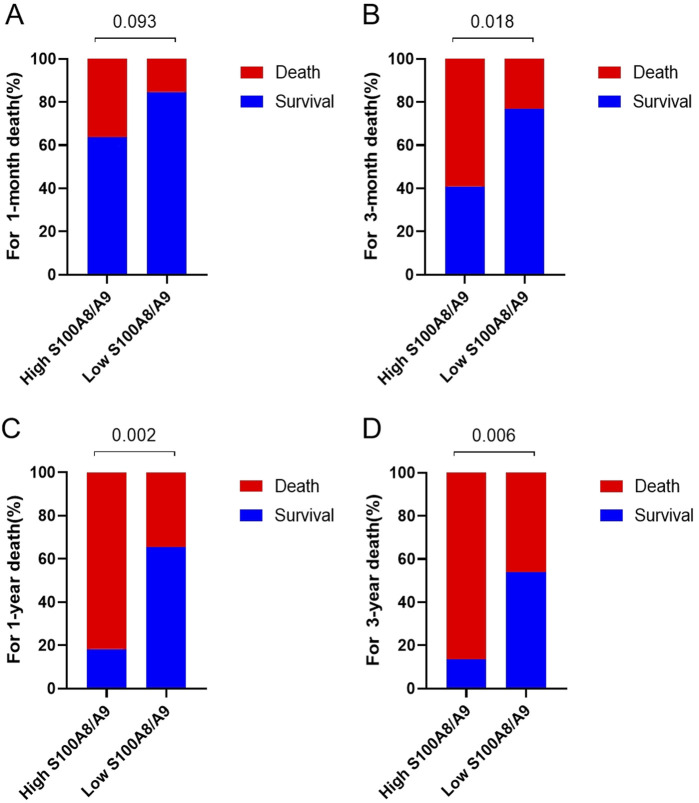 Figure 5
Peer Reviews
No public reviews on file for this paper yet. If you reviewed it on a platform where reviews are public (OpenReview, ICLR, NeurIPS, ICML), you can paste yours below so the community can read it here.
Videos
No videos yet. Explain this paper in a talk, walkthrough, or lecture? Add one.
Taxonomy
TopicsInflammasome and immune disorders · Autoimmune and Inflammatory Disorders Research · Inflammation biomarkers and pathways