Unlocking the Depths: Use of a Trait‐Based Approach to Reveal the Diversity of Foraging Strategies in a Deep‐Pelagic Fish Community
Liz Loutrage, Anik Brind'Amour, Benoit Simon‐Bouhet, Rachel Dubourg, Célina Chantre, Jérôme Spitz

TL;DR
This study explores how deep-pelagic fish communities adapt to environmental gradients by analyzing foraging strategies across different depths.
Contribution
The paper introduces a trait-based approach to reveal the diversity of foraging strategies in deep-pelagic fish communities.
Findings
Epipelagic species show trait convergence adapted for prey-tracking strategies.
Bathypelagic species exhibit high functional richness and unique trait combinations.
Functional rarity at depth suggests irreplaceable ecosystem functions.
Abstract
Community trait structure is shaped by environmental filtering and limiting similarity, balancing abiotic selection and competitive divergence. In the context of environmental change and anthropogenic pressures, increasing our understanding of the relative importance of these mechanisms is essential for predicting future changes in biodiversity. The deep‐pelagic ecosystem is characterised by pronounced environmental gradients, particularly in light and food availability. The mechanisms by which fish have adapted to these gradients remain poorly understood. To better understand community trait structure, we measured 26 traits related to foraging function in 42 epi‐ to bathypelagic fish species sampled between 20 and 2000 m depth at night in the Bay of Biscay. We first tested whether limiting similarity or environmental filtering dominates trait structure along the depth gradient by…
Genes, proteins, chemicals, diseases, species, mutations and cell lines named across the full text — each resolved to its canonical identifier and authoritative record.
Click any figure to enlarge with its caption.
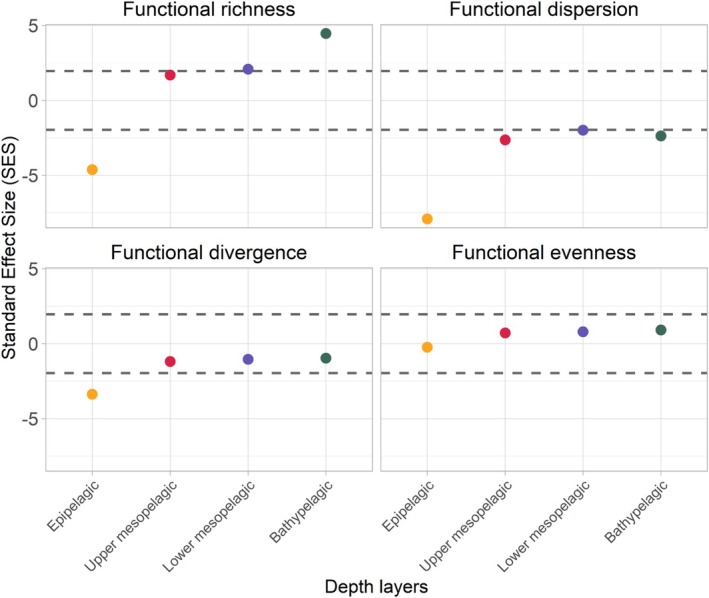 Figure 1
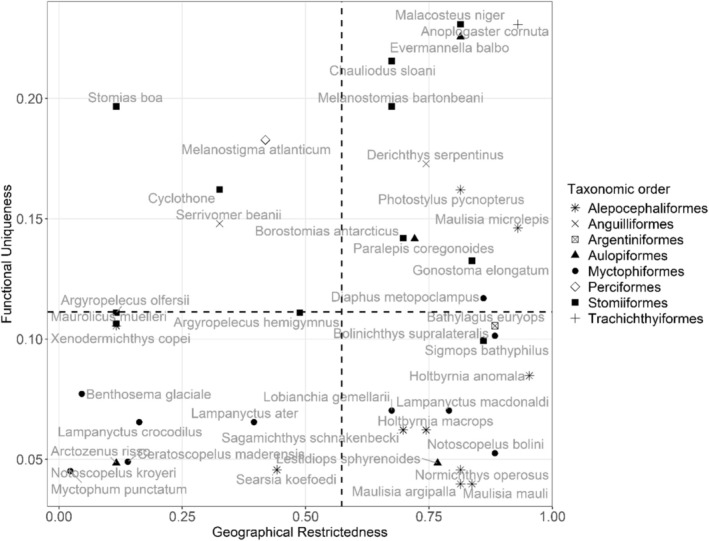 Figure 2
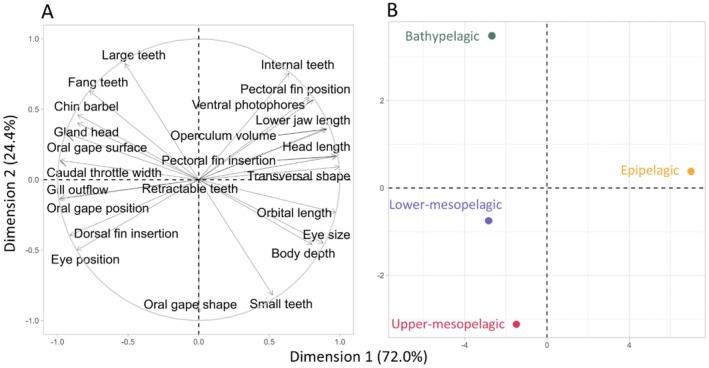 Figure 3
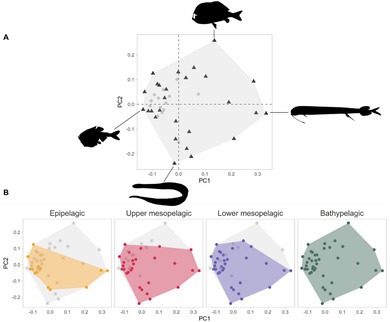 Figure 4
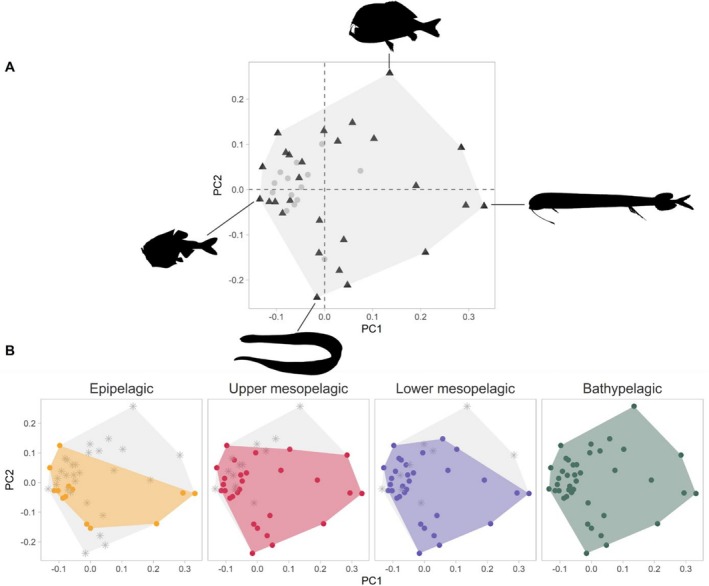 Figure 5
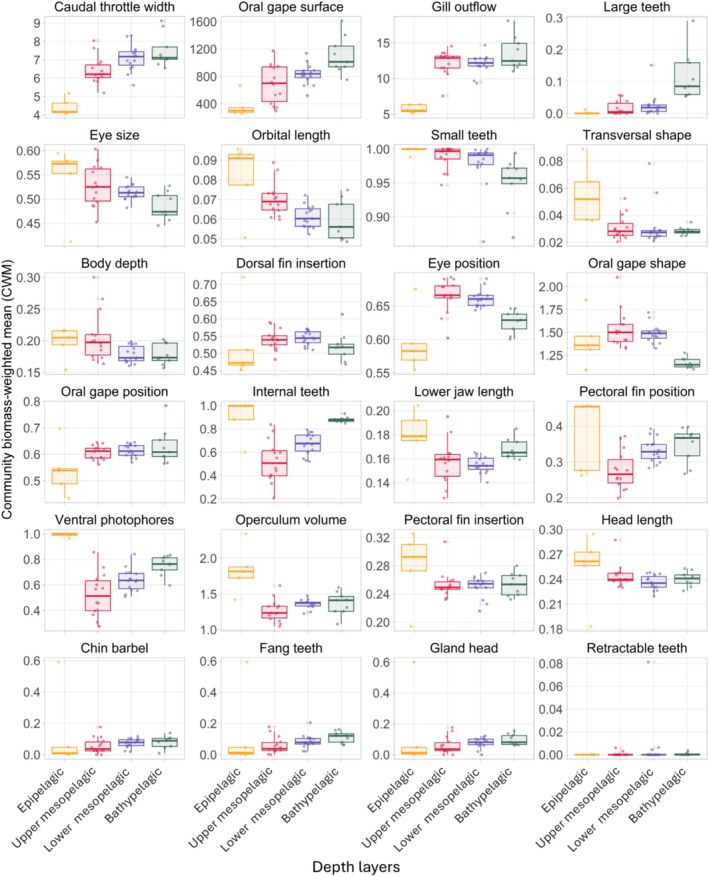 Figure 6
Peer Reviews
No public reviews on file for this paper yet. If you reviewed it on a platform where reviews are public (OpenReview, ICLR, NeurIPS, ICML), you can paste yours below so the community can read it here.
Videos
No videos yet. Explain this paper in a talk, walkthrough, or lecture? Add one.
Taxonomy
TopicsFish Ecology and Management Studies · Marine and fisheries research · Marine Biology and Ecology Research