Luminance noise impacts putative luminance components of visual evoked potentials but not chromatic components
Bellany Barbosa Lopes, Terezinha Medeiros Gonçalves Loureiro, Felipe André da Costa Brito, Letícia Miquilini, Alódia Brasil, Marcelo Fernandes Costa, Railson Cruz Salomão, Dora Fix Ventura, Ana Leda Brino, Givago da Silva Souza

TL;DR
This study shows that changes in luminance noise affect certain parts of brain responses to color stimuli but not others, which could help in diagnosing color vision issues.
Contribution
The study reveals that luminance noise affects specific visual evoked potential components without altering chromatic processing, offering insights for clinical applications.
Findings
Luminance noise contrast significantly affected P1 and P2 VECP amplitudes but not N1.
Number of luminance values in noise had no significant effect on VECP components.
Luminance noise manipulations impacted putative luminance components but not chromatic components of VECP.
Abstract
Pseudoisochromatic stimuli are widely used in psychophysical color vision testing and the features of the luminance noise present on these stimuli have been reported modifying the psychophysical chromatic discrimination. The present study investigated how modifications in the luminance noise features (luminance contrast and number of luminance values) affect chromatic visual evoked cortical potentials (VECP) elicited by pseudoisochromatic gratings, aiming to evaluate the influence of luminance contrast and the number of luminance values in the pseudoisochromatic stimulus on the chromatic VECP. The sample consisted of seven young trichromatic participants. The waveforms of the visual evoked cortical potentials (VECP) were analyzed, focusing on the P1, N1, and P2 components across all stimulus conditions. The luminance noise contrast in the pseudoisochromatic stimulus had distinct…
Genes, proteins, chemicals, diseases, species, mutations and cell lines named across the full text — each resolved to its canonical identifier and authoritative record.
Click any figure to enlarge with its caption.
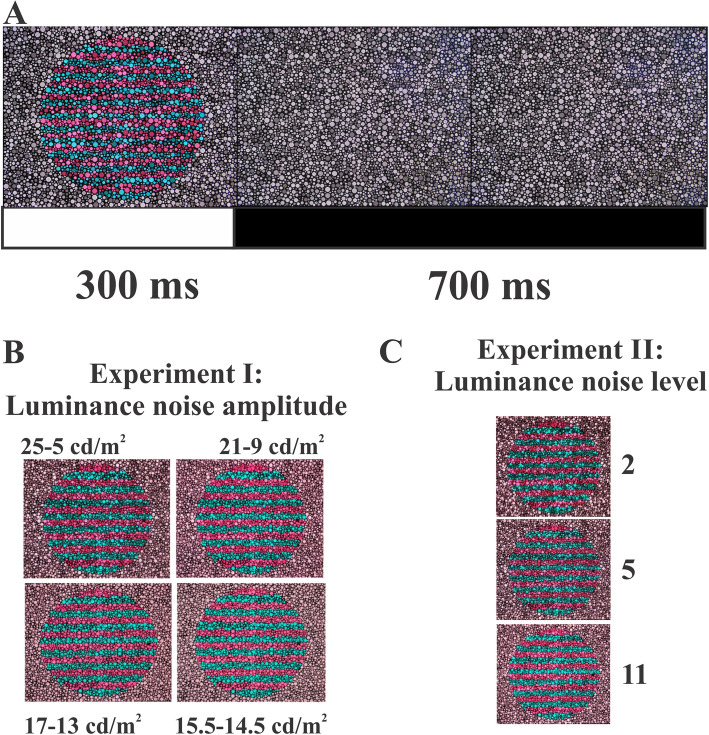 Figure 1
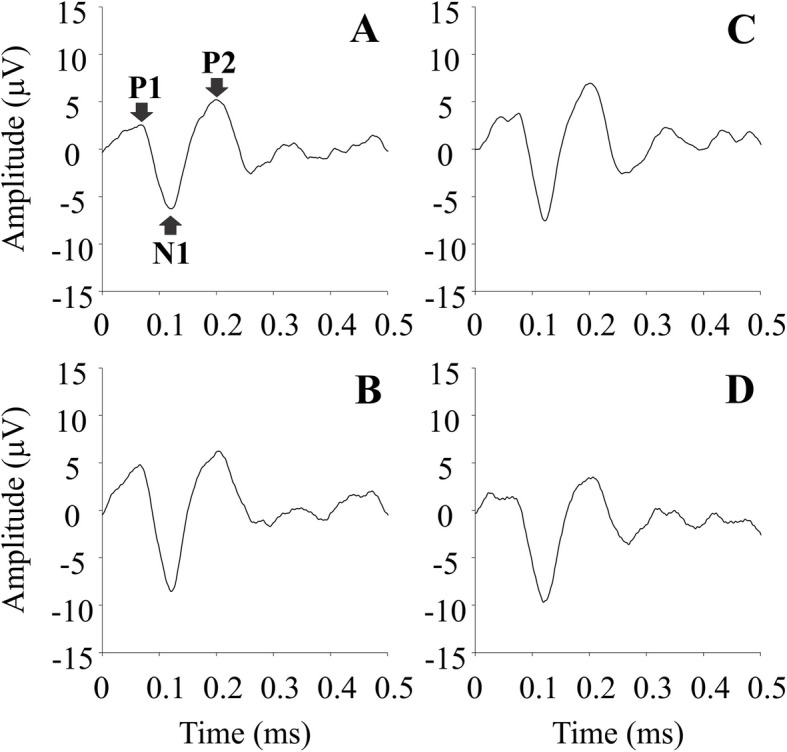 Figure 2
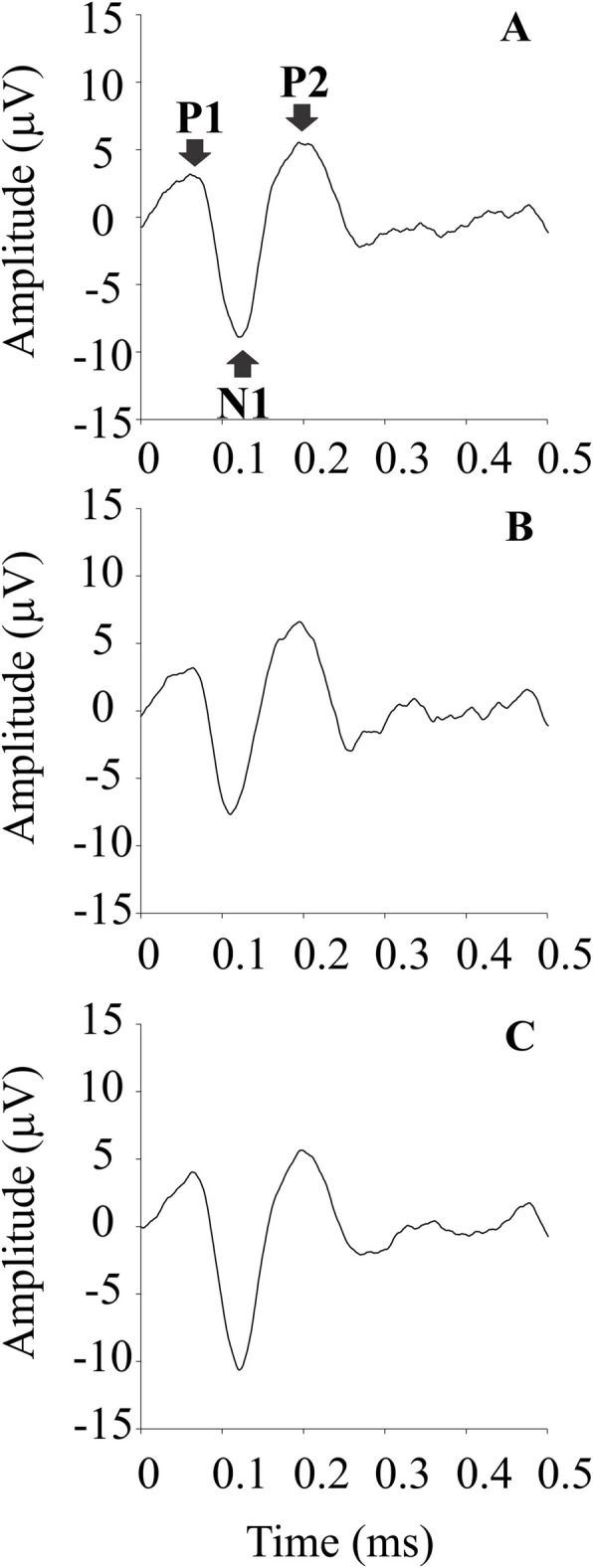 Figure 3
Peer Reviews
No public reviews on file for this paper yet. If you reviewed it on a platform where reviews are public (OpenReview, ICLR, NeurIPS, ICML), you can paste yours below so the community can read it here.
Videos
No videos yet. Explain this paper in a talk, walkthrough, or lecture? Add one.
Taxonomy
TopicsVisual perception and processing mechanisms · Color Science and Applications · Color perception and design