Critical upward shift of intracranial pressure levels in extremely obese patients; normalization due to bariatric surgery
Nabil Al Shammas, Robert Luck, Sophie Schumann, Dragana Köhler, Lutz Mirow, Bernhard Rosengarten

TL;DR
This study shows that extremely obese patients have higher intracranial pressure, which can be reduced through bariatric surgery.
Contribution
The study reveals a strong link between obesity and elevated intracranial pressure in asymptomatic patients, and demonstrates normalization after weight loss.
Findings
Obese patients had unexpectedly high pathologic and borderline intracranial pressure (ICP) values before surgery.
Bariatric surgery significantly reduced both body mass index and intracranial pressure levels.
Pathologic optic nerve sheath diameter (ONSD) values remained relatively constant despite weight loss.
Abstract
Increase in body mass index (BMI) is a risk factor for idiopathic intracranial hypertension (IIH). The matter of body weight and intracranial pressure (ICP) in clinically asymptomatic obese patients is unknown. We aimed at studying the relationship of ICP and BMI pre- and post-surgery in obese patients undergoing bariatric surgery. Patients with a BMI > 35 kg/m2, qualified for bariatric surgery and without clinical signs of IIH were prospectively and consecutively included. The optic nerve sheath diameter (ONSD) and a combined transcranial Doppler-arterial blood pressure (TCD&ABP-ICP) method were used to non-invasively determine the ICP (nICP) pre- and post-surgery (six months after surgery when weight loss had stabilized). ONSD > 5.8 mm and nICP > 25cmH2O were assumed as pathologically increased. A nICP between > 20 and ≤ 25 cmH2O was assumed as being in the borderline. 54 patients…
Genes, proteins, chemicals, diseases, species, mutations and cell lines named across the full text — each resolved to its canonical identifier and authoritative record.
Click any figure to enlarge with its caption.
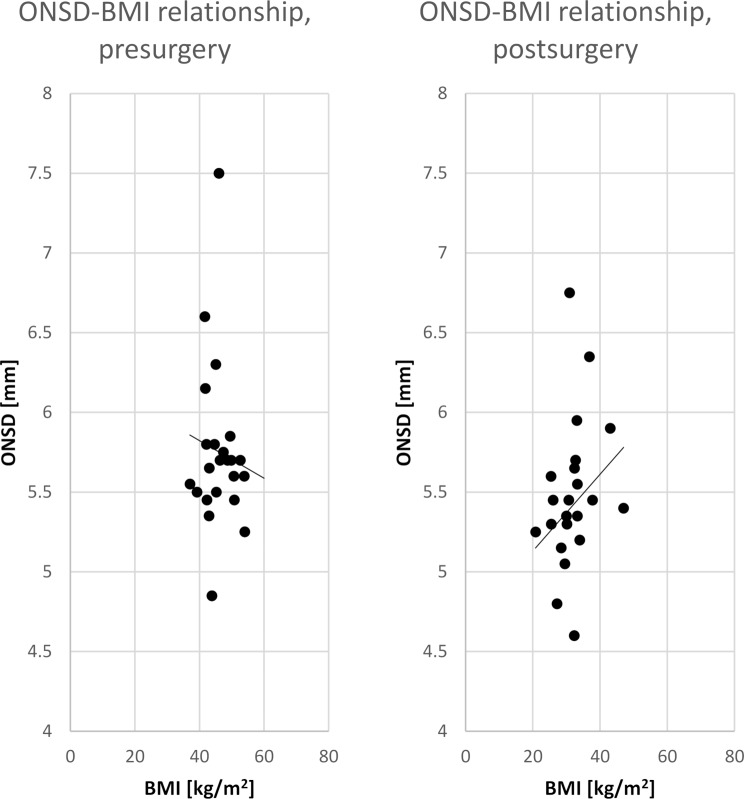 Figure 1
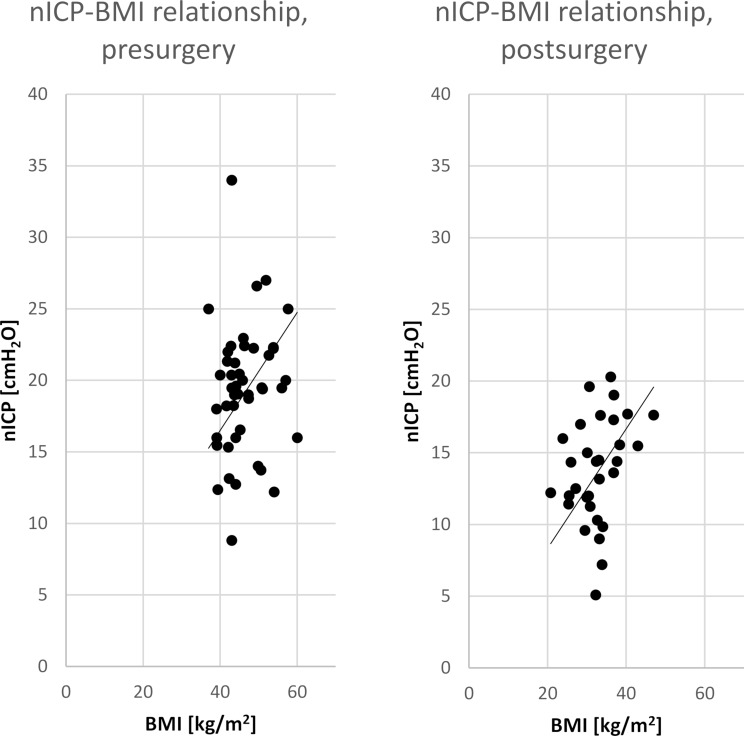 Figure 2
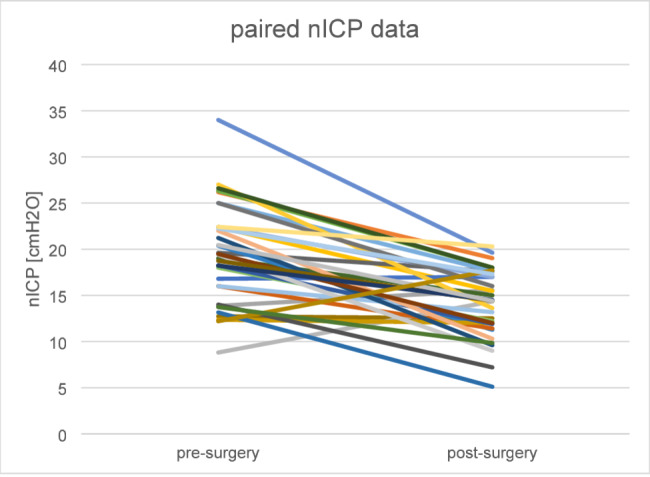 Figure 3
Peer Reviews
No public reviews on file for this paper yet. If you reviewed it on a platform where reviews are public (OpenReview, ICLR, NeurIPS, ICML), you can paste yours below so the community can read it here.
Videos
No videos yet. Explain this paper in a talk, walkthrough, or lecture? Add one.
Taxonomy
TopicsCerebral Venous Sinus Thrombosis · Cerebrovascular and Carotid Artery Diseases · Pituitary Gland Disorders and Treatments