Deciphering bidirectional causal links between oxidative stress and lung cancer risk through Mendelian randomization
XueLian Chen, JianRong Zeng, FengYun Cao, Jun Cai, Xin Ma, ChangYu Pu

TL;DR
This study uses genetic data to show how oxidative stress biomarkers are linked to different types of lung cancer, suggesting new prevention strategies.
Contribution
The study identifies specific causal links between oxidative stress biomarkers and lung cancer subtypes using bidirectional Mendelian randomization.
Findings
Higher albumin levels are linked to reduced adenocarcinoma risk.
Elevated monounsaturated fatty acids increase squamous cell carcinoma risk.
Increased lactate levels are associated with higher small cell lung cancer risk.
Abstract
Lung cancer remains the leading cause of cancer-related mortality globally. Despite advancements in treatment, survival rates for advanced-stage disease remain suboptimal, emphasizing the need for novel prevention strategies. Oxidative stress (OS), resulting from an imbalance between reactive oxygen species (ROS) and antioxidants, is implicated in lung cancer pathogenesis. This study aimed to explore bidirectional causal relationships between genetically predicted oxidative stress injury biomarkers (OSIBs) and lung cancer risk using mendelian randomization (MR). A two-sample bidirectional MR approach was used to assess causal effects of 16 OSIBs on lung cancer subtypes (small cell lung cancer, squamous cell carcinoma, and adenocarcinoma) and vice versa. Genetic data were derived from large-scale genome-wide association studies in European populations. MR analysis revealed significant…
Genes, proteins, chemicals, diseases, species, mutations and cell lines named across the full text — each resolved to its canonical identifier and authoritative record.
Click any figure to enlarge with its caption.
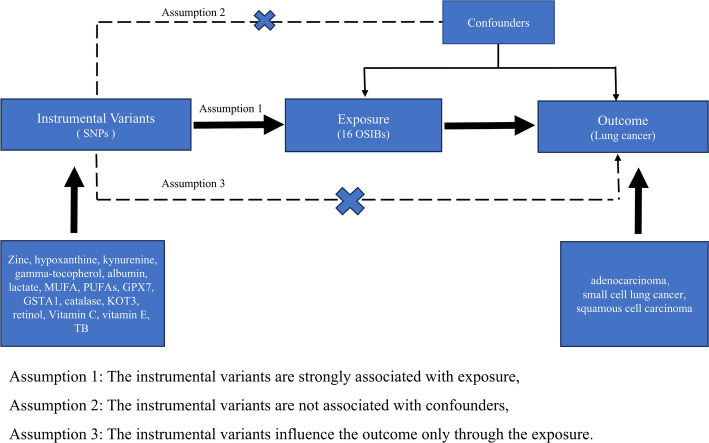 Figure 1
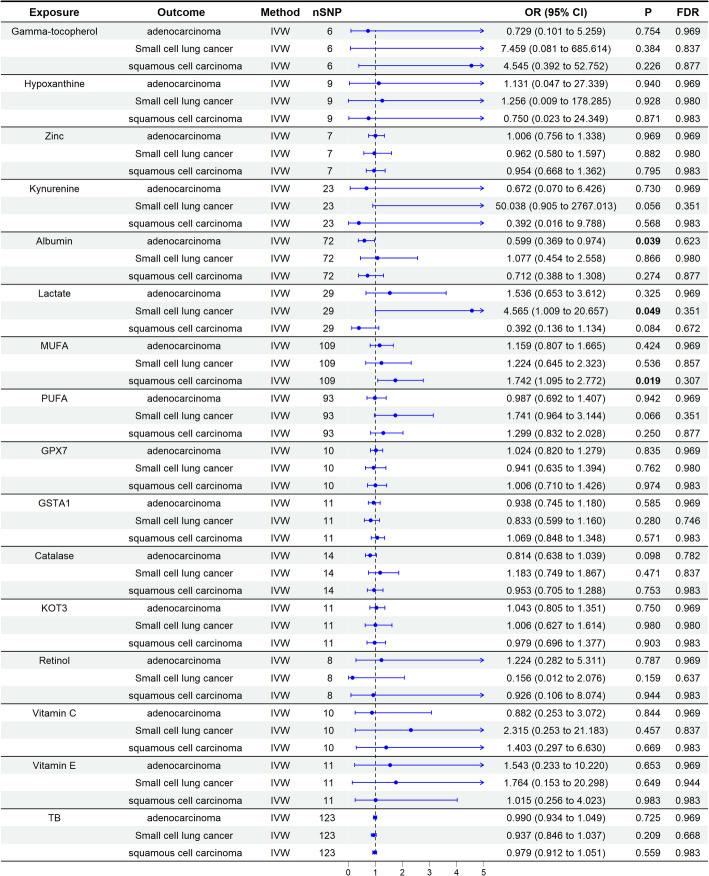 Figure 2
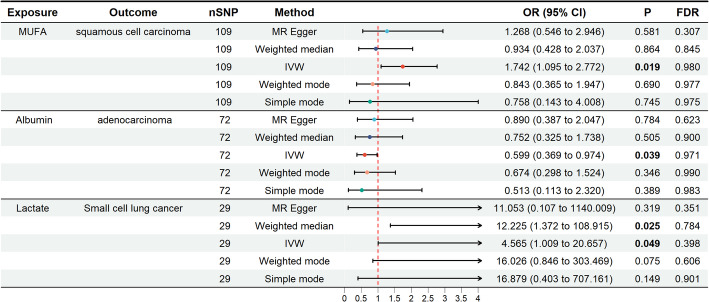 Figure 3
Peer Reviews
No public reviews on file for this paper yet. If you reviewed it on a platform where reviews are public (OpenReview, ICLR, NeurIPS, ICML), you can paste yours below so the community can read it here.
Videos
No videos yet. Explain this paper in a talk, walkthrough, or lecture? Add one.
Taxonomy
TopicsGenetic Associations and Epidemiology · Cancer-related molecular mechanisms research · RNA modifications and cancer