Platelet‐Activating Factor Promotes Neutrophil Activation and Platelet–Neutrophil Complex Formation
Lisa Wohlgemuth, Christiane Leonie Knapp, Laura Vidoni, Stefan Hug, Paul Müller, Adam Omar Khalaf Mohamed, Annika Dietz, Alexander Elias Paul Stratmann, Laura Stukan, Larissa Melina Höpfer, Bertram Dietrich Thomaß, Alexander Sebastian Koller, Frederik Münnich, Michael Ruhland

TL;DR
This study shows how platelet-activating factor (PAF) activates neutrophils and forms platelet-neutrophil complexes, which could lead to new treatments for inflammation-related diseases like sepsis.
Contribution
The study reveals novel mechanisms of PAF-induced neutrophil activation and platelet-neutrophil complex formation using an animal-free ex vivo model.
Findings
PAF rapidly changes neutrophil phenotype by upregulating CD10, CD11b, and CD66b and downregulating CD62L.
Platelet–neutrophil complexes (PNCs) enhance reactive oxygen species formation and phagocytosis compared to neutrophils alone.
Iloprost and anti-CD62P may modulate PAF-induced platelet–neutrophil interactions and neutrophil functions.
Abstract
Controlling excessive inflammation remains an unmet clinical need, for example, during sepsis or after severe injuries. Platelet‐activating factor (PAF) is central in thromboinflammatory processes. However, its role in the interaction of platelets and neutrophils requires further insights. Therefore, we elucidated PAF‐related neutrophil activation, including platelet–neutrophil complex (PNC) formation and investigated potential strategies to modulate PAF‐related inflammation. For the translation of the PAF‐mediated inflammation, we applied an animal‐free human ex vivo whole blood model. The neutrophil phenotype, its function, and PNC formation were studied by flow cytometry and platelet‐related activity was assessed by light microscopy and aggregometry. PAF induced a rapid and dose‐dependent change in neutrophil phenotype, as evidenced by CD10, CD11b, and CD66b upregulation and CD62L…
Genes, proteins, chemicals, diseases, species, mutations and cell lines named across the full text — each resolved to its canonical identifier and authoritative record.
Click any figure to enlarge with its caption.
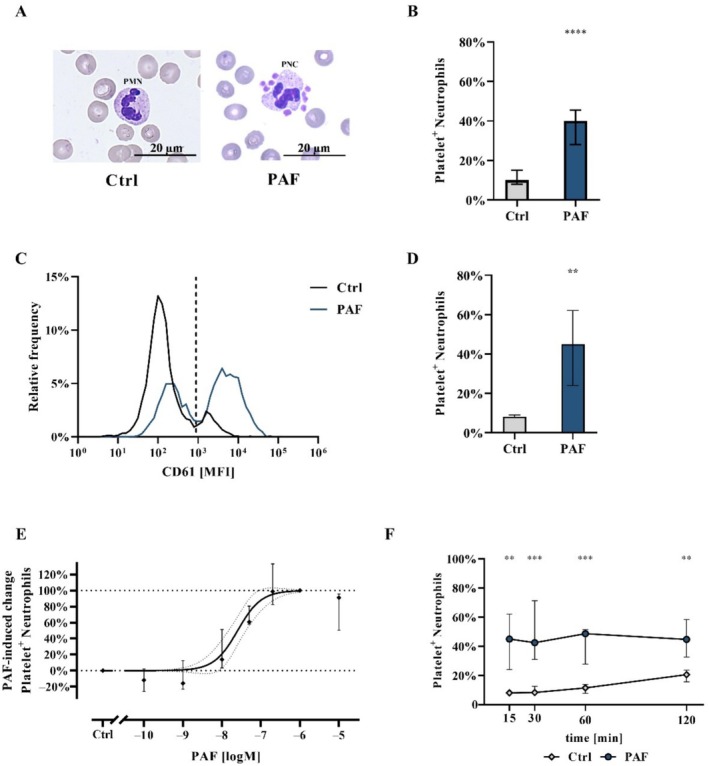 Figure 1
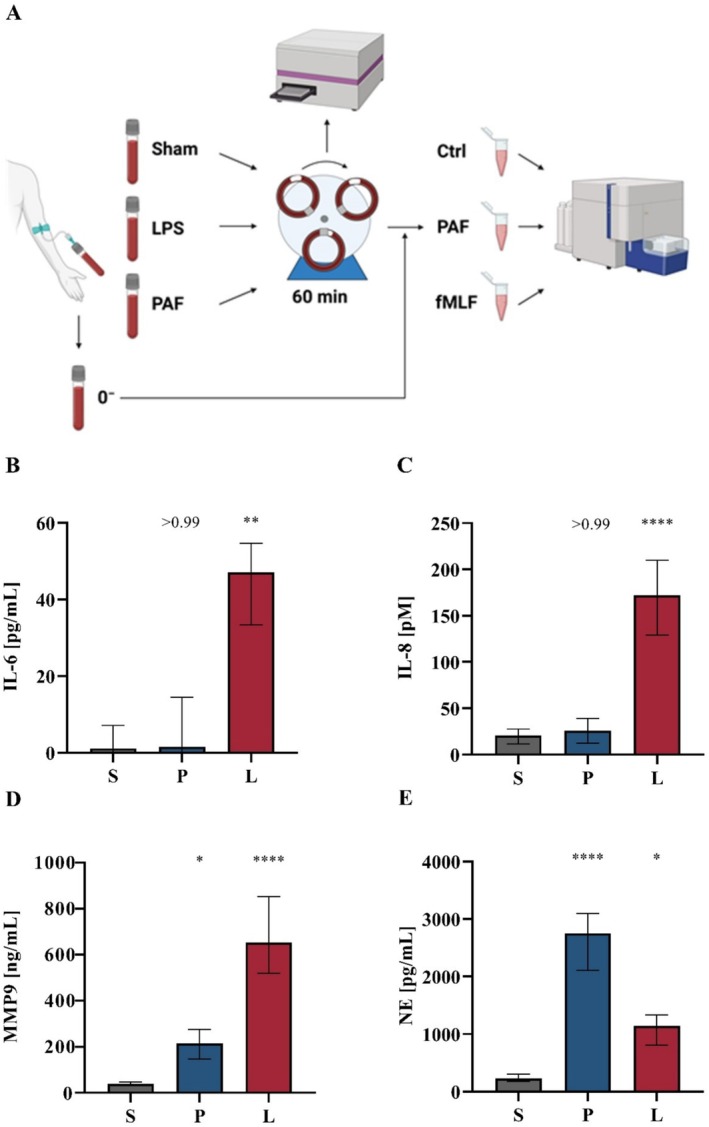 Figure 2
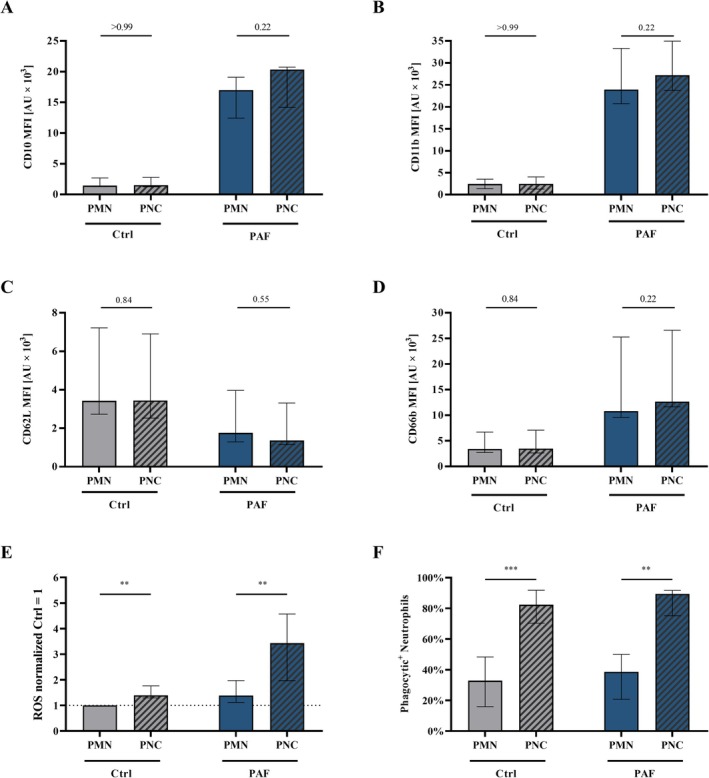 Figure 3
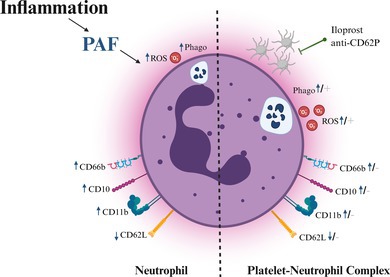 Figure 4
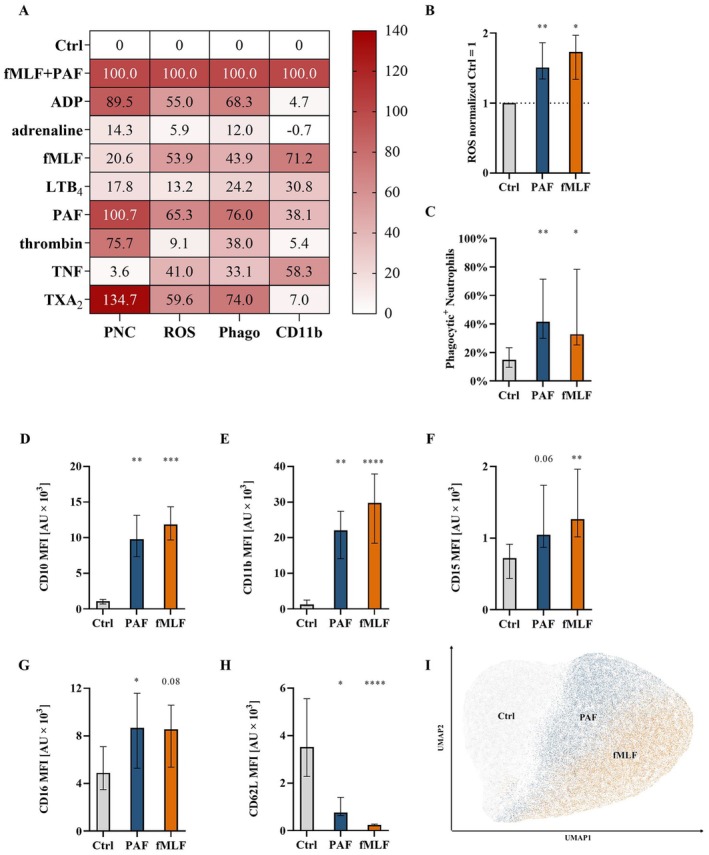 Figure 5
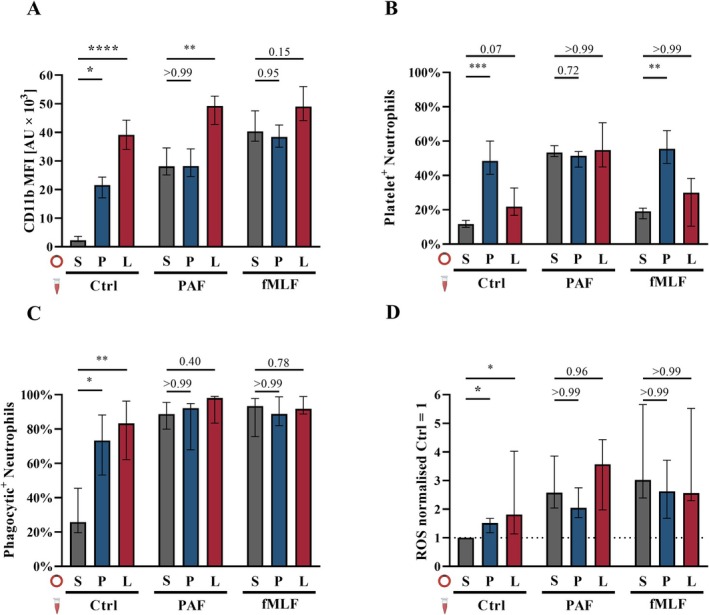 Figure 6
Peer Reviews
No public reviews on file for this paper yet. If you reviewed it on a platform where reviews are public (OpenReview, ICLR, NeurIPS, ICML), you can paste yours below so the community can read it here.
Videos
No videos yet. Explain this paper in a talk, walkthrough, or lecture? Add one.
Taxonomy
TopicsNeutrophil, Myeloperoxidase and Oxidative Mechanisms · Inflammatory Biomarkers in Disease Prognosis · Blood disorders and treatments