Phase 2 multicenter study of pegaspargase in Japanese patients with previously untreated acute lymphoblastic leukemia
Katsuyoshi Koh, Yoshiyuki Kosaka, Yasuhiro Okamoto, Naoko Maeda, Atsushi Ogawa, Ryoji Kobayashi, Daisuke Hasegawa, Nobuhiro Koga, Adrien Tessier, Yelena Shvenke, Jian Zhu, Bouchra Benettaib, Keizo Horibe, Chitose Ogawa

TL;DR
This study evaluated the safety and effectiveness of pegaspargase in Japanese patients with newly diagnosed acute lymphoblastic leukemia.
Contribution
The study provides new evidence on the tolerability and pharmacokinetics of lyophilized pegaspargase in the Japanese population.
Findings
All 26 patients experienced at least one treatment-emergent adverse event, including decreases in blood fibrinogen and platelet count.
Plasma asparaginase activity reached and was maintained at ≥ 0.1 IU/ml for 14 days in all evaluable patients.
No deaths were reported, indicating that lyophilized pegaspargase is a well-tolerated treatment option for Japanese ALL patients.
Abstract
Pegaspargase is a pegylated formulation of E. coli-derived asparaginase, which when combined with multi-agent chemotherapy is an effective, well-established therapy for acute lymphoblastic leukemia (ALL). This study evaluated the efficacy, safety and pharmacokinetics of lyophilized pegaspargase in the Japanese population. The study had two parts; the primary endpoint for Part 1 was the incidence and nature of treatment-emergent adverse events (TEAEs), including those related to pegaspargase, to determine the number of patients who experience intolerable toxicity during a tolerability assessment period. The primary endpoint for Part 2 was the percentage of patients with plasma asparaginase activity of ≥ 0.1 IU/ml 14 days after administration of the first dose of lyophilized pegaspargase. All 26 patients included in the safety analysis experienced at least one TEAE. Frequently reported…
Genes, proteins, chemicals, diseases, species, mutations and cell lines named across the full text — each resolved to its canonical identifier and authoritative record.
Click any figure to enlarge with its caption.
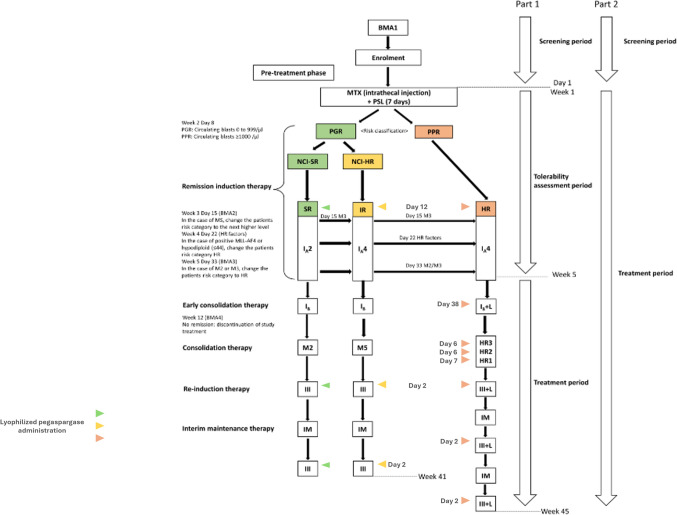 Figure 1
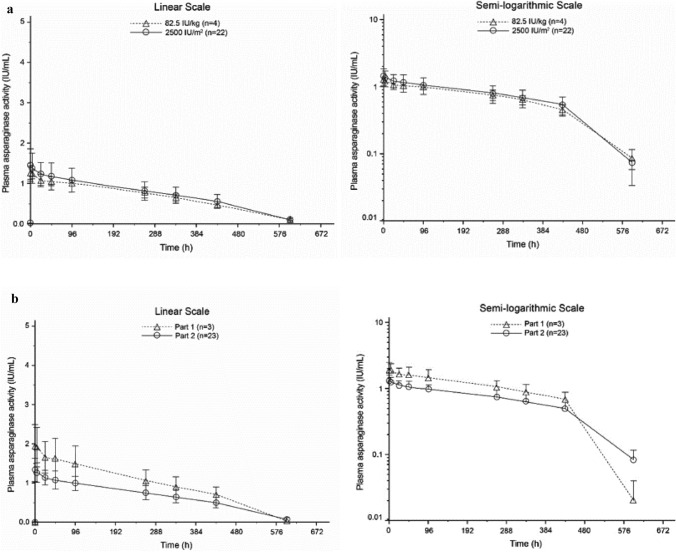 Figure 2
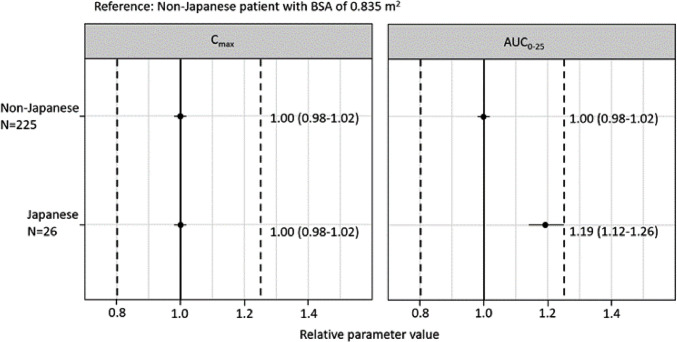 Figure 3
Peer Reviews
No public reviews on file for this paper yet. If you reviewed it on a platform where reviews are public (OpenReview, ICLR, NeurIPS, ICML), you can paste yours below so the community can read it here.
Videos
No videos yet. Explain this paper in a talk, walkthrough, or lecture? Add one.
Taxonomy
TopicsAcute Lymphoblastic Leukemia research · Childhood Cancer Survivors' Quality of Life · Neuroblastoma Research and Treatments