Practice patterns of paediatric surgeons on treating pilonidal sinus disease — a national survey study
Giada Corturillo, Marko Jovanovic, Stephan Rohleder, Andreas C. Heydweiller, Oliver J. Muensterer, Dietrich Doll, Christina Oetzmann von Sochaczewski

TL;DR
This study surveyed German pediatric surgeons to understand how they treat pilonidal sinus disease in children, finding that traditional methods are preferred over recommended guidelines.
Contribution
The study provides the first national survey data on surgical practices for pediatric pilonidal sinus disease in Germany.
Findings
Most surgeons use excision and secondary closure or vacuum-assisted closure for pilonidal sinus disease.
Pit-picking is a commonly used approach despite not being part of adult-based guidelines.
Few surgeons follow national guidelines or pediatric treatment algorithms for this condition.
Abstract
Paediatric pilonidal sinus disease is considered a separate entity of disease due to differing recurrence dynamics. However, there are almost no data on real-world surgical care and practice patterns for children and adolescents. We therefore aimed to gather such data surveying a representative sample of German paediatric surgeons. Some 101 German paediatric surgical departments and surgeries with inpatient beds were surveyed for their surgical approach to paediatric pilonidal sinus disease. The survey included demographics, information on practice setting, as well as the primary and secondary approach to pilonidal disease and three virtual patient scenarios. A total of 40 institutions (33 departments and 7 office-based paediatric surgeons) responded (recall rate 40%). Of these, 18/40 reported performing 10–20, and 9/40 perform 5–10 pilonidal sinus operations annually. 17/39…
Genes, proteins, chemicals, diseases, species, mutations and cell lines named across the full text — each resolved to its canonical identifier and authoritative record.
Click any figure to enlarge with its caption.
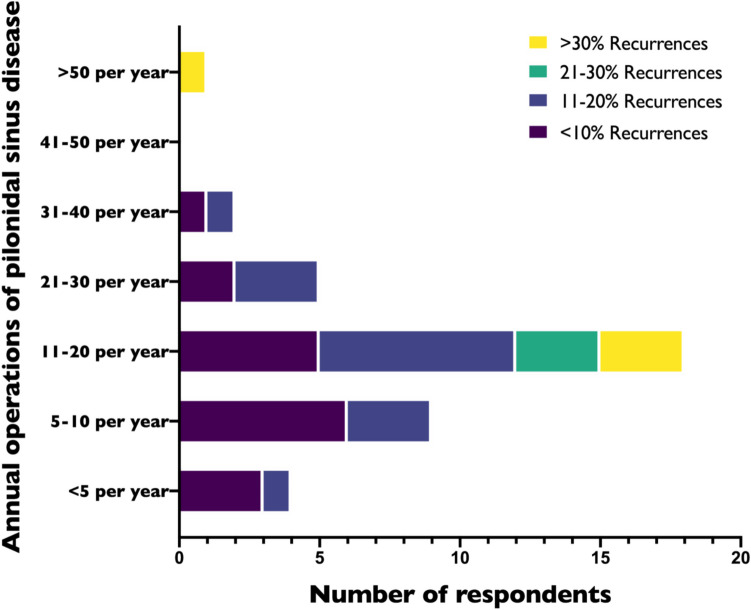 Figure 1
Peer Reviews
No public reviews on file for this paper yet. If you reviewed it on a platform where reviews are public (OpenReview, ICLR, NeurIPS, ICML), you can paste yours below so the community can read it here.
Videos
No videos yet. Explain this paper in a talk, walkthrough, or lecture? Add one.
Taxonomy
TopicsAnorectal Disease Treatments and Outcomes · Amoebic Infections and Treatments · Diverticular Disease and Complications