Fungi-Kcr: a language model for predicting lysine crotonylation in pathogenic fungal proteins
Yong-Zi Chen, Xiaofeng Wang, Zhuo-Zhi Wang, Haixin Li

TL;DR
Fungi-Kcr is a deep learning model that predicts lysine crotonylation in fungal proteins, offering a faster alternative to costly experiments.
Contribution
Fungi-Kcr combines CNN, GRU, and word embedding for improved prediction of Kcr sites in pathogenic fungi.
Findings
Fungi-Kcr outperforms conventional machine learning models in predicting lysine crotonylation sites.
General predictive models perform better than species-specific models for Kcr site prediction.
The model aids in understanding fungal pathogenesis and identifying therapeutic targets.
Abstract
Lysine crotonylation (Kcr) is an important post-translational modification (PTM) of proteins, playing a key role in regulating various biological processes in pathogenic fungi. However, the experimental identification of Kcr sites remains challenging due to the high cost and time-consuming nature of mass spectrometry-based techniques. To address this limitation, we developed Fungi-Kcr, a deep learning-based model designed to predict Kcr modification sites in fungal proteins. The model integrates convolutional neural networks (CNN), gated recurrent units (GRU), and word embedding to effectively capture both local and long-range sequence dependencies. Comprehensive evaluations, including ten-fold cross-validation and independent testing, demonstrate that Fungi-Kcr achieves superior predictive performance compared to conventional machine learning models. Moreover, our results indicate…
Genes, proteins, chemicals, diseases, species, mutations and cell lines named across the full text — each resolved to its canonical identifier and authoritative record.
Click any figure to enlarge with its caption.
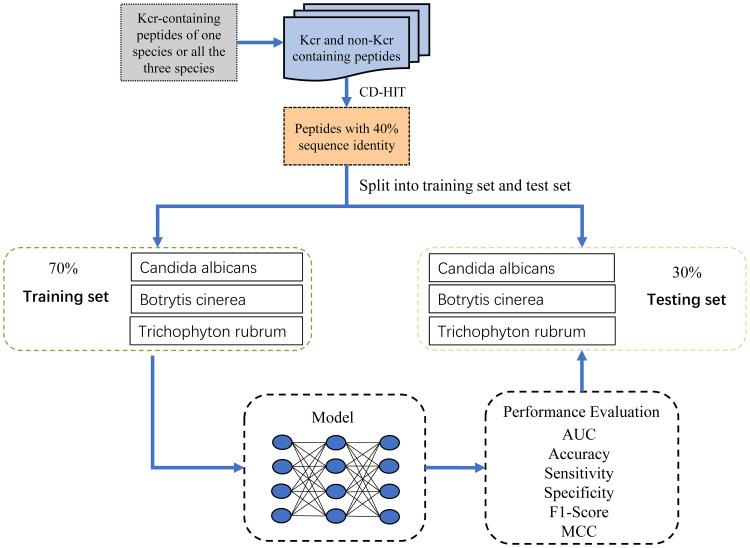 Figure 1
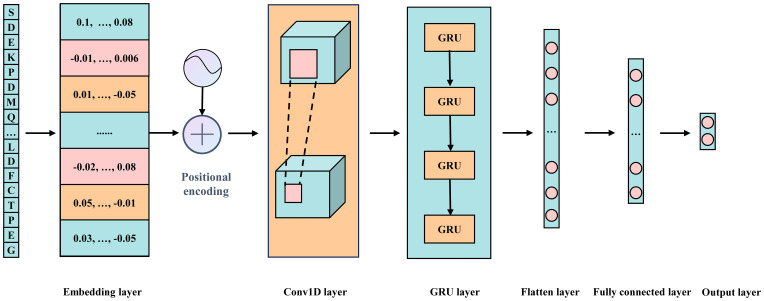 Figure 2
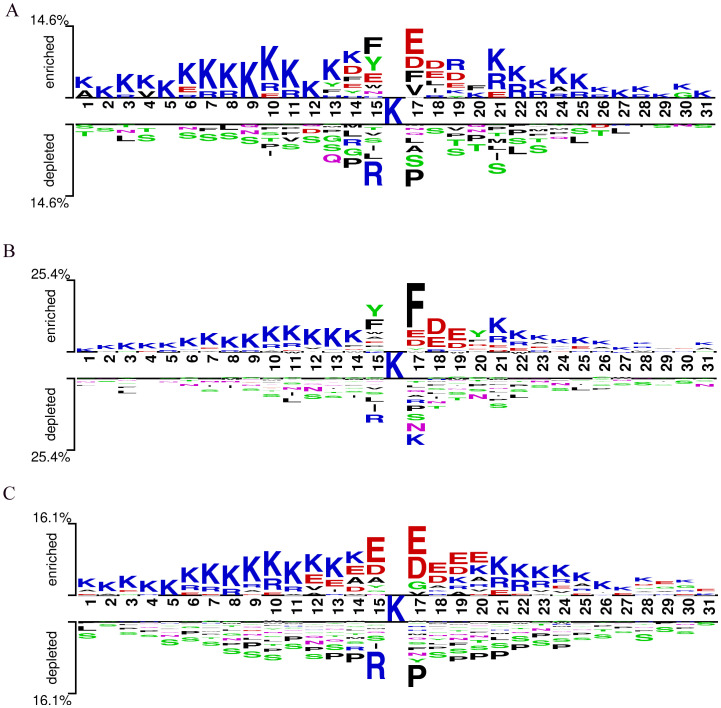 Figure 3
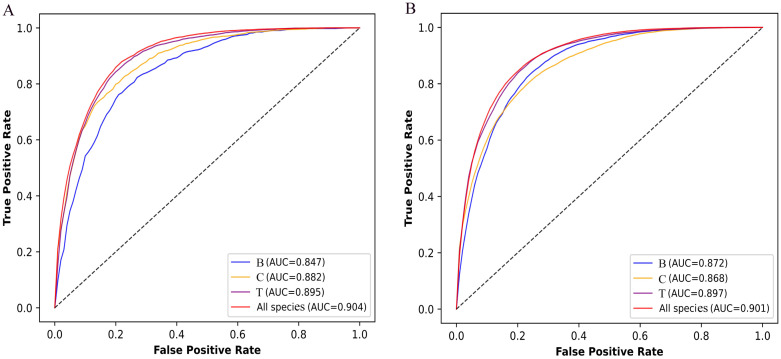 Figure 4
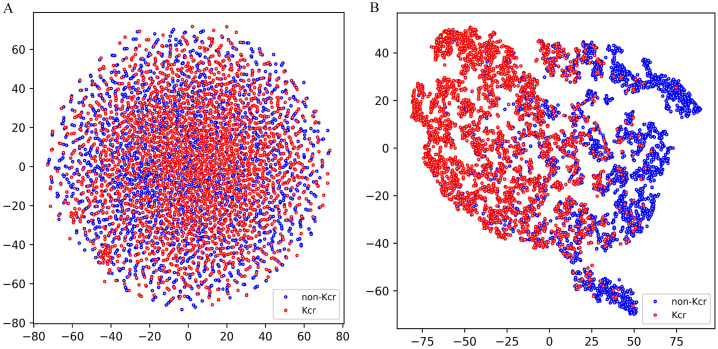 Figure 5
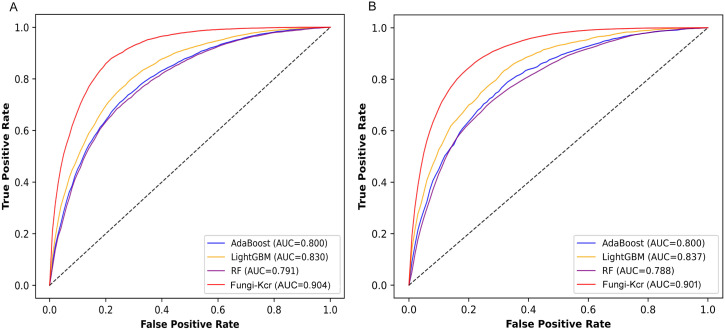 Figure 6
Peer Reviews
No public reviews on file for this paper yet. If you reviewed it on a platform where reviews are public (OpenReview, ICLR, NeurIPS, ICML), you can paste yours below so the community can read it here.
Videos
No videos yet. Explain this paper in a talk, walkthrough, or lecture? Add one.
Taxonomy
TopicsMicrobial Natural Products and Biosynthesis · Genomics and Phylogenetic Studies · Machine Learning in Bioinformatics