Fucoxanthin inhibits the proliferation of MOLM13 cells by targeting AKT to disrupt glucose metabolism
Tingting Niu, Ying Chen, Mengmeng Sun, Cong Shi, Duobing Zou, Wei Wu, Yuzhan Chen, Juanjuan Chen, Haimin Chen, Guifang Ouyang, Qitian Mu

TL;DR
Fucoxanthin, a natural compound, inhibits the growth of a type of leukemia cell by targeting a protein called AKT and disrupting glucose metabolism.
Contribution
The study reveals that fucoxanthin directly targets AKT to inhibit glucose metabolism in FLT3-ITD AML cells.
Findings
Fucoxanthin reduced MOLM13 cell viability by 63.6% and induced G0/G1 arrest and apoptosis.
It inhibited glucose uptake, GLUT1 translocation, and ATP production in these cells.
Molecular dynamics showed key interactions between fucoxanthin and AKT residues Phe-236 and Lys-179.
Abstract
Fucoxanthin is a natural carotenoid that has remarkable anti-tumor effects and an excellent safety profile. Here, we combined molecular docking, dynamics simulations, and functional assays (CCK-8, flow cytometry, glucose/ATP detection) to decipher the mechanism of Fucoxanthin on FLT3-ITD AML cells. Fucoxanthin (25 μM) reduced MOLM13 (FLT3-ITD) cell viability by 63.6% (P < 0.01), inducing G0/G1 arrest via CDK4 downregulation and apoptosis through Bcl2 suppression. Fucoxanthin also inhibited the glucose uptake, GLUT1 membrane translocation, and ATP production. Mechanistically, fucoxanthin directly bound to AKT and inhibited its kinase activity by 57.9%, while AKT overexpression rescued the glucose/ATP suppression (P < 0.05). Molecular dynamics revealed critical interactions between fucoxanthin and Phe-236/Lys-179. These results suggest that fucoxanthin may selectively target AKT-dependent…
Genes, proteins, chemicals, diseases, species, mutations and cell lines named across the full text — each resolved to its canonical identifier and authoritative record.
Click any figure to enlarge with its caption.
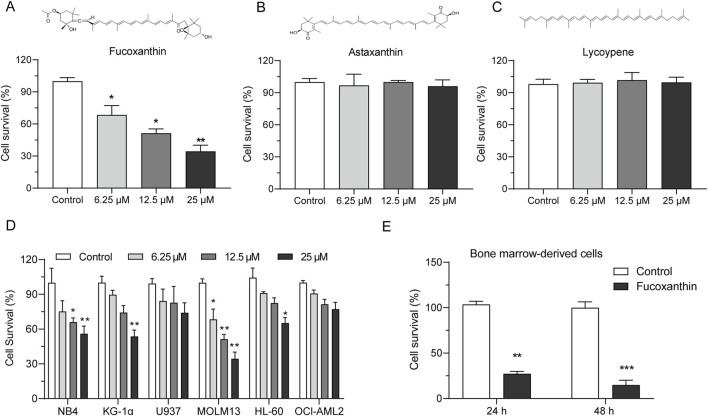 Figure 1
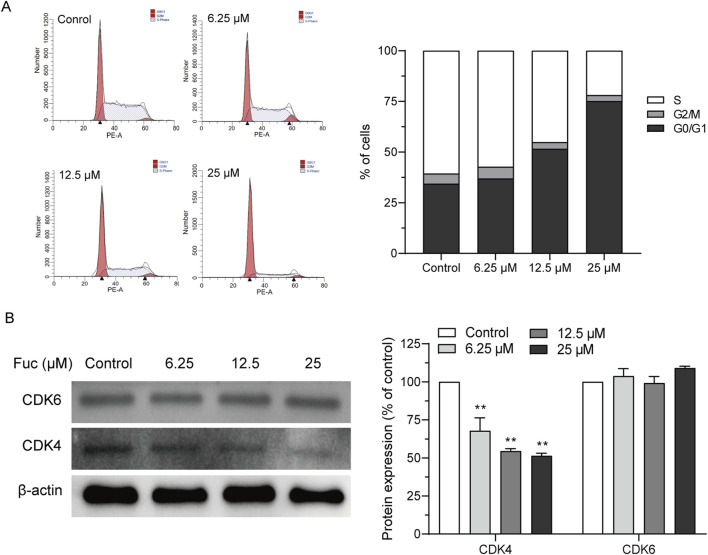 Figure 2
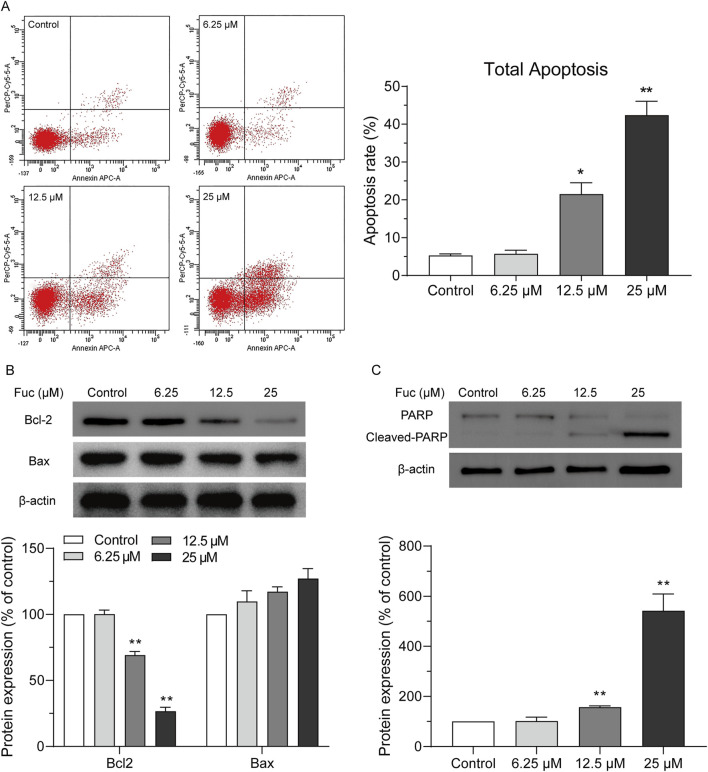 Figure 3
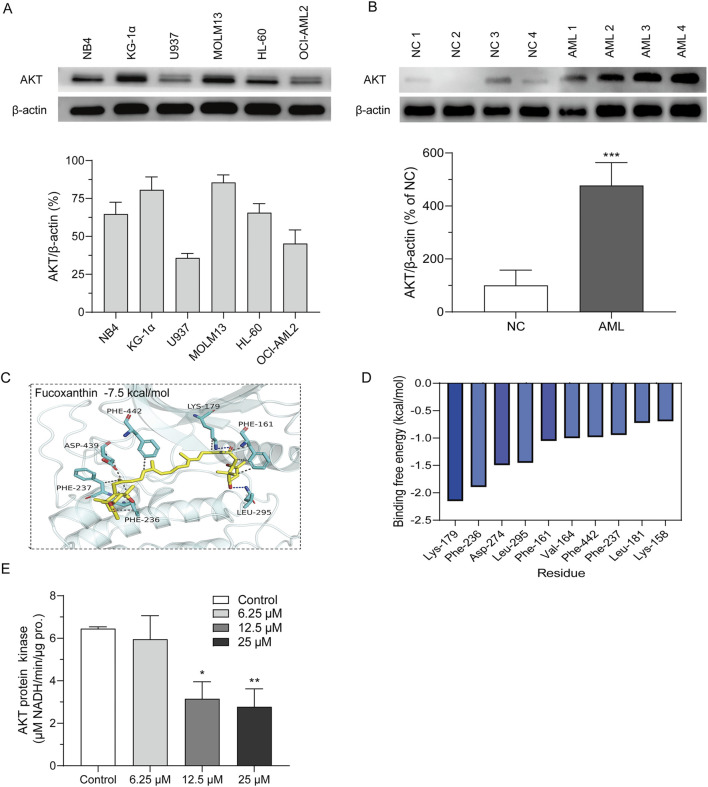 Figure 4
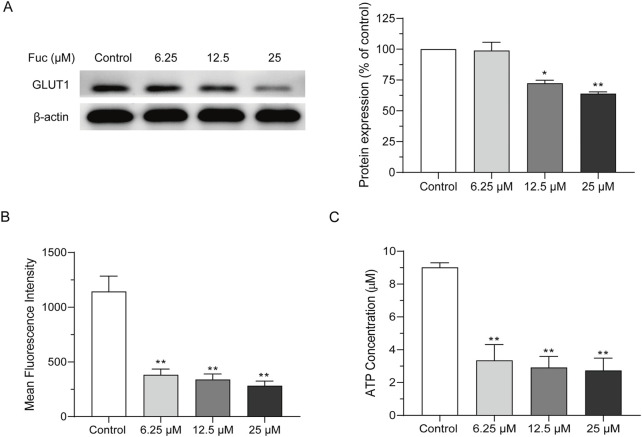 Figure 5
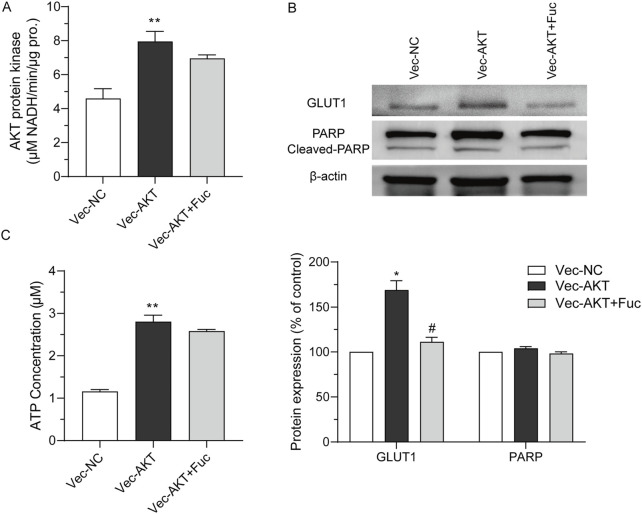 Figure 6
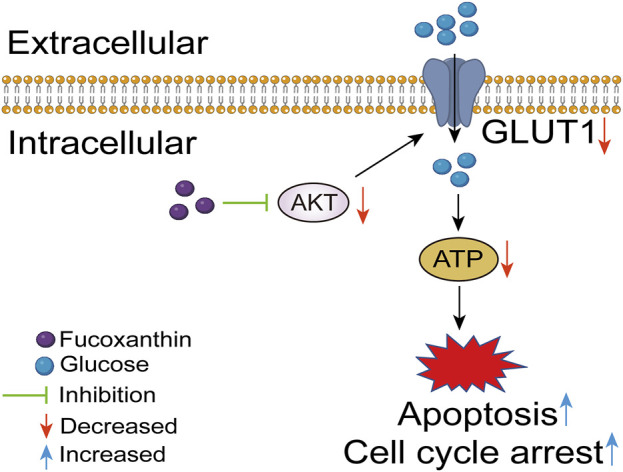 Figure 7
Peer Reviews
No public reviews on file for this paper yet. If you reviewed it on a platform where reviews are public (OpenReview, ICLR, NeurIPS, ICML), you can paste yours below so the community can read it here.
Videos
No videos yet. Explain this paper in a talk, walkthrough, or lecture? Add one.
Taxonomy
TopicsCancer, Hypoxia, and Metabolism · Cancer Research and Treatments · Cancer-related Molecular Pathways