Barriers and facilitators to implementing a task-sharing mental health intervention for Sickle Cell Disease populations in low- and middle-income countries: a qualitative analysis using the Consolidated Framework for Implementation Research (CFIR)
John Patena, Leah Elster, Tania Hameed, Sumedha Kulkarni, Alden Yuanhong Lai, Annika C. Sweetland, Joyce Gyamfi, Temitope Ojo, Angela Odoms-Young, Charmaine Royal, Emmanuel Peprah

TL;DR
This study explores the challenges and opportunities of using a task-sharing mental health approach for people with Sickle Cell Disease in low- and middle-income countries.
Contribution
The study provides new insights into the feasibility and acceptability of task-sharing mental health interventions for SCD populations in LMICs.
Findings
Both SCD stakeholders and mental health experts agree on the urgent need for mental health care tailored to SCD in LMICs.
Barriers include weak healthcare systems, lack of funding, and stigma, while facilitators include cultural adaptability and integration within SCD clinics.
Task-sharing is seen as acceptable but requires systemic improvements to be feasible.
Abstract
People living with Sickle Cell Disease (SCD) experience higher rates of common mental disorders (CMD). There is an alarming treatment gap in the provision of adequate mental health services for CMDs in low- and middle-income countries (LMIC). One solution is the implementation of task-sharing interventions such as the Friendship Bench which utilizes concepts of problem-solving therapy (PST). This investigation uses a qualitative study design to evaluate the acceptability and feasibility of implementing a PST-based task-sharing mental health intervention for SCD populations in LMICs using the Consolidated Framework for Implementation Research (CFIR). Purposive, convenience, and snowball sampling strategies were utilized to identify study participants targeting two key groups: (1) SCD stakeholders and (2) global mental health (GMH) experts. Key informant interviews were conducted between…
Genes, proteins, chemicals, diseases, species, mutations and cell lines named across the full text — each resolved to its canonical identifier and authoritative record.
Click any figure to enlarge with its caption.
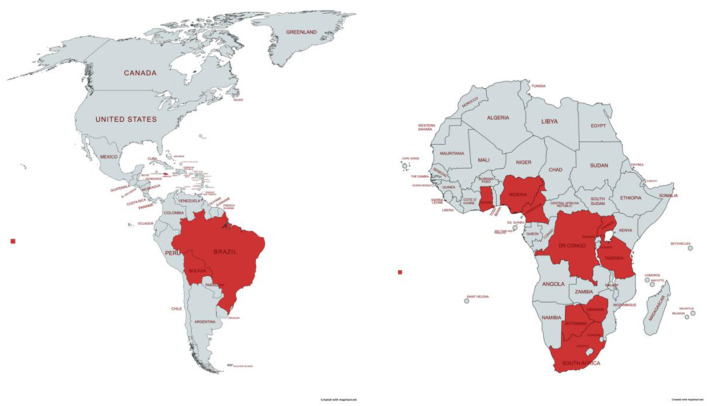 Figure 1
Peer Reviews
No public reviews on file for this paper yet. If you reviewed it on a platform where reviews are public (OpenReview, ICLR, NeurIPS, ICML), you can paste yours below so the community can read it here.
Videos
No videos yet. Explain this paper in a talk, walkthrough, or lecture? Add one.
Taxonomy
TopicsReligion, Spirituality, and Psychology · Global Maternal and Child Health · HIV/AIDS Research and Interventions