Peripheral Neuromodulation and Opioid Sparing Strategies for Mitigating Perioperative Pain in the Stabilization and Hardware Removal of Complex Trimalleolar Fractures: A Case Report
Bi Mo, Sandra Sacks, Jerry Markar

TL;DR
This case report shows how combining nerve blocks and non-opioid methods can effectively manage pain during surgery for complex ankle fractures, reducing the need for opioids.
Contribution
The paper introduces a novel opioid-sparing strategy using peripheral nerve catheters and neuromodulation for complex fracture surgeries.
Findings
Dual nerve catheters provided effective pain control during surgery and hardware removal.
The multimodal approach reduced opioid use and improved recovery outcomes.
Functional preservation was achieved without opioid-related complications.
Abstract
Individualized opioid‐free perioperative management, combining dual continuous peripheral nerve catheters targeting the popliteal sciatic and adductor canal nerves, non‐opioid pharmacologic agents, and adjunctive neuromodulation, offers robust multimodal analgesia. This approach supports both ORIF and hardware removal in complex trimalleolar fractures while preserving function, reducing opioid‐related risks, and promoting faster recovery.
Genes, proteins, chemicals, diseases, species, mutations and cell lines named across the full text — each resolved to its canonical identifier and authoritative record.
Click any figure to enlarge with its caption.
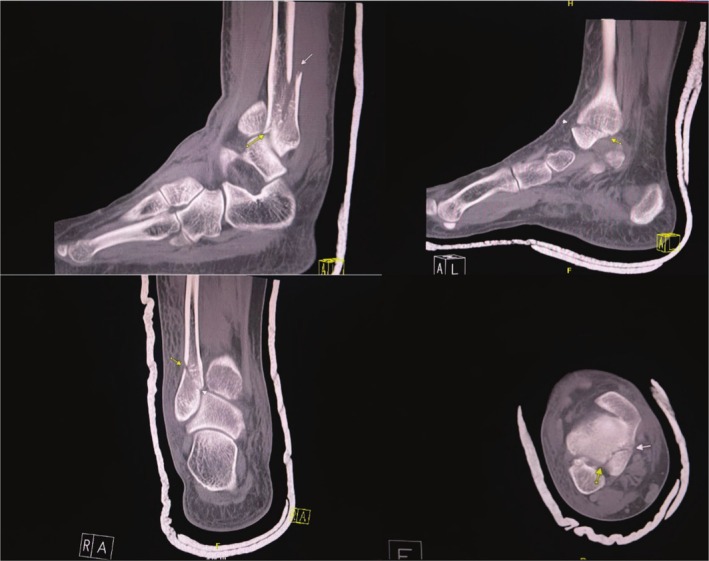 Figure 1
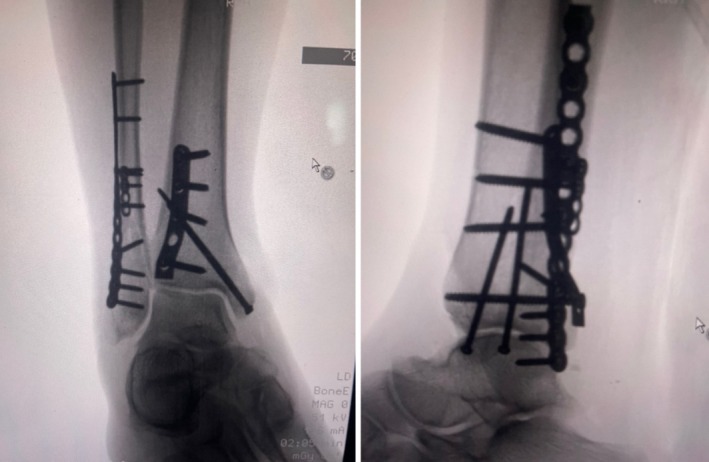 Figure 2
Peer Reviews
No public reviews on file for this paper yet. If you reviewed it on a platform where reviews are public (OpenReview, ICLR, NeurIPS, ICML), you can paste yours below so the community can read it here.
Videos
No videos yet. Explain this paper in a talk, walkthrough, or lecture? Add one.
Taxonomy
TopicsAnesthesia and Pain Management · Spine and Intervertebral Disc Pathology · Nerve Injury and Rehabilitation